Which appliance should you start with?
Start with how often you use the appliance and the capacity you need, then compare energy consumption figures in the same units. This approach lets you assess refrigeration, washing and cooking appliances without assuming that every household should replace a particular type.
| Priority |
What to check |
Your needs |
| Always-on refrigeration |
ADEME notes that fridges and freezers run continuously. Compare the kWh/year figures for appliances with similar fridge and freezer capacities and functions. The European Commission says these capacities are shown on the energy label. |
My fridge or freezer is too large, or its annual energy consumption means it’s worth looking into. I want to keep the storage space I actually need. |
| Frequent washing |
For washing machines and dishwashers, compare kWh/100 cycles, water consumption per cycle and capacity for the reference programme. Consider how many cycles you run and which programmes you use day to day. |
I run cycle after cycle, so choosing a capacity that suits my usual loads matters just as much as the figure on the label. |
| Cooking |
Check how often you use your oven or hob and the specifications of the appliance you’re considering. The European Commission states that hobs aren’t required to carry an energy label, so there’s no energy rating to compare. |
I cook often, or my cooking appliance needs replacing. I want to assess my oven and hob based on how I actually use them, rather than assuming their type alone will save energy. |
| Repair or keep as it is |
Check the appliance’s condition, capacity and energy consumption before deciding. If it’s faulty, ask whether a repair would be suitable and, in France, whether it meets the Ministry of the Economy’s requirements for the repair bonus. |
My appliance still meets my needs, or the fault looks repairable. I’d rather look into that option before replacing it. |
Brands to consider
There are no brands to feature in this section.
Fridges, freezers and washing appliances on Joybuy
These models offer two options to consider: a fridge freezer suited to the storage space you need, or a washing appliance suited to your household’s loads and cycles. Their inclusion here doesn’t determine which appliance you should replace in your home.
 Image unavailable
Candy CFQQ5T817EPS, 4-door fridge freezer, 467 L
Worth considering if you need the storage capacity of a large fridge freezer. The model name indicates 467 L, four doors, Total No Frost technology and an E energy rating. Check that the capacity suits your household, and compare its kWh/year figure with that of your current appliance.
View on Joybuy
 Image unavailable
CHiQ JR263LGE, 262 L Low Frost fridge freezer
A capacity worth considering if 262 L meets your storage needs. The model name indicates a 70/30 split, a width of 54 cm and a height of 176 cm. Check the space available and the annual energy consumption before comparing energy use.
View on Joybuy
 Image unavailable
Haier HTW5618ENMG, 3-door fridge freezer, 360 L
This model may be worth considering if 360 L suits your household. Its name indicates three doors, Total No Frost technology and an E energy rating. Compare the compartment capacities and kWh/year figures with those of an appliance used in the same way.
View on Joybuy
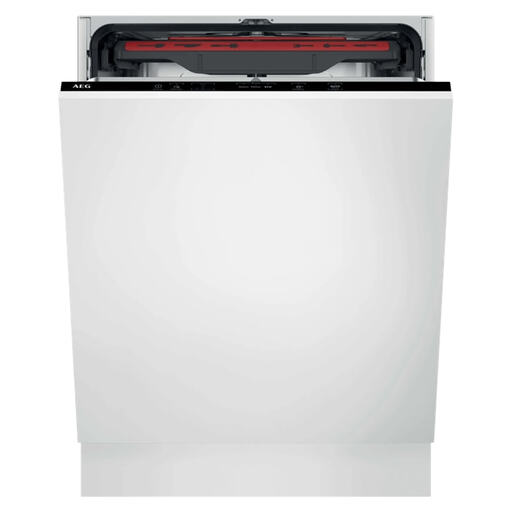 Image unavailable
AEG FSB34707Z, 60 cm fully integrated dishwasher, 14 place settings
Worth considering if 14 place settings suit your usual loads and your kitchen can accommodate a 60 cm fully integrated appliance. The model name indicates a C energy rating. To compare its energy consumption, check the kWh/100 cycles and water consumption per cycle for the reference programme.
View on Joybuy
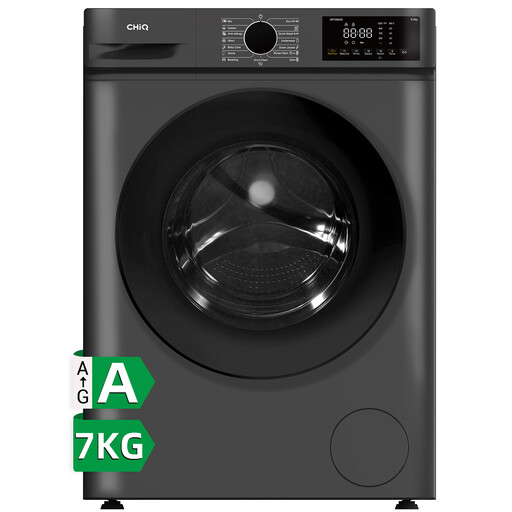 Image unavailable
CHiQ JW75883G, 7 kg front-loading washing machine, 1,200 rpm
Its 7 kg capacity should be considered in relation to your usual loads. The model name indicates an A energy rating and a spin speed of 1,200 rpm. Compare the kWh/100 cycles and water consumption per cycle for the reference programme before deciding whether to replace your appliance.
View on Joybuy
Frequently asked questions
How can I compare two fridges beyond their energy ratings?
Compare their kWh/year figures, making sure they have similar fridge and freezer capacities and functions. The European Commission says that the energy label for refrigeration appliances also shows their capacities and noise levels. A lower energy consumption figure achieved with much less storage space may not meet the same needs.
What should I look for on a washing machine or dishwasher energy label?
Look at the kWh/100 cycles, water consumption per cycle, capacity and noise level, as well as the duration of the reference programme. ADEME and the European Commission present these figures as a basis for comparison. Using other programmes and the number of cycles you run will affect your household’s energy consumption.
Does a hob carry an energy label like an oven?
No. The European Commission says that hobs aren’t required to carry an energy label. When deciding whether to replace a hob, consider its condition, how often you use it, and the specifications of the installation and cookware you’re considering instead.
Should you replace a large household appliance as soon as it breaks down?
No. First, consider whether a repair would meet your needs. In France, the Ministry of the Economy says that the repair bonus may cover certain out-of-warranty appliances repaired by a certified professional. Check whether your appliance and the repair are eligible before deciding.


