Start by working out how much fridge and freezer space you actually need, then compare the kWh/an figures for suitable appliances. The energy rating alone doesn’t tell you how much energy an appliance uses each year. A single-door fridge may be enough if you don’t need a freezer compartment in the same appliance; a fridge freezer combines both functions, while a separate freezer only makes sense if you’ll use the extra capacity, as it runs continuously too.
Who is this choice for?
Households keeping an eye on kWh
You’re replacing an appliance that runs continuously and want to compare its energy use without paying for unnecessary capacity or features. ADEME points out that a larger appliance and extra features can push up your energy bill.
Households that freeze food regularly
You store fresh and frozen food and want to know whether a fridge freezer’s compartment will be big enough, or whether a separate freezer would better suit your needs. Que Choisir Ensemble recommends choosing a fridge size to suit your household’s needs.
Kitchens with limited space
You need enough usable capacity while also checking the appliance’s dimensions and installation type. Installation requirements vary between models.
What to compare
ADEME points out that a fridge runs continuously and that its size can affect your household’s energy use. Compare models that offer the right amount of storage for your needs.
| Criteria |
What to check before buying |
Who prioritises it |
| Annual energy use |
Compare the kWh/an figures, energy ratings and capacities in litres of suitable models. |
If you want to use fewer kWh without losing the capacity you need, compare appliances that offer the same level of service; around 36% of consumers prioritise electricity costs. |
| Freezer capacity |
Check the freezer capacity in litres and, if you’re buying two appliances, add their kWh/an figures together. |
If you regularly store frozen food, check whether a fridge freezer’s compartment will be big enough or whether a separate appliance would be useful; around 29% of consumers prioritise freezer capacity. |
| Fresh-food capacity |
Compare the capacity reserved for the fridge and the total capacity listed for a fridge freezer. |
If your usual shopping needs enough room for fresh food, look for a suitable capacity without buying an oversized appliance; around 21% of consumers prioritise this need. |
| Installation |
Check the dimensions, installation type and noise emissions listed for the model. |
If your kitchen requires a specific location or installation type, check these details before choosing; around 14% of consumers prioritise installation requirements. |
Mistakes to avoid
-
Choosing based on the energy rating letter alone
The rating doesn’t replace the annual energy use in kWh or the capacity of each compartment. Models that store different amounts of food don’t offer the same level of service.
Compare the kWh/an figures and capacities in litres of models that suit your needs.
-
Adding a freezer without factoring in its energy use
A separate freezer gives you more capacity, but it also adds another appliance that runs continuously.
Compare the combined kWh/an figures for the fridge and freezer with those of suitable fridge freezers. Don’t assume one set-up is always more energy-efficient than another.
-
Confusing collection of your old appliance with full delivery and installation
In France, the “one-for-one” take-back scheme requires a retailer selling a new appliance to take back an equivalent used appliance free of charge. This doesn’t, in itself, include disconnecting or installing the appliance.
Before placing your order, ask how take-back works and check separately what each service on offer includes.
Brands to consider
Bosch
Bosch Électroménager France lists the KSN36VLDG as a freestanding fridge without a freezer compartment, with 402 l of fridge capacity and an energy use of 138 kWh/an.
- This model may suit households looking for plenty of space for fresh food.
- These specifications apply to the KSN36VLDG and don’t describe the entire Bosch range; its capacity may not suit every household.
Liebherr
Liebherr describes the FNe 5006 Pure NoFrost as an upright freezer with a capacity of 238 l.
- According to Liebherr, the NoFrost feature on this model saves you the hassle of defrosting.
- Check the freezer’s kWh/an figure and add it to the fridge’s figure when comparing a separate-appliance set-up.
Hisense
Hisense France lists the built-in RIB312F4AWE fridge freezer with a total capacity of 246 l, a width of 540 mm and an E rating.
- This model may be worth considering if a built-in fridge freezer suits your kitchen.
- Check each compartment’s capacity, the kWh/an figure and the housing dimensions; these specifications don’t apply to every Hisense fridge freezer.
Beko
Beko’s French freezer range includes No Frost models and models designed for use in unheated rooms.
- Beko says models with Freezer Guard can tolerate an ambient temperature of −15 °C.
- Check that your chosen model has this feature and read its installation requirements before placing it in a garage.
Whirlpool
Whirlpool’s French fridge freezer range includes freestanding and built-in models, with different cooling configurations.
- The choice of configurations makes it easier to compare models for different installation types.
- Features such as No Frost, an alarm or adjustable storage vary by model; the range alone doesn’t show that one model uses less energy than another.
Fridge freezers available
The models below are fridge freezers, so you can compare fresh and frozen food storage in a single appliance. They don’t include single-door fridges without a freezer compartment or separate freezers.
 No image available
AEG NSC6M18FES, built-in TwinTech No Frost fridge freezer, E rated
Combines fridge and freezer storage in a built-in appliance: the product details list 186 l for the fridge and 62 l for the freezer.
Listed annual energy use: 146 kWh/an. The sliding-hinge installation requires a compatible housing.
Joybuy
 No image available
Hisense RB3B250SAWC, built-in No Frost fridge freezer, C rated
Keep fresh and frozen food in a built-in appliance: the product details list 176 l of fridge capacity and 76 l of freezer capacity.
Listed annual energy use: 150 kWh/an. Check the appliance dimensions and the instructions for securing it inside the unit.
Joybuy
 No image available
Haier HTW5618ENMG, 3-door Total No Frost fridge freezer, E rated
Brings together fresh and frozen food storage in a freestanding appliance: the listed compartment capacities are 235 l and 125 l respectively.
Listed annual energy use: 271 kWh/an.
Joybuy
 No image available
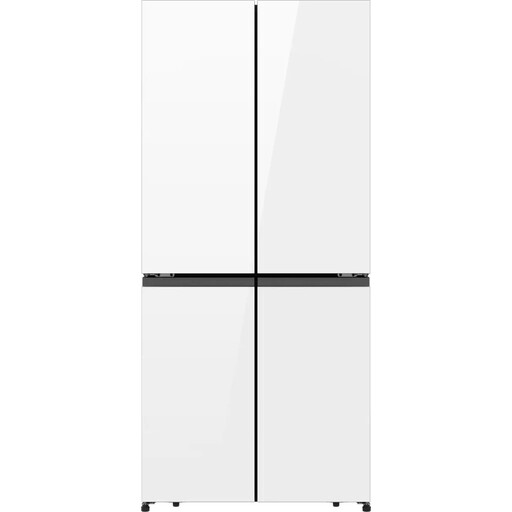
Hisense RQ5P470SETE, 4-door Total No Frost fridge freezer, E rated
Brings together fresh and frozen food storage in a freestanding appliance: the product details list 304 l of fridge capacity and a variable-temperature freezer zone.
Listed annual energy use: 293 kWh/an. Make sure you have enough space to open all four doors.
Joybuy
 No image available
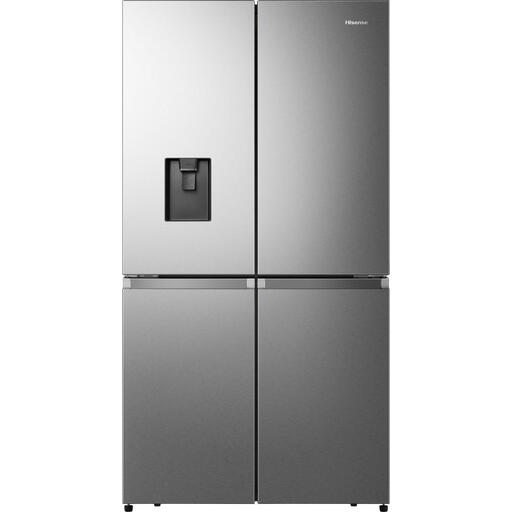
Hisense RQ758N4SWSE, Cross Door Total No Frost fridge freezer, E rated
Store fresh and frozen food in a freestanding appliance: the product details list 336 l for the fridge and 149 l for the freezer.
Listed annual energy use: 295 kWh/an.
Joybuy
Frequently asked questions
What should I compare on the energy label if two appliances have different ratings?
Compare the kWh/an figures and the capacities for fresh and frozen food: appliances with different storage capacities don’t offer the same level of service. The EU energy label also shows the A to G rating and noise emissions; its QR code links to detailed model information in EPREL.
Does the retailer have to take back my old fridge?
In France, as the DGCCRF points out, retailers selling a new appliance must take back an equivalent used appliance free of charge under the “one-for-one” scheme. Check the practical arrangements before delivery; disconnection and installation are separate services.
Am I covered by a legal guarantee if my new appliance doesn’t match its description?
Yes, if you’re buying as a private individual from a professional seller. The Ministry of the Economy explains that the legal guarantee of conformity is compulsory and covers cases such as a product not matching its description or labelling. You claim under it through the seller, and it is separate from any optional commercial warranty extension.


