What should you compare before replacing an appliance?
Start with how you’ll use the appliance and the capacity you need, then check energy use in the unit used for that type of appliance.
| Factor |
What to check |
What I need |
| Continuous cooling |
For a fridge, fridge freezer or freezer, compare kWh/year with the fridge and freezer capacities. Compare appliances with a similar function and capacity. According to ADEME, choosing a larger size or more features than you need can increase energy use. |
My appliance runs day and night: do I need the same capacity, a different size, or a separate freezer? |
| Washing up |
The European Commission says a dishwasher’s energy label shows energy use per 100 Eco programme cycles, water use per cycle, place setting capacity, Eco programme duration and noise level. The energy figure does not cover every programme. |
I run the dishwasher regularly: does its capacity suit the amount of washing-up I usually have, and does the Eco programme duration work for me? |
| Electric oven |
According to the European Commission, compare the capacity in litres and kWh per cycle using the same cooking mode, either conventional or fan-assisted. Don’t compare these figures directly with a fridge’s kWh/year. |
Do my dishes need the capacity of the oven I’m considering, and which cooking mode will I use? |
| Electric hob |
The European Commission states that hobs are not required to carry an energy label. Check the technology, cooking zone sizes and the manufacturer’s specifications. If you’re considering induction, make sure your pans are compatible. |
I’m replacing my hob: will my cookware work with the cooking zones I’m considering and suit the way I cook? |
Featured brands
There are no featured brands in this section.
Fridge freezers and dishwashers on Joybuy
These models are for food storage and washing up. To compare them, start with the usable capacity and check energy use across appliances designed for similar purposes.
 Image unavailable
AEG NSC6M18FES, 249 L integrated fridge freezer
This fridge freezer is worth considering if you’re looking for an integrated appliance and its capacity suits your storage needs. The product name lists a 249 L capacity, TwinTech No Frost and an E energy rating. Check the cabinet dimensions and the energy label for the exact model to compare its annual energy use.
View on Joybuy
 Image unavailable
Samsung RB33B612EBN, 344 L fridge freezer
This 344 L fridge freezer is best compared with appliances of a similar configuration and capacity, rather than with a small fridge. The product name lists an E energy rating. Check the available space and the energy label for the exact model before assessing its energy use.
View on Joybuy
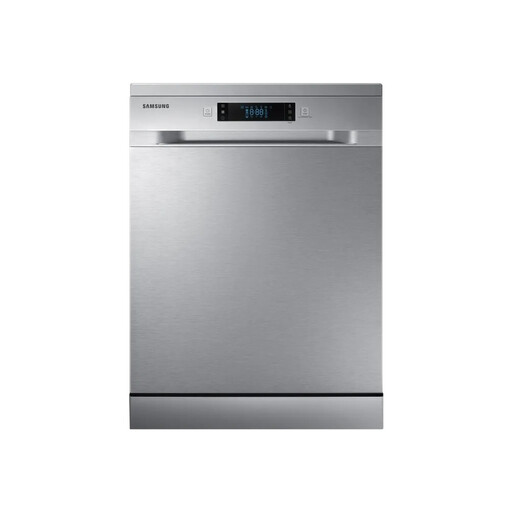 Image unavailable
Samsung DW60M6050FS, dishwasher with 14 place settings
Its capacity of 14 place settings is worth comparing with the amount of washing-up you usually have; the product name also lists 7 programmes. Before buying, confirm the installation type and check the energy label for the exact model to find out its energy use and Eco programme duration.
View on Joybuy
 Image unavailable
Candy CFQQ5T817EPS, 467 L four-door fridge freezer
This 467 L model makes sense if its capacity suits your storage needs and you have enough space in your kitchen. The product name lists Total No Frost and an E energy rating. Check the overall dimensions, required clearance and the energy label for the exact model to compare its annual energy use.
View on Joybuy
 Image unavailable
Sonlu CC-520WE, 444 L fridge freezer
Before choosing this 444 L fridge freezer, check that its capacity meets your actual food storage needs. The product name lists an E energy rating and a noise level of 40 dB. Also check the space available and the energy label for the exact model to compare its annual energy use.
View on Joybuy
Frequently asked questions
Can you directly compare a fridge’s kWh/year with a dishwasher’s kWh per 100 cycles?
No. These figures relate to different periods and types of use. The labels described by the European Commission show annual energy use for cooling appliances and energy use per 100 Eco programme cycles for dishwashers. Start by comparing appliances of the same type and similar capacity.
What should you look for on a fridge or freezer energy label?
Check the annual energy use in kWh alongside the storage capacity, energy rating and noise level. The European Commission says this information is provided for cooling appliances. When choosing a model, compare it with the storage capacity your household actually needs.
Does the energy use shown for a dishwasher apply to all its programmes?
No. According to the European Commission, the energy figure on the label is based on 100 Eco programme cycles. Also check water use per cycle, capacity, the programme duration and noise level to see whether the model suits the way you use it.
Do electric hobs have an energy label?
The European Commission says hobs are not required to carry an energy label. To choose one, check its technical specifications and cooking zone sizes. If you’re considering induction, make sure your cookware is compatible.
How can you compare the energy use of two electric ovens?
Compare their kWh per cycle using the same cooking mode, either conventional or fan-assisted, then check the usable capacity in litres. The European Commission provides these figures for each mode, so a figure for one mode shouldn’t be treated as a measure of another.


