What should you look at before replacing your appliance?
Larder fridge
Worth considering: if you store little frozen food and mainly need suitable fridge capacity.
Bear in mind: a small freezer compartment, if included, may not be suitable if you regularly buy frozen food.
Under-counter fridge
Worth considering: when space is limited and you don’t need to store much.
Bear in mind: the usable capacity and any freezer compartment may limit how much shopping you can store.
Fridge-freezer
Worth considering: if you need a separate freezer for your frozen food.
Bear in mind: a fridge-freezer that’s too large for your needs adds capacity without meeting a genuine storage need.
Multi-door fridge
Worth considering: if your household needs plenty of space and separate compartments, and your kitchen can accommodate the appliance.
Bear in mind: weigh its footprint and any water or ice dispensers against its stated energy use.
According to the European Commission, the energy label for the domestic fridges covered includes the A to G energy efficiency class, kWh/year, capacity and noise level. Compare these details once you’ve settled on a format that suits your needs.
| Consideration | What to check | What matters to shoppers |
|---|
| Stated energy use |
Compare the kWh/year and A to G energy efficiency class of appliances with similar formats and capacities. |
If I’m replacing my appliance to keep electricity use in check, I want to compare its energy use without overlooking the space I need. Around 36% of consumers would prioritise this comparison. |
| Capacity and freezing |
Check the usable capacity in litres of the fridge and freezer separately, based on your shopping habits and frozen food. |
When I store frozen food and shop for several days at a time, I want enough space in each compartment without choosing an oversized appliance. Around 29% of consumers would prioritise getting the right capacity. |
| Space and noise |
Measure the space, access routes and door clearance; check the stated noise level. |
In a small or open-plan kitchen, I need to be able to fit the appliance and live with its noise every day. Around 14% of consumers would put these practical considerations first. |
| Useful features |
Look at the cooling system and whether the dispensers, alarms or other features on offer would be genuinely useful. |
If certain features suit my storage habits, I’d rather choose them deliberately than end up with extras I never use. Around 21% of consumers would make this a priority. |
Fridge-freezers and multi-door fridges available on Joybuy
These models give you a chance to explore two formats for households that need a separate freezer or plenty of space: the fridge-freezer and the multi-door fridge. Before replacing your appliance, check the exact model’s energy label for its kWh/year, the way capacity is divided and the space needed for installation.
 Image unavailable
Samsung RB33B612EBN, black 344 L fridge-freezer
Worth considering if you’d prefer a fridge-freezer to an appliance without a separate freezer.
Stated total capacity: 344 L; stated energy efficiency class: E. Check the capacity split and kWh/year on the exact model’s energy label, and make sure its dimensions suit your kitchen.
View on Joybuy
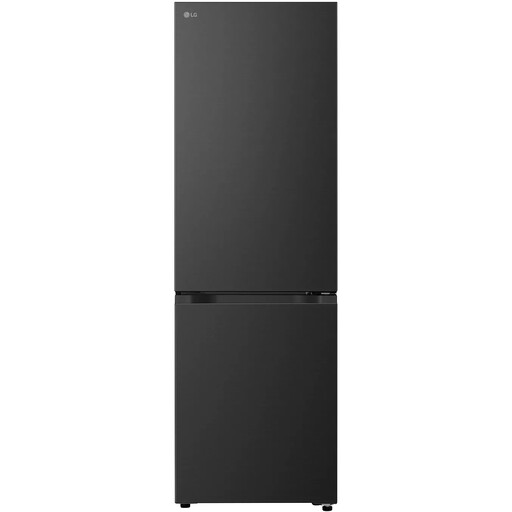 Image unavailable
LG GBBS312AEV, black 333 L No Frost fridge-freezer
Compare it with other fridge-freezers if you need a separate freezer and want to look at a No Frost model.
Stated total capacity: 333 L; stated energy efficiency class: A. Check the kWh/year and the capacity of each compartment on the exact model’s energy label, then measure the space available.
View on Joybuy
 Image unavailable
Candy CFQQ5T817EPS, silver 467 L multi-door fridge-freezer
Worth considering if your household needs plenty of space and you’re looking for a four-door appliance.
Stated total capacity: 467 L; stated energy efficiency class: E; Total No Frost. Check the kWh/year on the exact model’s energy label and measure access routes as well as door clearance.
View on Joybuy
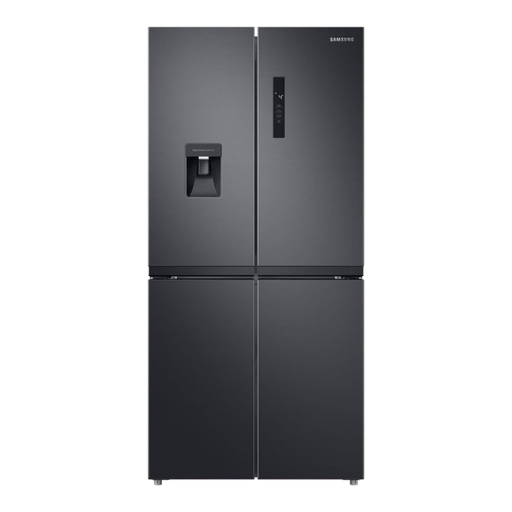 Image unavailable
Samsung RF48A401EB4, black 488 L large-capacity fridge
Worth considering if you’re looking for plenty of space, once you’ve confirmed it suits your storage habits.
Stated total capacity: 488 L; stated energy efficiency class: E. Check the exact model’s energy label for its kWh/year and make sure you have enough space before choosing this format.
View on Joybuy
 Image unavailable
Samsung RF50C530EB1, black 495 L multi-door fridge-freezer
Worth considering if your household regularly needs plenty of space split between fridge and freezer compartments.
Stated total capacity: 495 L; stated energy efficiency class: E. Compare the kWh/year and compartment capacities on the exact model’s energy label; also check its footprint and door clearance.
View on Joybuy
Frequently asked questions
What should I look for on a fridge energy label?
According to the European Commission, the European energy label for the domestic fridges covered shows the A to G energy efficiency class, annual energy use in kWh, capacity and noise level. This scale has applied since 1 March 2021. Scan the QR code to access information about the model in the EPREL database.
Does a better energy efficiency class guarantee lower energy use in my home?
No. The class alone can’t predict your household’s energy use. Compare the kWh/year of models with similar formats and capacities; ADEME points out that size and having more features than you need can affect energy use.
What capacity should I choose to avoid an oversized fridge?
Que Choisir gives an average guide of 100 to 150 L for one person, then an extra 50 L for each additional person. Use this as a starting point and adjust it to how often you shop. If you regularly store frozen food, check the freezer capacity separately.
How can I arrange for my old fridge to be taken away when I replace it?
In France, when you buy an equivalent new appliance, the retailer must offer a free take-back solution for the old one, according to ecosystem. Before placing your order, ask which arrangements apply to your purchase and delivery, including where and when the old appliance will be collected.


