What should you check before replacing an appliance?
Start with how often you use it and the capacity you need, then check the energy figure in the unit relevant to that type of appliance.
| Priority |
What to check |
Your needs |
| Electricity use |
Identify appliances that run continuously, as well as how often you actually wash and cook. Don’t add together kWh/year, kWh/100 cycles and kWh/cycle figures. |
I want to look at the things that affect my bills without losing capacity I need. According to the 2025 Energy-info Barometer by France’s national energy ombudsman, conducted in September 2025 among 2,000 households in mainland France, 85% of households surveyed felt that their energy bills took up a significant part of their budget. Among households that changed their habits to reduce energy use, 87% did so to lower their bills; these figures do not measure appliance-buying criteria. |
| Cold storage |
For a fridge, fridge-freezer or freezer, compare kWh/year, the usable compartment capacities and noise levels across appliances of a similar type and size. ADEME and the European Commission describe these indicators for domestic refrigeration. |
I need enough space for fresh or frozen food, without choosing extra capacity I won’t use. |
| Regular washing |
According to ADEME and the European Commission, a dishwasher’s energy label shows, among other things, the Eco programme’s kWh/100 cycles, litres per cycle, place settings and programme duration. Compare noise levels too if the appliance’s location makes this important. |
I’m looking for a capacity that suits the amount of washing-up we usually have, and a programme duration that fits around my routine. |
| Oven cooking |
The European Commission says an oven’s energy label shows kWh/cycle for conventional and fan-assisted cooking, as well as its capacity in litres. Compare ovens with a similar capacity and using the same cooking mode. |
My dishes need to fit in the oven, but a larger capacity is only useful if it suits the meals I make. |
| Choosing a hob |
The European Commission states that hobs are not required to carry an energy label. If you’re considering induction, check that your cookware and electrical installation are compatible. |
I want a hob that suits my saucepans, frying pans and cooking style, without assuming that one stated power rating tells me how much energy it uses. |
| Long-term use |
For relevant appliances, check the stated noise level. In France, a dishwasher’s repairability index gives it a score out of 10, according to the Ministry for the Ecological Transition; check the score for the model you’re considering. |
Noise matters to me in an open-plan kitchen. I also want to be able to assess how repairable a dishwasher is before choosing one. |
Kitchen appliances on Joybuy
This selection includes fridge-freezers for continuous food storage and a portable induction hob for cooking. Compare each appliance with others in its category, bearing in mind the capacity or cookware you need.
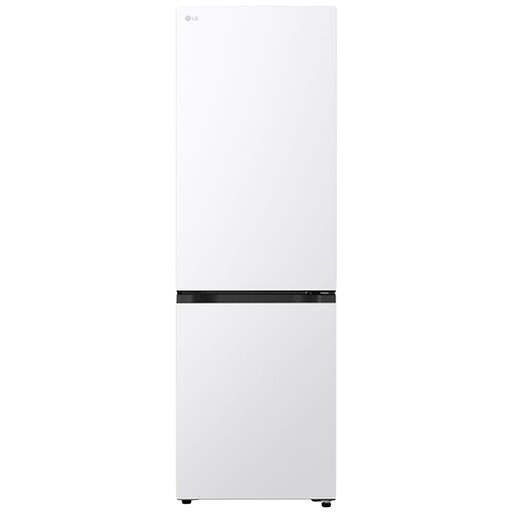 Image unavailable
LG GBBSJ1CCSW, 333 L fridge-freezer, class C
This fridge-freezer combines fresh and frozen food storage in an appliance that runs continuously. Compare its 333 L capacity and class C rating with the capacity and kWh/year figures of similar models. Also check how much room you’ll need to install it.
View on Joybuy
 Image unavailable
Samsung RB33B612EBN, 344 L fridge-freezer, class E
If you need fresh and frozen food storage, consider whether the total 344 L capacity gives you enough useful space in each compartment. The class E rating isn’t enough to estimate energy use: check the kWh/year on the label for the exact model and make sure you have enough space for it.
View on Joybuy
 Image unavailable
Candy CFQQ5T817EPS, 467 L four-door fridge-freezer, class E
This 467 L fridge-freezer is suited to households that need plenty of storage space. Before choosing its four-door design and class E rating, check how the capacity is divided between fresh and frozen food, the kWh/year figure and the space needed to open the doors.
View on Joybuy
 Image unavailable
Sonlu CC-520WE, 444 L fridge-freezer, class E
The total capacity of 444 L may suit households with substantial storage needs. To see if it’s right for you, check the separate fridge and freezer capacities, along with the external dimensions. Then compare the kWh/year figure with those of similar-sized appliances.
View on Joybuy
 Image unavailable
IAGREEA DF200-14V10, 2,000 W portable induction hob
This portable hob can provide extra cooking space if its size suits your needs. It’s stated to work with compatible cookware measuring 12 to 26 cm; check that your pans are suitable for induction too. Its 2,000 W power rating alone doesn’t tell you how much electricity it will use while cooking.
View on Joybuy
Frequently asked questions
Can you directly compare the kWh figures for a fridge, dishwasher and oven?
No. According to ADEME and the European Commission, refrigeration is labelled in kWh/year, dishwashers in kWh/100 cycles for the Eco programme, and ovens in kWh/cycle for each cooking mode. First compare appliances in the same category with a similar capacity, then consider how often you’ll use them.
Why look at capacity as well as the energy class?
Because capacity determines whether an appliance meets your needs: litres for refrigeration compartments, place settings for a dishwasher and oven cavity capacity. ADEME warns in particular that a larger or over-equipped refrigeration appliance can use more energy, so compare its class with its kWh/year figure and usable capacity.
Can you use the Eco programme to compare dishwashers?
Yes, for the figures on the label. ADEME and the European Commission state that energy use per 100 cycles, water per cycle and programme duration are based on the reference Eco programme. Check the duration if you regularly need a shorter cycle.
Does an electric hob have an energy label like an oven?
No. The European Commission states that hobs aren’t required to carry an energy label. If you’re considering induction, check that your cookware and electrical installation are compatible. The stated power rating alone doesn’t measure how much energy your cooking will use.
How can you take a dishwasher’s repairability into account?
In France, check the repairability index for the model you’re considering. According to the Ministry for the Ecological Transition, its score out of 10 indicates how easy or difficult the appliance is to repair. Use it alongside the energy label; it doesn’t measure electricity use.


