Start with the appliance you genuinely need to replace: for everyday food storage, washing-up, hob cooking or oven cooking. Then compare models with a suitable capacity, using the figures for their specific category: kWh/year for a fridge, kWh/100 eco cycles for a dishwasher and kWh/cycle for an oven, depending on the setting. These standardised figures alone aren’t enough to predict your household’s electricity use. The European Commission also states that energy labels are mandatory for ovens, but not hobs.
Who are these choices for?
Households replacing a fridge
You need enough storage space for your needs and want to compare the annual energy use of an appliance that runs all the time. ADEME highlights the electricity costs of household appliances, while the European Commission states that fridge labels show annual consumption in kWh.
Households that wash up frequently
You’re looking for a capacity that suits your usual loads and want to understand the eco programme figures without assuming they apply to every programme. The European Commission explains that dishwasher labels include information such as kWh per 100 eco cycles, water use per cycle, capacity and noise.
Households buying cooking appliances
You need to replace a hob or oven and want to compare useful features without confusing their different measurement bases. The European Commission distinguishes between ovens’ energy figures per cycle and the fact that hobs don’t have a mandatory energy label.
What should you compare?
When choosing between these four types of purchase in France, start with your main need: food storage, washing up, hob cooking or oven cooking. The consumers considered here are looking to buy or replace one of these appliances; each row relates to a single priority.
| What matters |
What to check before buying |
Who is most likely to prioritise it |
| Food storage and fridge size |
Compare kWh/year and compartment volumes across appliances suited to the same needs; check the overall dimensions too. Label information: European Commission. |
I want enough storage space for my food without choosing an appliance that takes up too much room. Consumers who prioritise food storage could account for around 33% of the purchasing priorities considered. |
| Dishwashing cycles and capacity |
Check kWh per 100 eco cycles, water use per eco cycle and the number of place settings. Also consider cycle duration, noise and installation. Label information: European Commission. |
If I run frequent cycles, I want a capacity that suits the amount of washing up I actually have and to compare the programme I use. Consumers who prioritise washing up could account for around 27% of the purchasing priorities considered. |
| Hob cooking and installation |
Check the type of hob, number of cooking zones, dimensions and the power stated by the manufacturer; don’t assign it an oven energy rating. |
If I’m replacing my hob, I first check the number of cooking zones and the space available for my pans and installation. Hob cooking could be the priority for around 20% of the consumers concerned. |
| Oven cooking and kWh per cycle |
Compare kWh/cycle for the same cooking setting, then check the usable capacity and built-in dimensions. Oven labels distinguish between settings; European Commission. |
When replacing an oven I use regularly, I want a suitable capacity and to compare energy use for the cooking setting I use. Consumers who prioritise an oven could account for around 20% of the purchasing priorities considered. |
Pitfalls to avoid
-
Comparing ratings or kWh figures from different categories as if they measured the same thing
The published figures use different measurement bases: fridges are measured in kWh/year, dishwashers in kWh per 100 eco cycles and ovens in kWh/cycle, depending on the setting. Hobs aren’t covered by the mandatory energy label for ovens.
Compare appliances in the same category and with a suitable capacity. To estimate your own usage, take account of how often you use the appliance and the programme or setting in question, without assuming this guarantees savings.
-
Choosing a built-in appliance based on its energy rating alone
An incompatible space, cabinet door or set of dimensions can make a model unsuitable, even if its rating catches your eye.
Measure the space and check it against the installation instructions for the exact model, including the cabinet door and required clearances.
-
Confusing collection of an old appliance with installation services
The DGCCRF describes ‘one-for-one’ take-back as the retailer collecting an equivalent used product free of charge when a new product is sold. Disconnection or installation may be subject to separate arrangements.
Before ordering, ask separately about the take-back arrangements and the terms for installation or disconnection services.
Brands to consider for these appliances
Bosch
The models documented here cover refrigeration and hob cooking.
- Bosch Home Appliances France lists a 195 l fridge compartment and a 94 l freezer compartment for the KGV33VLEAS, as well as three cooking zones for the PIJ631HB1E induction hob.
- These specifications describe the models mentioned; they don’t demonstrate that a particular household will save electricity.
Beko
The fully integrated BDIN38562P dishwasher is an example of a model to consider for your washing-up needs.
- Beko France lists an A rating, capacity for 15 place settings and a built-in height of 82 to 92 cm for this model.
- The rating alone can’t predict a household’s electricity use; the cabinet space and door panel must also be suitable.
Electrolux
The FR53G built-in oven lets you check the capacity and installation requirements of a specific model.
- Electrolux France lists a 68 l capacity, an A rating and built-in dimensions of 590 × 560 × 550 mm for the FR53G.
- The rating doesn’t replace checking the kWh per cycle for the cooking setting you’ll use.
Joybuy products for these needs
This selection includes dishwashers for regular use and a fridge freezer for your food storage needs.
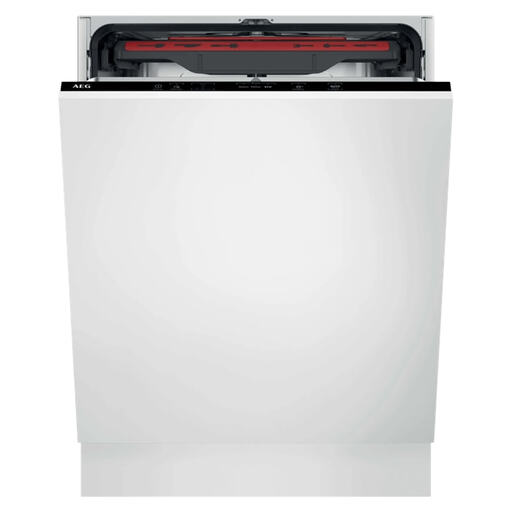 Image unavailable
AEG FSB34707Z, fully integrated dishwasher, 14 place settings
Worth considering if you run regular cycles and are looking for a stated capacity of 14 place settings.
- C energy rating.
- Stated energy use: 0.75 kWh per eco cycle.
- Stated water use: 10.5 l per eco cycle.
- Stated noise level: 44 dB.
- Fully integrated design: a compatible cabinet space and door panel are required.
View on Joybuy
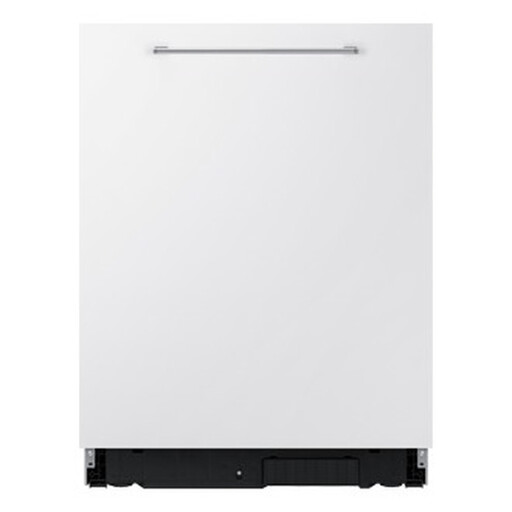 Image unavailable
Samsung DW70H72WCB0U1, 60 cm built-in dishwasher, 13 place settings
Worth considering if you’re looking for a 60 cm built-in model for regular loads.
- Stated capacity: 13 place settings.
- C energy rating.
- Eco, Express and Hygiene Care programmes listed.
- Middle rack adjustable to three levels and AutoRelease door opening listed.
- Wi-Fi connection listed; check that it suits your usage and software needs.
- Built-in design: a compatible cabinet space is required.
View on Joybuy
 Image unavailable
Samsung DW80H72YBB0U1, 60 cm built-in dishwasher, 13 place settings
Compare this model if you need a 60 cm built-in dishwasher with a stated capacity of 13 place settings.
- B energy rating.
- Eco and Express programmes listed.
- Adjustable middle rack and automatic door opening listed.
- Built-in design: a compatible cabinet space is required.
View on Joybuy
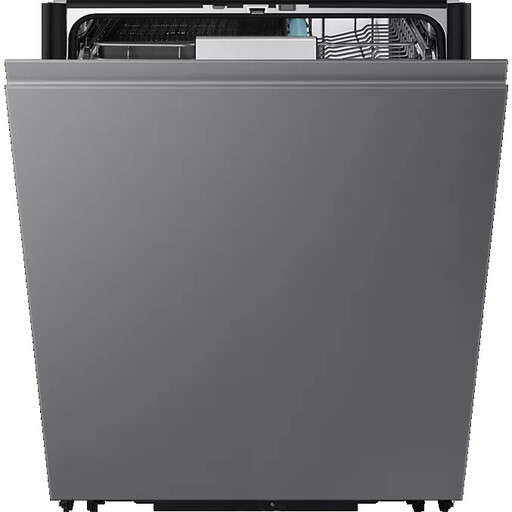 Image unavailable
Samsung DW90H79JAI0U1, fully integrated dishwasher, 14 place settings
Worth considering if you’re looking for a stated capacity of 14 place settings and want to compare the eco programme figures.
- A energy rating.
- Stated energy use: 54 kWh per 100 eco cycles.
- Stated water use: 9.4 l per eco cycle.
- Eight programmes listed.
- Fully integrated design: a compatible cabinet and installation are required.
View on Joybuy
 Image unavailable
Sonlu CC-520WE, 444 l side-by-side fridge freezer, E rating
Compare this model if you need a fridge with fridge and freezer compartments and a stated capacity of 444 l.
- Stated annual energy use: 289 kWh/year.
- E energy rating.
- Total No Frost technology listed.
- Stated noise level: 40 dB.
View on Joybuy
Frequently asked questions
Can you compare the kWh figures shown for these four appliances directly?
No, because the measurement bases vary by category. The European Commission gives figures for fridges in kWh/year, dishwashers in kWh per 100 eco cycles and ovens in kWh/cycle, depending on the cooking setting. The mandatory energy label for ovens doesn’t apply to hobs. Compare models suited to the same need, using figures based on the same type of use.
What should you check before installing a built-in appliance?
Check the cabinet space and the installation requirements for the exact model. Beko France lists a built-in height of 82 to 92 cm for the BDIN38562P dishwasher; Electrolux France lists built-in dimensions of 590 × 560 × 550 mm for the FR53G oven. These model-specific measurements aren’t interchangeable.
Does the statutory guarantee of conformity also apply to second-hand appliances?
Yes. In France, the Ministry of the Economy and Finance states that the statutory guarantee of conformity covers new, second-hand and refurbished goods sold by a trader to a consumer. The Ministry gives a period of two years in which to make a claim; any additional commercial guarantee is separate.
Can you be charged to have an equivalent old appliance taken away when replacing it?
The DGCCRF describes ‘one-for-one’ take-back as free of charge when a new product is sold, with the retailer taking back an equivalent used appliance. Check the practical arrangements for take-back separately from any installation or disconnection services.
Is the repairability index the same as the energy label?
No. The repairability index tells you how easy a product is to repair, while the energy label shows information including energy use under defined conditions. The Ministry of the Economy and Finance lists dishwashers among the products covered by the index; don’t automatically assume that this information applies to fridges, hobs and ovens.


