Anyone living in a studio flat
If there’s limited space beneath your worktop and you mainly buy small amounts of fresh food, consider an under-counter fridge. Also measure the available depth and allow enough room to open the door.


For a small kitchen, first choose a fridge that leaves enough room for the door to open and allows for the clearances required for installation. An under-counter fridge is best suited to spaces with limited height and little need for freezing. If several people share the appliance or you regularly buy frozen food, compare the separate capacities of fridge freezers instead, while also considering their height, noise level and energy consumption.
If there’s limited space beneath your worktop and you mainly buy small amounts of fresh food, consider an under-counter fridge. Also measure the available depth and allow enough room to open the door.
Sharing space for food, drinks and leftovers calls for usable capacity and areas that are easy to allocate. Defined zones and labelling food that isn’t for sharing can help keep things organised, as Flatzen suggests.
If you don’t shop often, check the freezer capacity rather than just the total capacity. UFC-Que Choisir recommends taking your frozen food consumption into account when choosing a format.
Measure the space and check how far the door can open before comparing usable capacities. Then work out how much room you need for fresh and frozen food, and compare suitable models by their energy label and noise level.
| Consideration | What to check | Who it matters to |
|---|---|---|
| Size and door clearance | Measure the height, width and depth, as well as the door’s opening arc. Follow the manual for clearance requirements and, where applicable, niche dimensions. | In a narrow kitchen, I need to open the door without blocking the way through. Around 31% of consumers say available space is their main consideration. |
| Capacity and sharing | Compare usable capacity and the layout of the shelves and drawers. UFC-Que Choisir suggests allowing 100 to 150 L for one person, then 50 L for each additional person, adjusting this to suit your shopping habits. | When several people store their food separately, I want everyone to have usable space. Around 31% of consumers put shared storage capacity first. |
| Freezer space | Check the freezer capacity separately from the fridge capacity, and find out what type of compartment it has. | If I regularly buy frozen food, a small freezer may not have enough room for my shopping. Around 19% of consumers prioritise freezer space. |
| Noise and energy consumption | For appliances of a similar type and capacity, compare the dB(A) and kWh/year figures, not just the energy rating. These details appear on the label described by the European Commission. | If I sleep near the kitchen, I pay attention to the stated noise level and annual energy consumption. Around 19% of consumers prioritise these practical considerations. |
Even a narrow appliance can stick out past the worktop, get in the way or leave too little room for the door to open.
Measure the space in all three dimensions and check the manual for clearance requirements. For a built-in model, also check the niche, door fixings and ventilation.
A model without a freezer won’t suit you if you regularly buy frozen food. A small freezer compartment may also be too limited for your needs.
Compare the separate freezer capacity and the type of compartment before settling on an under-counter model.
The rating alone won’t tell you how much food the appliance can hold, or what its annual energy consumption and noise levels are.
On the energy label, compare kWh/year, capacities and dB(A) figures across models of a similar type and capacity.
In a shared house, separately stored food can take up the same shelves, even if the total capacity seems suitable.
Agree on zones for each housemate and check that the model’s drawers and shelves will work for this arrangement. Label food that isn’t for sharing once the fridge is installed.
Beko’s range includes the freestanding TSE1504FN under-counter fridge, designed for compact spaces.
The range mentioned includes a compact under-counter model and a 55 cm-wide freestanding fridge freezer, for different storage needs.
Bosch offers both freestanding and built-in appliances. Its installation guidance shows what to check when fitting a model into a niche.
Whirlpool’s range includes the WHC18T132FR built-in fridge freezer, which is worth considering if you have a compatible kitchen niche.
These fridge freezers combine refrigeration and freezing in one appliance, making them a good option for households that want to store both fresh and frozen food. Whether one will fit in a small kitchen depends on its full dimensions, door clearance and the space required around the model.
 Image unavailable
Worth considering if you need separate spaces for fresh and frozen food in a narrow space.
The model name indicates 153 L of fridge capacity, 74 L of freezer capacity, a width of 54 cm, a reversible door and an E energy rating. Check the height and clearance requirements in the manual before choosing this appliance.
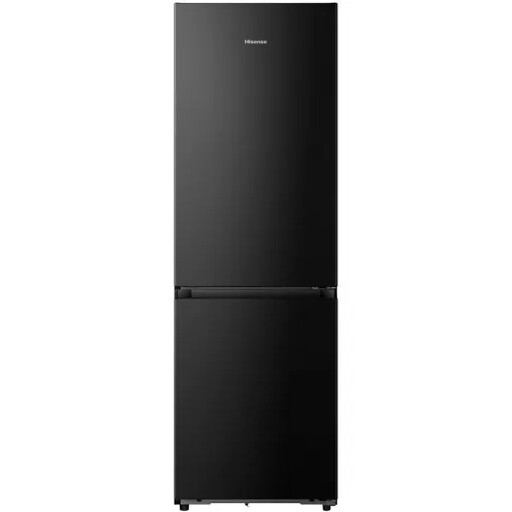 Image unavailable
This 330 L fridge freezer is worth considering if shared storage space is your priority and you have room for a suitably sized appliance.
Check the overall dimensions, door opening arc and capacity of each compartment to see whether it suits your kitchen and shopping habits.
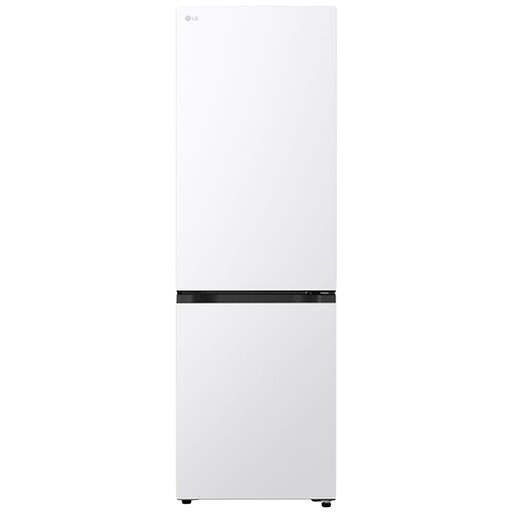 Image unavailable
Compare this model if you’re looking for a total capacity of 333 L, with space for fresh and frozen food in one appliance.
The model name indicates a C energy rating. Check the capacity of each compartment, the depth including the handle and the clearance required for its location.
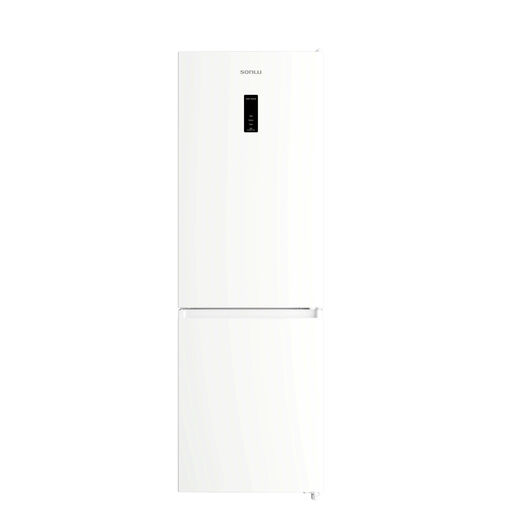 Image unavailable
Worth considering if your household wants separate storage for fresh and frozen food and has room for an appliance 60 cm wide.
The model name indicates 211 L of fridge capacity, 99 L of freezer capacity, a reversible door and an E energy rating. Check the height, depth and clearance requirements before deciding where to put it.
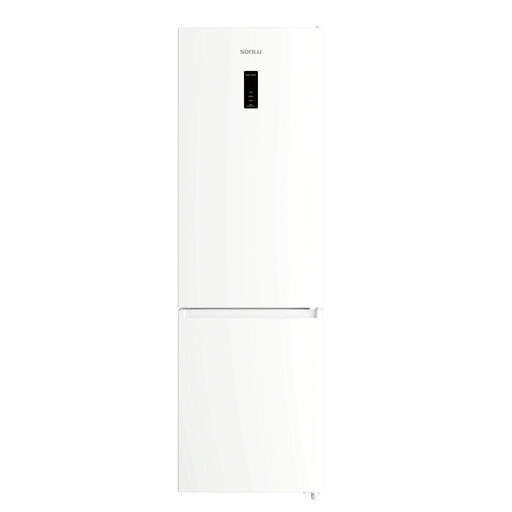 Image unavailable
Worth considering if you mainly need extra space for fresh food while still wanting a separate freezer compartment.
The model name indicates 252 L of fridge capacity, 103 L of freezer capacity, a width of 60 cm, a reversible door and an E energy rating. Compare its full dimensions with the space available.
As well as the energy rating, compare annual energy consumption in kWh, the capacity of each compartment and the stated noise level. The European Commission says the label includes this information. Where possible, compare appliances of a similar type and capacity.
No. The niche dimensions, ventilation and door fixing system must all match the instructions for the model you choose. Bosch’s installation guidance, including its ventilation recommendations, shouldn’t be applied as-is to every brand.
Not necessarily. Compare the freezer capacity with how much frozen food you buy and how often you shop. UFC-Que Choisir recommends basing your choice on these habits. A small freezer compartment may not be enough if frozen food makes up a large part of your shopping.
First, check that the niche, door fixings and ventilation are compatible with the instructions. If you need delivery, removal of your old appliance or installation, check the services available separately before placing your order.