Choose a capacity based on how much space you really need for fresh and frozen food. A fridge on its own suits households with little need for freezing, a fridge-freezer combines both compartments, while a dedicated freezer makes sense if you store a lot of frozen food. Before buying an appliance that will run continuously, compare the separate compartment capacities and stated annual energy consumption of models with a similar format and capacity. If your current appliance meets your needs and works properly, keeping it is also an option.
Who is this choice for?
Households matching capacity to their shopping habits
The number of people in your household, how often you shop and how much space fresh and frozen food takes up matter more than a large total capacity. UFC-Que Choisir recommends considering these needs when choosing an appliance format.
Households mindful of continuous energy use
Fridges and freezers stay switched on all the time. ADEME notes that their size and having more equipment than you need can affect energy use, so check the model’s kWh/year alongside its capacity.
Households that regularly store frozen food
If bulk buys or batch cooking take up a lot of space, compare freezer capacity and how easy it is to access the contents. If you’re putting a freezer in an unheated room, also check the ambient temperature range allowed for that model.
What should you compare?
Fridge only
Choose this if: you mainly store fresh food and have little need for freezer space.
Bear in mind: if you buy frozen food, check the actual capacity of any freezer compartment.
Fridge-freezer
Choose this if: you use both fresh and frozen food but don’t need a second appliance.
Bear in mind: the total capacity may hide a split between compartments that doesn’t suit your shopping habits.
Chest or upright freezer
Choose this if: storing frozen food is a major need, either as your main or an additional appliance.
Bear in mind: it takes up space of its own and uses electricity continuously; compare how easy it is to access the contents of a chest and an upright freezer.
Keep your current appliance
Consider this if: its capacity meets your needs and there’s no fault or usability issue prompting you to replace it.
Check: its condition, seals, noise and energy consumption before you decide.
| Criteria |
What to check |
Relevant to |
| Capacity and format |
Compare fridge and freezer capacities separately; measure the space available and how far the doors open. |
If my shopping needs vary with the size of my household, I want enough room without taking up unnecessary space in the kitchen. Around 33% of consumers prioritise a suitable capacity and format. |
| Annual energy consumption |
Check the kWh/year on the energy label and compare appliances of the same type and similar capacity. |
For an appliance that runs all the time, I want to be able to assess its stated energy consumption before choosing; this is the main concern for around 27% of consumers. |
| Frozen food storage |
Check the freezer capacity and how easy it is to access food in a fridge-freezer, chest freezer or upright freezer. |
When I batch-cook or buy frozen food in bulk, storage takes priority over other criteria. This need for freezer space comes first for around 20% of consumers. |
| Food storage and maintenance |
Check the compartments and features of the specific model, including how it handles ice build-up if that matters to you. |
I prioritise how fresh food is organised or want to keep maintenance to a minimum. Around 20% of consumers put these needs first. |
Mistakes to avoid
-
Looking at the energy rating alone
The rating alone doesn’t tell you whether two appliances offer the same capacity. The European Commission says the label for fridges and freezers also gives information about energy consumption, capacity and noise.
Compare the kWh/year and separate compartment capacities of similar formats. Check the model’s entry in EPREL if the QR code on the label takes you there.
-
Choosing capacity or features without a clear need
ADEME points out that a larger size and more features than you need can increase the energy use of an appliance that runs continuously.
First work out how much space you really need for fresh and frozen food, then consider extra features based on how often you’ll use them.
-
Installing a chest freezer without checking the room
A chest freezer needs floor space and enough room to access it from above. The room temperature must also be compatible with the model’s climate class.
Measure the available space and check the manufacturer’s permitted ambient temperature range, particularly if you’re placing it in a cellar, utility room or garage.
-
Leaving arrangements for your old appliance until delivery
Old fridges and freezers need to be collected appropriately. If you haven’t arranged this in advance, removal can complicate the delivery of your new appliance.
Before placing your order, confirm the take-back options available, the collection location and when the old appliance will be removed.
Brands to consider, depending on the model
Bosch
Some Bosch fridges and fridge-freezers feature a VitaFresh compartment; features vary by model.
- Bosch presents VitaFresh as a way to adjust the temperature and humidity for certain fresh foods.
- Check the selected model for its capacities, kWh/year, noise level and whether it includes the features you’re looking for.
Liebherr
Some Liebherr fridges and fridge-freezers have BioFresh compartments designed to keep fresh foods separate.
- Liebherr describes compartments kept close to 0 °C, with humidity levels suited to different foods; claims about keeping food fresh are made by the manufacturer.
- Also compare the specific model’s dimensions, capacities, noise level and energy consumption.
Beko
NeoFrost Dual Cooling technology is available in some Beko fridge-freezers.
- Beko says this technology keeps the airflow in the fridge and freezer compartments separate.
- Check that the model you’re considering includes this feature, as well as its capacities, kWh/year and noise level.
Fridge-freezers available on Joybuy
These models combine fridge and freezer compartments in one appliance. Compare their stated capacity with the space you have available and the amount of room you need for fresh and frozen food.
 Image unavailable
Haier HTW5618ENMG, 3-door fridge-freezer, 360 L
Worth considering if you want to keep fresh and frozen food in one 360 L appliance. The model name indicates an E rating, Total No Frost, Wi-Fi connectivity and My Zone; check the manual to see how much space you’ll need for installation.
View on Joybuy
 Image unavailable
Candy CFQQ5T817EPS, 4-door fridge-freezer, 467 L
Consider this if you’re looking for a large combined capacity and four-door access. The model is listed as E-rated and features Total No Frost; measure the space and clearance carefully before buying.
View on Joybuy
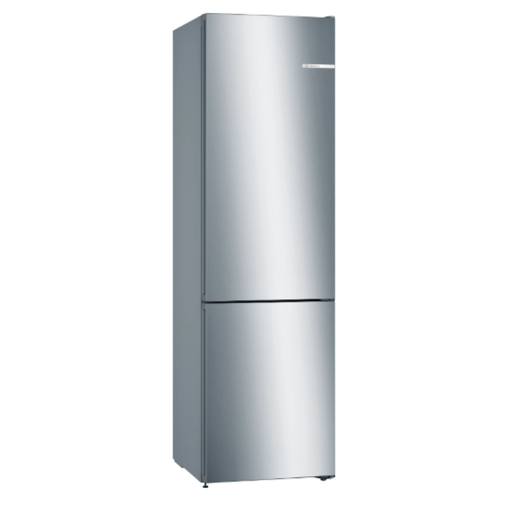 Image unavailable
Bosch KGN39VLEB, 368 L fridge-freezer, E-rated
An option to consider if you want to keep fresh and frozen food in one 368 L appliance. Check the dimensions and handling requirements; the product information lists flammable refrigerant R600a, so follow the manual when transporting and disposing of the appliance.
View on Joybuy
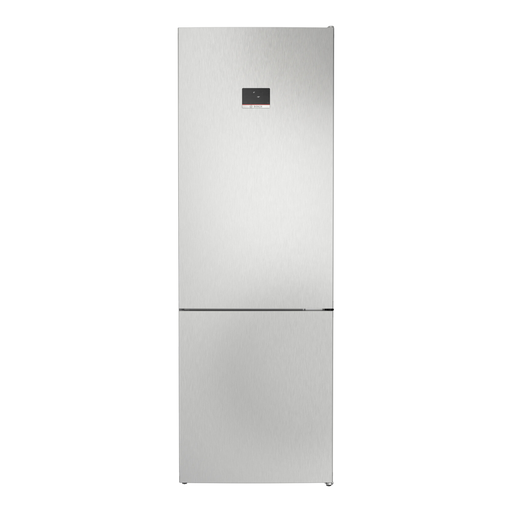 Image unavailable
Bosch KGN497LDF, 440 L fridge-freezer, D-rated
Compare this model if you need a 440 L fridge-freezer and have enough space for it. If avoiding manual defrosting is important to you, check the product information to see which feature is provided for the freezer compartment.
View on Joybuy
 Image unavailable
Samsung RF50C530EB1, 495 L fridge-freezer, E-rated
Worth considering if you need plenty of space for fresh and frozen food, provided you have enough room for the appliance. Check the door configuration in the product information. If a water dispenser is important to you, also check whether it needs to be connected to the water supply and whether the climate class is suitable for the room.
View on Joybuy
Frequently asked questions
How do you compare the energy use of two refrigeration appliances?
Compare their kWh/year figures when they’re the same type and have a similar capacity. According to ADEME and the European Commission, the energy label provides this figure and the usable capacities; actual energy use also depends on installation and how the appliance is used. The QR code on the label may link to the model’s entry in EPREL.
What should you look for on a fridge or freezer energy label?
The European Commission says the label includes the energy efficiency class from A to G, annual energy consumption, compartment capacities and noise emissions. Consider this information together: the rating alone won’t tell you whether the capacity meets your needs.
Should you choose a chest freezer to store a lot of frozen food?
A chest freezer can suit larger quantities, but make sure you have enough floor space and can easily reach the food inside. UFC-Que Choisir distinguishes this format from an upright freezer, whose drawers make it easier to organise food. Also check the climate class if the appliance will be installed in an unheated room.


