Who is this choice for?

Households replacing an energy-hungry appliance

If you want to reduce the energy use of an appliance that runs day and night, start by checking how much capacity you really need. ADEME points out that fridges and freezers run continuously, and that choosing an appliance that is too large or over-equipped can push up your electricity bill.

Households that store fresh and frozen food every week

A fridge-freezer combines both uses in one appliance. Check the capacity in litres allocated to the fridge and freezer separately: a suitable total capacity can still have a split that doesn’t suit your shopping habits.

Households that freeze food in bulk

If you prepare portions in advance or regularly stock up, work out how much freezer capacity you need before adding a separate appliance. As ADEME points out, it will also run continuously.

What should you compare?

Fridge only

Consider this: if you mainly store fresh food and don’t regularly stock up on frozen food.

Bear in mind: this option doesn’t provide a dedicated freezer compartment for bulk shopping.

Fridge-freezer

Consider this: if your weekly shop includes both fresh and frozen food that you want to store in one appliance.

Bear in mind: the freezer compartment may not be large enough if you often prepare or buy food in bulk.

Separate freezer

Consider this: if freezing food in bulk is your priority and you already have fresh-food storage covered.

Bear in mind: this appliance takes up extra space and uses electricity continuously.

CriterionWhat to checkWho is it for?
Usable capacity Compare the fridge and freezer capacities in litres separately. For the fridge compartment, UFC-Que Choisir suggests allowing 100 to 150 L for one person, then 50 L for each additional person, adjusting this to suit your household’s habits. When I need my shopping to fit without leaving a large part of the appliance unused, how the space is split between fresh and frozen food matters more than the total capacity. Around 36% of consumers rank getting the capacity right as their top need.
Annual energy consumption Check the kWh/year figure alongside the energy class. Compare appliances of the same type and similar capacity, as the European energy label allows you to do. If I’m replacing an appliance that runs day and night, I want to compare its stated energy consumption rather than relying on the energy class letter alone. This is a priority for around 36% of consumers.
Freezing and everyday use Check the freezer capacity in litres and the noise level. If defrosting is a concern, check the feature listed for the exact model, but don’t let it take the place of the other criteria. If I prepare portions or buy in bulk, I mainly need a freezer compartment that suits the quantity I store and the way I organise things. Around 28% of consumers make this a priority.

Mistakes to avoid

  • Choosing based on the energy class alone

    The A to G rating is a helpful first filter, but it doesn’t tell you everything about an appliance’s capacity or annual energy consumption. The European Commission says that the label for fridges and freezers also shows kWh/year, capacity and noise levels.

    Compare labels for models of the same type and similar capacity, looking at the energy class, kWh/year and the capacity of each compartment together.

  • Buying capacity you’re unlikely to use

    A large capacity can be useful if you shop less often, but ADEME points out that choosing an appliance that is too large or over-equipped can increase the energy use of appliances that run continuously.

    Start with how often you shop and how much you actually freeze, then check how the capacity is split rather than focusing on the total alone.

  • Assuming No Frost ticks every box

    Bosch and Whirlpool describe this feature as a way to limit frost build-up on certain models. On its own, it doesn’t tell you the appliance’s kWh/year, noise level or installation space requirements.

    If defrosting matters to you, check which compartments the feature applies to, then look separately at the label and dimensions of the exact model.

  • Forgetting what will happen to your old appliance

    In France, the rules published on Légifrance provide for used electrical and electronic equipment to be collected separately. Having your old appliance taken away at delivery also takes some practical planning.

    Before placing your order, ask the seller where and when your old appliance can be collected, and how it needs to be prepared and handled.

Brands to consider by model

Bosch

Bosch offers freestanding fridge-freezers in a range of sizes, with features that vary by model.

  • For the KGN36VLED, Bosch lists 237 L of fridge capacity, 89 L of freezer capacity and 39 dB(A). Compare these figures with your storage needs and where you plan to put the appliance.
  • The size and features of the KGN36VLED aren’t representative of every Bosch fridge-freezer. Check the product details and energy label for the model you’re considering.

Liebherr

The range includes built-in fridge-freezers, whose dimensions and installation requirements need to suit your planned kitchen layout.

  • For the ECBNe 7871, Liebherr specifies a niche size of 203,2 to 207,2 × 76,2 × 63,5 cm, which is useful when checking whether it will fit your built-in space.
  • Liebherr lists BioFresh and DuoCooling features for certain models. Their stated benefits don’t replace the need to check the dimensions, door fitting and energy label of the model you choose.

Whirlpool

Whirlpool offers both freestanding and built-in fridge-freezers, with defrosting configurations that vary by model.

  • For the WFNF82EOXFR, Whirlpool lists 223 L of fridge capacity, 97 L of freezer capacity and a width of 59,5 cm.
  • Whirlpool describes Total No Frost on this model as limiting frost build-up. This feature doesn’t tell you its annual energy consumption or whether it will fit your space.

Fridge-freezers to explore on Joybuy

These appliances combine fridge and freezer compartments for households that use both. Before choosing between them, compare the capacity you actually need with the energy label and the installation dimensions of the exact model.
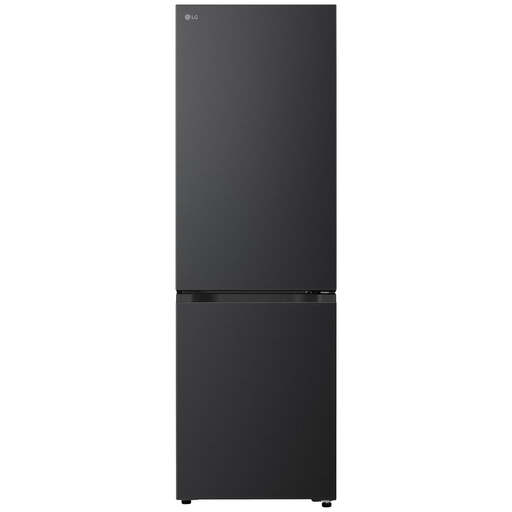
Black LG GBBS312CEV fridge-freezer

LG GBBS312CEV, 333 L black fridge-freezer

Worth considering if you want to store fresh and frozen food in one fridge-freezer. Compare the space allocated to each compartment with your shopping routine.

Listed as energy class C. Check the kWh/year figure on the energy label for the exact model and allow for the required clearance before installation.

View on Joybuy

Black Samsung RF50C530EB1 multi-door fridge-freezer

Samsung RF50C530EB1, 495 L black multi-door fridge-freezer

Consider this if your fresh and frozen food storage needs justify this capacity. Check the capacity of each compartment rather than focusing on the total.

Listed as energy class E. Check the kWh/year figure, dimensions and route planned for delivery.

View on Joybuy

Bosch KGN33NLEB fridge-freezer with bottom freezer

Bosch KGN33NLEB, 282 L stainless steel fridge-freezer

Worth considering if you want a fridge-freezer with a bottom freezer. Compare the fridge and freezer capacities separately with your habits.

Listed as energy class E. Check the annual energy consumption and the clearance required for installation of the exact model.

View on Joybuy

Silver CHiQ JR227LSE fridge-freezer

CHiQ JR227LSE, 227 L silver fridge-freezer

Worth considering if you have limited width, provided the split between fridge and freezer capacity suits your shopping habits.

The product description lists 153 L for the fridge, 74 L for the freezer, a width of 54 cm, Low Frost and energy class E. Also check the kWh/year figure, height and depth before ordering; Low Frost doesn’t mean frost-free.

View on Joybuy
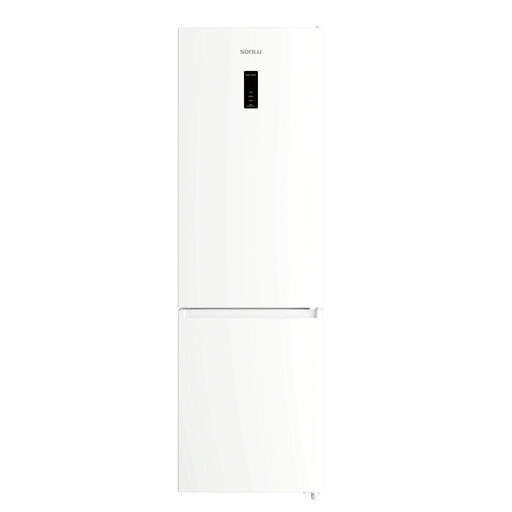
Sonlu CD‑400RW fridge-freezer

Sonlu CD‑400RW, 355 L fridge-freezer

Worth considering if you need plenty of space for frozen food while keeping a separate fridge compartment.

The product description lists 252 L for the fridge, 103 L for the freezer, a width of 60 cm and energy class E. Check the kWh/year figure, noise level, and the height and depth of the exact model.

View on Joybuy

Frequently asked questions

What should I look for on a fridge or freezer energy label?

According to the European Commission, the European energy label shows the A to G class, annual energy consumption in kWh, storage capacity and noise emissions. To compare appliances, look at these figures for models of the same type and similar capacity. You can scan the QR code to view additional information about the model in EPREL.

What temperature should I set my fridge to?

Anses recommends setting your fridge below 4 °C and says food should be kept between 0 and +4 °C. You can check the actual temperature with a thermometer, especially in an older appliance. This setting doesn’t tell you about energy consumption or the quality of a brand.

What should I do with my old fridge when replacing it?

Don’t put it in with unsorted household waste: the French rules published on Légifrance provide for used electrical and electronic equipment to be collected separately. Before delivery, ask the retailer how they handle take-back and how the appliance needs to be prepared.

What should I measure before buying a built-in or large fridge-freezer?

For a built-in model, check the niche and door fitting, then measure the appliance’s external dimensions and the route through any doors, stairways or lifts. These measurements vary by model. For example, Liebherr specifies a niche size of 203,2 to 207,2 × 76,2 × 63,5 cm for the ECBNe 7871.