A fridge-freezer is a good choice if you shop regularly and keep frozen food; a table-top or single-door model suits more modest needs, while a multi-door appliance needs more space. Compare the fridge and freezer capacities separately, then check the dimensions, noise level and annual energy consumption of appliances of a similar size.
Who are these formats for?
Households that do a weekly shop
If you fill your fridge in one go, consider the space for fresh food and the freezer capacity separately. UFC-Que Choisir includes a full weekly shop in its test protocol to assess how quickly the temperature recovers after food is added.
Small households and compact kitchens
A table-top or single-door model may suit you if you mainly need space for fresh food. Check the usable capacity and whether it has a freezer compartment, rather than choosing based on the exterior size alone.
Families stocking up
A spacious fridge-freezer or multi-door appliance can make it easier to separate fresh shopping from frozen food. Extra capacity is only useful if each compartment suits what you store and the appliance fits into your home and opens properly in your kitchen.
What should you compare before choosing?
Start with how much space you need for fresh and frozen food. Then choose a format to suit the space available and how you use it every day.
Table-top
Consider it: for a very compact kitchen and a shop made up mainly of fresh food.
Keep in mind: check whether the model has a freezer compartment and how much usable space it actually offers.
Single-door
Consider it: if you prioritise fridge space and buy little frozen food, or have a separate freezer.
Keep in mind: depending on the model, the freezer compartment may be small or absent.
Fridge-freezer
Consider it: if your regular shop includes both fresh and frozen food.
Keep in mind: a large overall capacity doesn’t guarantee a freezer that’s right for your needs.
Multi-door
Consider it: if you stock up on food and your kitchen has room for the appliance and its doors to open.
Keep in mind: measure the delivery route too, and compare energy consumption with appliances of a similar capacity.
| Criteria |
What to check |
Your needs |
| Capacity and storage |
Compare the usable capacity in litres of the fridge and freezer separately. Check that the shelves and drawers can accommodate the containers you usually use. |
I do a full shop in one go, so I need room for fresh food without compromising on space for my frozen-food supplies. |
| Cooling and maintenance |
Check the model’s cooling technology and defrosting instructions. Gifam describes No Frost as fan-assisted cooling that limits frost build-up. |
After shopping, I want to be able to put my food away and know what maintenance the model requires. |
| Energy |
Since March 2021, the EU energy label for fridges has used a scale from A to G, according to the European Commission. Also compare kWh/year between appliances of a similar size and capacity. |
I want to take energy consumption into account without comparing appliances with very different capacities. According to the 2024 Eurobarometer cited by the European Commission, 75% of EU consumers said the energy label had influenced their choice when buying an appliance in the previous five years; this figure does not relate to fridges alone. |
| Noise |
Check the noise emissions listed for each model. UFC-Que Choisir gives a stated noise level below 40 dBA as a guide to the quietest fridges. |
If my kitchen is open-plan or near a bedroom, operating noise matters when I’m choosing a fridge. |
| Installation |
Measure the width, depth and height, door clearance and delivery route. Check the dimensions of the specific model, especially for a multi-door appliance. |
My fridge needs to fit into my home and be easy to open once it’s installed. |
What mistakes should you avoid?
-
Looking only at the total capacity
Two appliances with a similar total capacity may divide the space differently between fresh and frozen food. The biggest figure won’t necessarily suit the way you store food.
Work out how much space you need in each section, then compare the stated capacity in litres for both compartments.
-
Choosing a multi-door appliance without checking access
An appliance may fit in the space you have in mind but still be too large to get through a doorway, or lack enough clearance for its doors to open.
Measure the space, the delivery route and the door clearance before choosing a model.
-
Comparing energy ratings alone
The rating doesn’t tell you the annual energy consumption or the capacity on its own. According to the European Commission, these are among the details to check on the EU energy label.
Compare the rating, kWh/year and capacities of appliances with a similar format and capacity.
-
Assuming every model from a brand has the same features
Dedicated drawers, settings and cooling technologies vary from one model to another. A feature advertised for one model won’t necessarily be available across the whole range.
Check the product page and manual for the exact model, and distinguish its features from the manufacturer’s claims about food preservation.
Which brands and ranges should you consider?
These examples highlight features to compare on specific models. Don’t assume they’re available across every range.
Bosch
Bosch freestanding fridge-freezers let you compare the balance between fridge and freezer space on a specific model.
- Bosch Electroménager France lists 237 l of fridge capacity, 89 l of freezer capacity, a noise level of 39 dB and No Frost for the KGN36VLED.
- Check the capacity, dimensions and energy rating of the model you’re considering; these figures don’t apply to every Bosch appliance.
Liebherr
The RBbsb 525i Prime BioFresh is a single-door model to consider if fridge space matters more to you than storing large amounts of frozen food.
- Liebherr lists a total capacity of 386 l, a noise level of 34 dB and BioFresh compartments for this model.
- This single-door model won’t, on its own, meet the need for a large freezer compartment.
Haier
The HFR7819ENGC is an example of a multi-door format for households looking to organise food across several storage zones.
- Haier France describes this model as a four-door appliance, 83 cm wide and featuring No Frost.
- Before choosing this model, check its depth and height, the door clearance and whether it can be brought into your home.
Beko
Some Beko fridge-freezers feature air circulation systems or dedicated compartments for fresh food.
- Beko France features AeroFlow and EverFresh+ on selected models.
- Check whether these features are available, and review the brand’s food-preservation claims, for the exact model you’re considering.
Fridges to compare on Joybuy
These models include fridge-freezers, a multi-door appliance and a side-by-side model for households that store both fresh and frozen food. Compare the space in each compartment with the room you have at home.
 Image unavailable
Candy CFQQ5T817EPS, 467 L four-door fridge-freezer
Worth considering if you want to organise your shopping across several doors while still having space for frozen food. The product details list a total capacity of 467 L, Total No Frost and an E energy rating. Measure the space, door clearance and delivery route.
View on Joybuy
 Image unavailable
Haier HTW5618ENMG, 360 L three-door fridge-freezer
An option for keeping fresh and frozen food in one three-door appliance. The product details list a capacity of 360 L, Total No Frost, an E energy rating, Wi-Fi and My Zone. Check the dimensions and the clearance needed to open the doors in your kitchen.
View on Joybuy
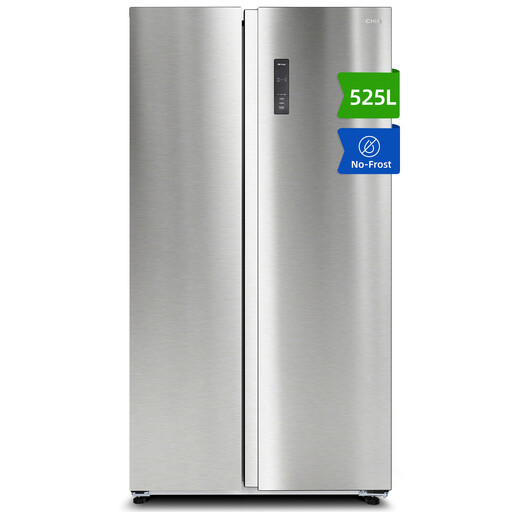 Image unavailable
CHiQ JR525WSE, 525 L side-by-side fridge-freezer
A side-by-side format may suit you if you need plenty of storage space and have room in your kitchen. The product name lists 333 L for the fridge, 192 L for the freezer, No Frost, 37 dB and an E energy rating. Check its full dimensions and kWh/year before comparing it with another large appliance.
View on Joybuy
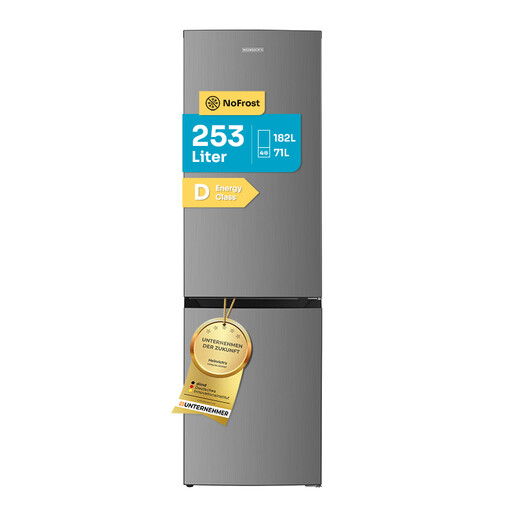 Image unavailable
Heinrich´s, 253 L fridge-freezer
Consider comparing this fridge-freezer if its 71 L freezer compartment is big enough for what you store. The product title lists 182 L of fridge capacity, 71 L of freezer capacity, 39 dB and No Frost. Check the width, depth and kWh/year before making your choice.
View on Joybuy
 Image unavailable
CHiQ JR263LGE, 262 L Low Frost fridge-freezer
Its stated width of 54 cm is worth considering for a narrow kitchen, but be sure to check the full installation space needed. The product title also lists a height of 176 cm and a capacity of 262 L. Low Frost isn’t the same as No Frost, so check the model’s defrosting instructions.
View on Joybuy
Frequently asked questions
What should you look for on a fridge energy label?
Compare the A to G rating, annual energy consumption, storage capacities and noise emissions. The European Commission says these details appear on the label for fridges and freezers; compare them across models of a similar size and capacity.
Is a large total capacity enough for storing frozen food?
No. The total capacity doesn’t tell you how much space is in the freezer. Check its capacity in litres separately from the fridge, especially if you regularly stock up on frozen food.
Does No Frost mean there’s no maintenance?
No. According to Gifam, No Frost fan-assisted cooling limits frost build-up and avoids the need for manual defrosting; it doesn’t replace cleaning the appliance. Check the model’s manual for maintenance instructions.


