What should you check before buying?
A fridge, a fridge-freezer and a separate freezer each meet different storage needs. The European Commission says that the label on refrigeration appliances includes information such as the energy rating, kWh/year and storage volumes. Consider all of these figures together.
Fridge
Consider it if: you mainly store fresh food and don’t need a large freezer.
Bear in mind: a small freezer compartment, if included, won’t replace a freezer for storing larger quantities.
Fridge-freezer
Consider it if: the separate capacities of the fridge and freezer compartments meet your usual needs.
Bear in mind: the total capacity can hide a freezer compartment that’s too small. Don’t assume it will save energy without comparing models suited to the same use.
Upright freezer
Consider it if: you need a separate freezer and prefer to access food in drawers.
Bear in mind: if you also have a fridge, this extra appliance will run constantly too.
Chest freezer
Consider it if: you need to store bulky items and have enough floor space to accommodate the appliance and open its lid.
Bear in mind: access and organisation are different from an upright freezer. If the room is cold, check the temperature range permitted for the model.
| What matters |
What to check |
Who it matters most to |
| Capacity to suit your needs |
Check fridge and freezer capacities separately, in litres, against the amount you usually store. |
If I want to avoid an appliance that’s too large without running out of room for fresh food or frozen supplies, I’ll prioritise the right usable capacity. Around 30% of consumers prioritise capacity. |
| Comparable energy consumption |
Compare the kWh/year figures for appliances that meet the same needs, and check their energy ratings too. |
If I’m comparing two formats, I want to compare their stated annual consumption without confusing it with my actual energy bill. Around 30% of consumers prioritise kWh/year. |
| Frozen supplies and access |
Check the freezer capacity and choose between drawers and an open chest, depending on what you need to store. |
When I keep food in reserve, I look for enough capacity and easy access to my food. This matters to around 20% of consumers. |
| Where you’ll install it |
Check the dimensions and clearance requirements, as well as the ambient temperatures permitted for that model. |
If the appliance needs to fit in a room with particular dimensions or temperatures, I’ll check that it’s suitable for the space. Around 20% of consumers put installation first. |
Joybuy products for these needs
This selection includes a fridge, fridge-freezers and an upright freezer, with capacities and energy figures shown where available for each product.
 No image available
Heinrich´s 161 l upright freezer, C rated
Worth considering if you want a separate appliance with drawers for storing frozen food.
Capacity: 161 l. Energy rating: C. The title lists three freezer drawers and No-Frost protection.
View on Joybuy
 No image available
Haier HTW5618ENMG, 360 l fridge-freezer
Worth considering if you want a single appliance for both fresh and frozen food.
Fridge capacity: 235 l; freezer capacity: 125 l. Energy rating E, 271 kWh/year and Total No Frost, according to the product information.
View on Joybuy
 No image available
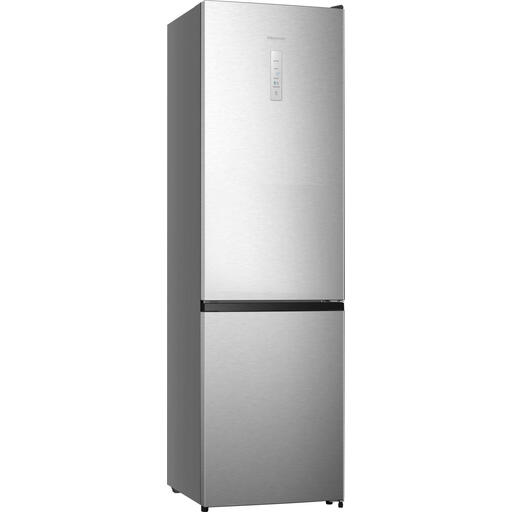
Hisense RB440N4CCB, 336 l fridge-freezer
Worth considering if you’re looking for a fridge-freezer with separate capacities listed for the fridge and freezer compartments.
Fridge capacity: 238 l; freezer capacity: 98 l. Energy rating B, 135 kWh/year and Total No Frost, according to the product information.
View on Joybuy
 No image available
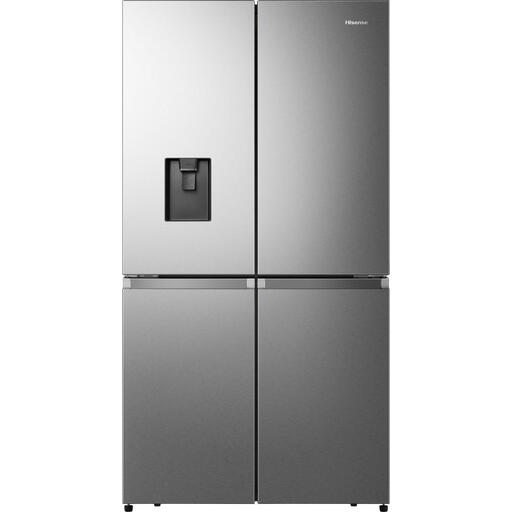
Hisense RQ758N4SWSE, 606 l fridge-freezer
Worth considering if you need a large total capacity and several storage zones.
Total capacity: 606 l, including 390 l of fridge capacity. Energy rating E and 320 kWh/year, according to the product information.
View on Joybuy
 No image available
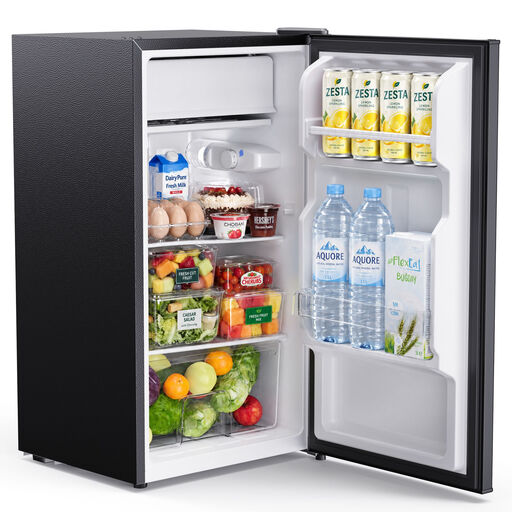
Upstreman CR85 Black, 85 l fridge
Worth considering if you need compact fridge space without a large freezer.
Capacity: 85 l. The description lists consumption of 84 kWh/year; the title mentions an adjustable thermostat from 0 to 12 °C.
View on Joybuy
Frequently asked questions
How do I compare the energy consumption of two refrigeration appliances?
Compare the kWh/year figures, energy ratings and compartment capacities shown on each appliance’s label. Start with models that meet the same storage needs: kWh/year is a standardised figure, not a guarantee of what you’ll pay on your energy bill.
Can I install a freezer in a cellar or cold garage?
That depends on the minimum and maximum ambient temperatures permitted for the model, and on the conditions in its manual. Que Choisir recommends checking the climate class. Liebherr says its CFe 2500 Pure chest freezer can operate at temperatures as low as −15 °C, but this doesn’t apply to every model.
What temperature should I set my fridge to?
Anses recommends a temperature between 0 °C and 4 °C in the coldest part of the fridge. Follow the instructions to locate and check this area: reducing energy consumption shouldn’t come at the expense of food safety.
What warranty applies if an appliance bought from a trader has a conformity defect?
In France, the legal guarantee of conformity applies to new, second-hand and refurbished goods sold by a trader to a consumer. The Ministry of the Economy and Finance states that you have two years from the date the goods are delivered to exercise this right. It is separate from any optional commercial extended warranty.
Is an energy label required for a new fridge sold online in France?
Yes. The Ministry of the Economy and Finance explains that the requirement to display an energy label for fridges applies whether they’re sold in a shop or online. For the household refrigeration appliances covered, the European scale has run from A to G since 1 March 2021. Check the label for the model you’re considering.


