To replace a fridge or freezer without choosing an unnecessarily large capacity, work out how much space you need for fresh food and frozen food separately. A fridge-freezer combines both uses in one appliance; a separate freezer is better suited to regular extra storage, but it needs space of its own. Then compare models of a suitable type and capacity, looking at annual energy consumption in kWh, energy rating and noise level.
Who is this guide for?
Households keeping an eye on energy use
You’re replacing an appliance that runs constantly and want to avoid paying for capacity or features you won’t use. ADEME points out that an appliance’s size and extra features can increase its energy consumption.
Households looking to store fresh and frozen food together
You need both compartments in one space. For you, the split between fridge and freezer capacity matters more than the total capacity alone.
Households that regularly freeze large quantities
You’re considering a separate freezer because the freezer compartment in a fridge-freezer doesn’t meet your usual needs. This extra capacity also means finding space for another appliance that runs continuously.
What should you look for?
First, choose a configuration that meets your storage needs, then compare energy consumption and installation requirements across suitable models. ADEME highlights the importance of size for an appliance that runs constantly; the European Commission lets you check models’ energy information in EPREL.
Fridge only
Consider this if: you mainly store fresh food and don’t need freezer capacity in this appliance.
Limitation: it won’t meet your need for frozen food if you don’t have another appliance for it.
Fridge-freezer
Consider this if: you regularly store both fresh and frozen food and want to keep it all in one appliance.
Limitation: its freezer capacity needs to suit your habits; a large total capacity doesn’t guarantee the right balance between compartments.
Separate freezer
Consider this if: you regularly need more room for frozen food and have space for an additional appliance.
Limitation: this appliance also runs continuously, so its extra capacity should meet a genuine need.
| What matters |
What to check |
What shoppers need |
| Energy use and capacity |
Compare kWh/year and energy ratings across appliances of the same type and a suitable capacity. |
When replacing an appliance that runs continuously, I want enough space without powering unnecessarily large compartments. Around 36% of shoppers make this balance a priority. |
| Fresh and frozen food capacity |
Check the fridge and freezer capacities separately, as well as the appliance’s external dimensions. |
To store fresh food and frozen food in one appliance, I need compartments suited to both. This balance is a priority for around 29% of shoppers. |
| Extra freezer capacity |
Compare the amount of frozen food you usually store with the capacity of a fridge-freezer, then with that of a separate freezer. |
If I regularly freeze large quantities, I need more capacity than the freezer compartment in my fridge-freezer can offer. Around 21% of shoppers prioritise this extra space. |
| Installation and noise |
Measure the space and access routes; check the built-in dimensions if there’s an alcove, then check the noise level in dB. |
In a small kitchen or one close to a living area, I need to be able to install the appliance without overlooking its noise level. Around 14% of shoppers put these requirements ahead of other criteria. |
Mistakes to avoid
-
Choosing the largest capacity “just in case”
According to ADEME, an appliance’s size and features can affect its energy consumption, and it runs constantly.
Work out separately how much fresh and frozen food you usually store, then choose a capacity that meets your actual needs.
-
Relying on the energy rating alone
The rating letter doesn’t tell you the appliance’s annual energy consumption or capacity on its own. The European Commission says you can check these details in EPREL.
To compare models with similar types and capacities, look at the rating, kWh/year, the capacity of each compartment and the noise level together.
-
Adding a freezer for occasional use
A separate freezer adds capacity, but it also means another appliance running continuously.
First compare how much frozen food you usually store with the capacity of a suitable fridge-freezer. If you still need a separate appliance, check its annual energy consumption.
-
Forgetting about your kitchen layout
A model that doesn’t fit the alcove or access routes won’t work in the space you’ve planned for it. Noise is also worth considering if it’s near a living area.
Measure before ordering and check the installation instructions, door type and noise level for the exact model.
Brands to know when comparing ranges
Bosch
Bosch’s French range of fridge-freezers includes freestanding and built-in models, which you can compare by capacity and individual specifications.
- Bosch lists the KGN39AIAU with 260 L of fridge capacity, 103 L of freezer capacity and a noise level of 29 dB.
- These figures apply to the KGN39AIAU, not every Bosch fridge-freezer. Also check annual energy consumption and whether the features of the model you’re considering will be useful to you.
Beko
Beko offers fridge-freezers in a range of capacities, including some with flexible compartments.
- Beko describes Multizone as a feature that lets you change how a compartment is used on selected models.
- Features vary by model. A large capacity is only useful if it suits your household’s usual storage needs.
Electrolux
Electrolux’s range of built-in fridge-freezers lets you assess capacity and energy consumption while taking the dimensions of your cabinet into account.
- Built-in model specifications list details to check against your planned installation, including capacity and dimensions.
- The benefits Electrolux attributes to TwinTech No Frost are the manufacturer’s claims; they don’t replace checking the energy label for the model you choose.
Fridge-freezers available on Joybuy
These appliances combine refrigeration and freezing. Their sizes and capacities vary, so first choose one that suits the amount of fresh and frozen food you store, then check the energy information for the exact model.
 Image unavailable
Samsung RB33B612EBN, black fridge-freezer, 344 L
Worth considering if you want to store fresh and frozen food in one 344 L appliance.
Energy rating E is stated in the product name. Before choosing, compare its annual energy consumption and the capacity of each compartment for the exact model.
View on Joybuy
 Image unavailable
Candy CFQQ5T817EPS, four-door fridge-freezer, 467 L
Worth looking at if your needs call for a high-capacity fridge-freezer with a four-door design.
The product name lists an E energy rating and Total No Frost. Check that 467 L suits the amount of food you usually store and that the appliance fits the space you have in mind.
View on Joybuy
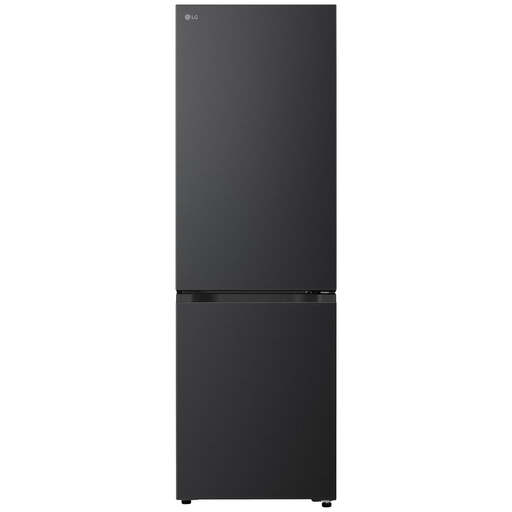 Image unavailable
LG GBBS312CEV, black fridge-freezer, 333 L
Compare this model if a 333 L fridge-freezer offers the space you need for fresh and frozen food.
Energy rating C is stated in the product name. To assess its energy use, also check the kWh/year and the dimensions needed for installation.
View on Joybuy
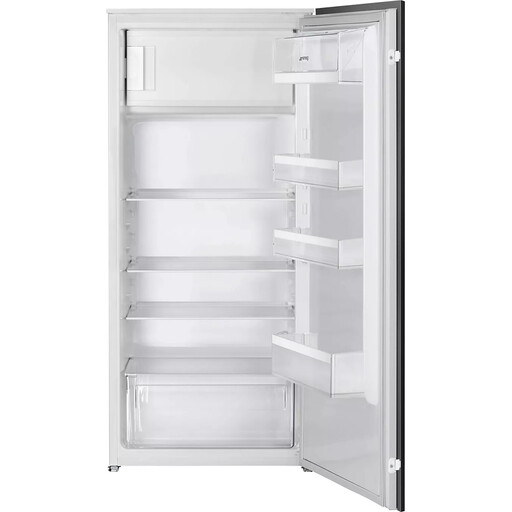 Image unavailable
SMEG S4C122E, built-in fridge-freezer, 188 L
Worth considering for a fitted kitchen if you’re looking for a built-in fridge-freezer with a top freezer.
The product name lists a total capacity of 188 L and an E energy rating. Before choosing, check the freezer capacity, cabinet dimensions and door compatibility.
View on Joybuy
 Image unavailable
Bosch KGN33NLEB, fridge-freezer, 282 L
Compare this model if you’re looking for a 282 L fridge-freezer with a bottom freezer.
Energy rating E is stated in the product name. Check the capacity of each compartment, kWh/year and the noise level for the exact model to make sure it suits your kitchen.
View on Joybuy
Frequently asked questions
What should I compare on a fridge’s energy label?
Compare the energy rating and annual consumption in kWh with the capacity that suits your needs. The European Commission says the QR code on the label gives you access to EPREL, where you can check details for the model, including its capacity, dimensions and noise level.
Is a better energy rating enough to choose between two fridge-freezers?
No. Also compare their kWh/year and the capacity of each compartment, especially if their overall capacities differ. ADEME points out that unnecessary size or features can increase the energy use of an appliance that runs continuously.
When should I consider a separate freezer instead of a fridge-freezer?
Consider one if you regularly store more frozen food than a suitable fridge-freezer can hold. Make sure you have room for it, then compare the annual energy consumption of this additional appliance.
Can France’s repairability index help me choose between fridges?
Fridges aren’t included in the list of product categories covered by the repairability index published by the French ministries responsible for the ecological transition in January 2026. To compare two models, look instead at the repair, spare parts and warranty information specific to each one.


