What should you compare?
Fridge only
Choose this if: you store fresh food and don’t need to freeze anything.
Bear in mind: if you add a freezer, factor in its energy use and the space it takes up.
Fridge-freezer
Choose this if: you regularly store fresh and frozen food, and the capacity of both compartments suits you.
Check: the total capacity alone doesn’t tell you how much space is allocated to each compartment.
Fridge with a small freezer compartment
Choose this if: space is limited and you don’t need much freezer capacity.
Check: the compartment capacity and, for an integrated model, the dimensions of the housing unit.
Separate fridge and freezer
Choose this if: you need more freezer space than an integrated compartment can provide, or need to place the appliances separately.
Bear in mind: you’ll need space for both appliances and should add their annual energy consumption figures together.
For a new fridge sold in France, whether online or in store, the DGCCRF says the energy label must be displayed. Compare the kWh/year figures and usable capacities of models that suit your needs.
| Consideration |
What to check before buying |
Who it matters most to |
| Electricity consumption |
Compare the kWh/year figures for appliances that suit your needs; if you’re buying two, add their figures together. The cost also depends on your price per kWh. |
When replacing an appliance, I want to compare its stated consumption with that of the model I’m considering, without mistaking these figures for a guaranteed bill. Around 33% of consumers put electricity use first. |
| Fresh and frozen food capacity |
Check the fridge and freezer capacities in litres separately, then compare them with the amounts of food you usually store. |
If I regularly keep fresh and frozen food, I want each compartment to hold the quantities I need. Around 27% of consumers put this balance first. |
| Space and installation |
Measure the space and access route; check the height, width, depth and installation instructions. For an integrated model, check the housing unit too. |
In a kitchen where space is limited, I want to know whether the appliance will fit where I plan to install it. Available space is the top priority for around 20% of consumers. |
| Freezing capacity |
Check the freezer capacity, the manufacturer’s specifications and the star rating of the compartment for the exact model. |
If I stock up on frozen food, I want to make sure a small compartment won’t limit how much I can store. Around 20% of consumers prioritise this capacity. |
Fridge-freezers on Joybuy
The models featured here are fridge-freezers, with a range of capacities and different balances between fresh and frozen food storage.
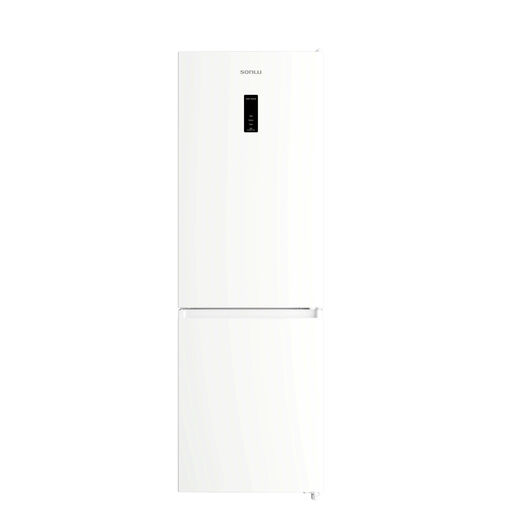 Image unavailable
Sonlu CD-350RW, energy rating E
This fridge-freezer lets you assess the capacity available for fresh and frozen food separately.
Total capacity: 310 L; fridge: 211 L; freezer: 99 L. Width: 60 cm. Energy rating E. Inverter compressor, reversible door and electronic temperature control are listed in the product name.
View on Joybuy
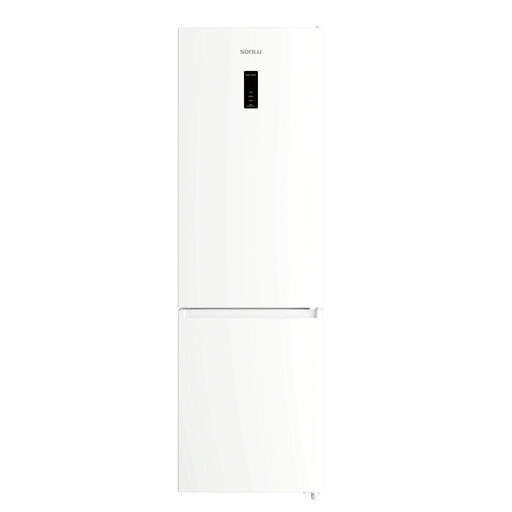 Image unavailable
Sonlu CD-400RW, energy rating E
This model is useful for comparing fresh and frozen food capacities when you need one appliance to meet both needs.
Total capacity: 355 L; fridge: 252 L; freezer: 103 L. Width: 60 cm. Energy rating E. Inverter compressor, reversible door and electronic temperature control are listed in the product name.
View on Joybuy
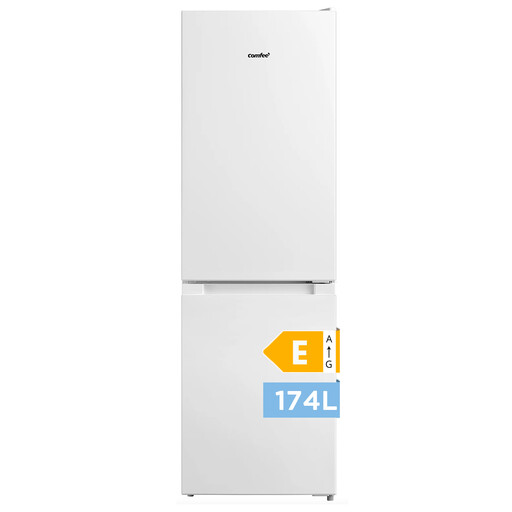 Image unavailable
Comfee RCB169WH2(E), energy rating E
The split between fridge and freezer space lets you assess a more compact fridge-freezer format.
Total capacity: 174 L; fridge: 115 L; freezer: 59 L. Height: 150 cm. Four-star freezer, Low Frost technology and reversible door are listed in the product name.
View on Joybuy
 Image unavailable
Samsung RF50C530EB1, energy rating E
This fridge-freezer offers a total capacity to compare with the space available and your storage needs.
Total capacity: 495 L. Black. Energy rating E.
View on Joybuy
 Image unavailable
CHiQ JR525WSE, energy rating E
The separately listed capacities make it easy to check whether the balance suits the amount of fresh and frozen food you plan to store.
Total capacity: 525 L; fridge: 333 L; freezer: 192 L. No Frost technology is listed in the product name.
View on Joybuy
Frequently asked questions
Is a better energy rating enough to predict my energy bill?
No. Compare the kWh/year figures for models with formats and capacities that suit your needs; if you use two appliances, add their figures together. The estimated cost also depends on your price per kWh, and actual consumption can vary depending on installation and usage.
How should you use cold temperatures to keep food fresh?
Anses recommends monitoring your fridge temperature, keeping the coldest area at 4 °C, and avoiding overfilling it so that air can circulate. For home freezing, it recommends −18 °C; freezing doesn’t eliminate most micro-organisms.
What should you know about your old appliance and after-sales service?
Ask about taking back your old appliance when you buy: the French Ministry for Ecological Transition distinguishes, among other options, the « one-for-one » take-back of a product of the same type. If you buy from a professional seller, the statutory guarantee of conformity applies under its terms. Check delivery and installation services separately, along with any commercial guarantees.
Must an energy label be displayed for a new fridge sold online in France?
Yes. The DGCCRF says the label must be displayed for new fridges sold both in shops and online. This requirement doesn’t apply to second-hand products.


