Households that mainly store fresh food
If you mainly buy fresh food and freeze very little, start by considering how much fridge space you need. Then check the model’s annual energy use instead of choosing a large freezer compartment you won’t use.


If you mainly store fresh food, start by working out how much fridge space you need. If you regularly freeze food, compare the fresh and frozen capacities of a fridge-freezer separately. Only add a separate freezer if you consistently need more freezer space: according to ADEME, fridges and freezers run continuously. To compare options that suit your household, check the EU energy label for details including capacity, energy use in kWh/year and noise level.
If you mainly buy fresh food and freeze very little, start by considering how much fridge space you need. Then check the model’s annual energy use instead of choosing a large freezer compartment you won’t use.
Whether you store frozen food, bulk-buy or freeze prepared portions, compare the freezer and fridge capacities separately. This will help you decide between a fridge-freezer and, if you consistently need more freezer space than it offers, a separate appliance.
If space is limited or you’d rather avoid a second appliance, check the dimensions, usable capacity for your food, noise level and kWh/year. ADEME points out that refrigeration appliances run continuously and that their size can affect energy use.
First, choose the configuration that suits the way you store food. Then compare the features of models within that category. A lack of freezer space calls for a different solution from a lack of fridge space.
Consider this if: your household mainly stores fresh food and freezes very little or not at all.
Limitation: this configuration won’t meet a regular need for frozen-food storage.
Consider this if: you need space for both fresh and frozen food in one appliance.
Limitation: the fixed split between the two compartments needs to suit the way you use them; total capacity alone won’t tell you if it does.
Consider this if: your fridge still meets your needs, but you consistently need more freezer space.
Trade-off: it takes up space and means running a second appliance continuously.
| Factor | What to check | Consumers concerned |
|---|---|---|
| Capacity split | Compare the fridge and freezer capacities separately, then identify which compartment is genuinely short on space. | If my shopping mainly fills one compartment, I don’t want to choose a large total capacity that’s split the wrong way; around 36% of consumers prioritise getting the right capacity split. |
| Continuous energy use | When comparing configurations that meet the same need, check the kWh/year and energy rating shown on the label. | As the appliance stays switched on, I want to know its annual energy use before choosing; around 29% of consumers prioritise keeping energy use down. |
| Freezer capacity needed | Work out whether the lack of freezer space continues for several weeks, then compare the capacity of a fridge-freezer with that of a separate appliance. | I regularly freeze portions or bulk buys, and my drawers are no longer big enough; around 21% of consumers prioritise having this extra freezer space over the long term. |
| Installation and noise | Measure the space and check the installation type, door clearance and noise level of the exact model. | In a kitchen where space or noise affects my choice, the right capacity isn’t enough if the appliance doesn’t fit well; around 14% of consumers prioritise these considerations. |
A fridge-freezer can offer plenty of overall capacity without enough room in the compartment you use most. The EU energy label lists fridge and freezer capacities separately.
Work out which compartment is regularly full, then compare the two capacities separately.
The rating letter doesn’t replace the declared annual energy use: appliances with different capacities or configurations may not meet the same needs.
Shortlist a suitable configuration and capacity first, then check the kWh/year, energy rating and noise level shown on the label.
An occasional bulk buy doesn’t necessarily mean your household needs more freezer space in the long term. According to ADEME, an additional freezer also runs continuously.
Check how full the compartments are over several weeks. If you consistently need more room, compare a separate freezer with a fridge-freezer that has a suitable capacity split.
A second appliance also needs a permanent space.
If your appliance has broken down or is due to be replaced, look into repair and take-back options for the old appliance rather than treating its disposal as an afterthought.
Check with the retailer what protections apply. If you’re considering a repair, find out whether the fault qualifies for the Repair Bonus. If you’re replacing the appliance, ask how the old one can be taken back.
The freestanding fridge-freezer range includes models whose specifications list fridge and freezer capacities separately.
The range includes built-in and freestanding fridge-freezers to consider based on the space available and capacity you need.
The fridge-freezer range includes different configurations and cooling technologies, depending on the model.
These models combine fridge and freezer storage in one appliance. Before choosing, compare the installation type, the capacity split on the label for the exact model and its annual energy use.
 Image unavailable
Worth considering if you want fresh and frozen storage in a built-in space. The title lists a capacity of 252 l, No Frost and a C rating; check the capacity of each compartment and the dimensions of the housing space before installation.
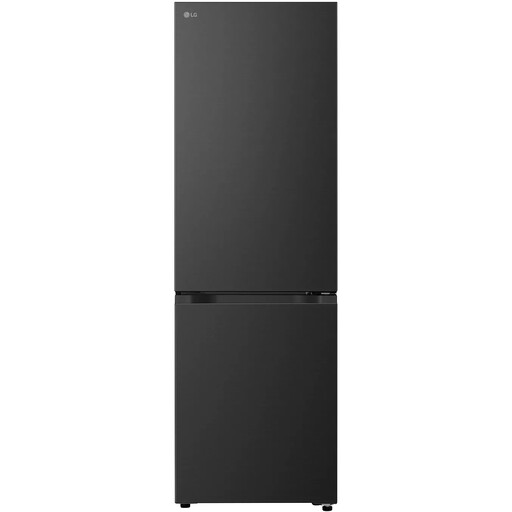 Image unavailable
Consider this if you’re looking for one appliance for both fresh and frozen food. The title lists a capacity of 333 l, No Frost and an A rating; check the capacity of each compartment, the kWh/year and the space needed to open the doors.
 Image unavailable
Compare this if you need fresh and frozen storage in one appliance. The title lists a capacity of 344 l and an E rating; compare the separate capacities and kWh/year with other models that suit your space.
 Image unavailable
Worth considering if a three-door layout suits the way you organise fresh and frozen food. The title lists a capacity of 360 l, Total No Frost and an E rating; check the capacity split, kWh/year and dimensions before deciding.
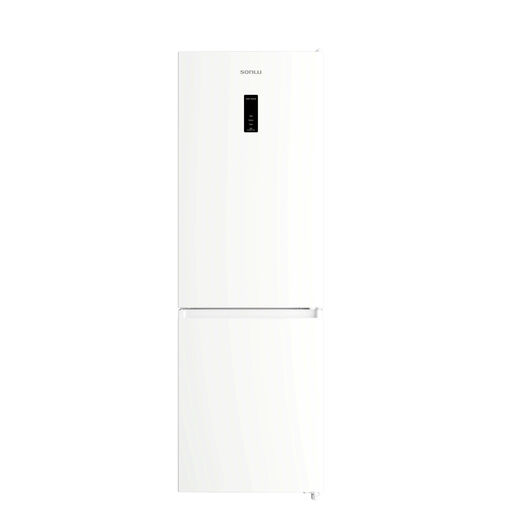 Image unavailable
Worth considering if you’re looking for a fridge-freezer with the capacity split listed in the title: 211 l for fresh food and 99 l for frozen food. It also lists a width of 60 cm, a reversible door and an E rating; check the full dimensions, kWh/year and door clearance.
Check the kWh/year, the capacity of the fresh and frozen compartments, the energy rating and the noise information. The European Commission says the QR code on the label links to detailed information about the model in EPREL; compare appliances that meet the same storage needs.
No. Also compare their annual energy use in kWh/year and the space available in each compartment. ADEME notes that the size of an appliance that runs continuously can affect energy use; the rating alone won’t tell you whether its capacity suits your household.
Scan the QR code on its energy label or search for its model number in EPREL. The European Commission describes this database as a way to view and compare the main product features; make sure the model number matches the one you’re considering buying.
Arrange for it to be taken back or drop it off through the waste electrical and electronic equipment scheme, rather than putting it out with general rubbish. The French ministries responsible for the ecological transition explain that the ‘one-for-one’ take-back scheme applies when you buy a new appliance of the same type; ask the retailer how this will be arranged for your order.
Not necessarily. First, check what protections apply and whether repair is an option. ADEME recommends considering repair when it makes sense; according to ecosystem, eligibility for the Repair Bonus depends in part on the appliance not being covered by a warranty and the fault qualifying.