Which criteria should you prioritise?
Work out how much space you need for fresh and frozen food, then compare the energy use and installation requirements of formats that meet those needs.
Fridge
Consider this if: you mainly buy fresh food and don’t need much freezer space.
Limitation: a small freezer compartment is no substitute for proper frozen-food storage.
Fridge-freezer
Consider this if: you regularly store fresh and frozen food in one appliance.
Limitation: the integrated freezer compartment needs to hold enough for your usual supplies, even if the total capacity looks generous.
Separate freezer
Consider this if: you regularly stock up on frozen food or need to store large quantities, and have space for an extra appliance.
Limitation: it takes up space and runs continuously in addition to your fridge.
| Criterion |
What to check |
Consumers concerned |
| Annual energy use |
Compare the kWh/year on the energy label for appliances with similar functions and capacities, and check their energy classes. |
When an appliance runs all the time, I want to keep electricity use down without running out of room for my food. Around 36% of consumers prioritise this ongoing energy use. |
| Fresh and frozen capacities |
Check the capacity in litres of each compartment and compare it with your usual shopping habits. |
If I store both fresh and frozen food, I need a suitable balance of space rather than a large total capacity that I won’t use properly. Around 36% of consumers prioritise having storage that suits their needs. |
| Space and everyday use |
Measure the space available and the access route for delivery. Check the door opening, the clearances specified in the manual and the noise level shown on the energy label. |
In a compact kitchen or when replacing an appliance, I need to be able to get it in, install it and use it without any hassle. These practical considerations come first for around 28% of consumers. |
Appliances to consider on Joybuy
These models meet two different needs: keeping fresh and frozen food in one appliance, or adding a separate freezer for extra storage. Before choosing, compare their specifications with those of appliances in the same format.
 Image unavailable
Candy CFQQ5T817EPS, 467 L four-door fridge-freezer
For keeping fresh and frozen food together in a multi-door model. The product name lists a 467 L capacity, Total No Frost and an energy class of E.
Check the capacity of each compartment, the dimensions and the required clearances before deciding whether it’s right for your home.
View on Joybuy
 Image unavailable
Samsung RF50C530EB1, 495 L multi-door fridge
For households looking to store fresh and frozen food in a multi-door appliance. The product name lists a 495 L capacity and an energy class of E.
Check the fresh and frozen capacities separately, then check the dimensions and any requirements for the dispenser.
View on Joybuy
 Image unavailable
AUCMA, 291 L convertible chest freezer
For larger frozen-food reserves that call for a separate appliance. The product name lists a 291 L capacity, a convertible fridge or freezer mode, a removable basket and an energy class of E.
Make sure the top-opening design suits the space you have in mind. Compare its annual energy use with that of freezers of a similar capacity and for similar use.
View on Joybuy
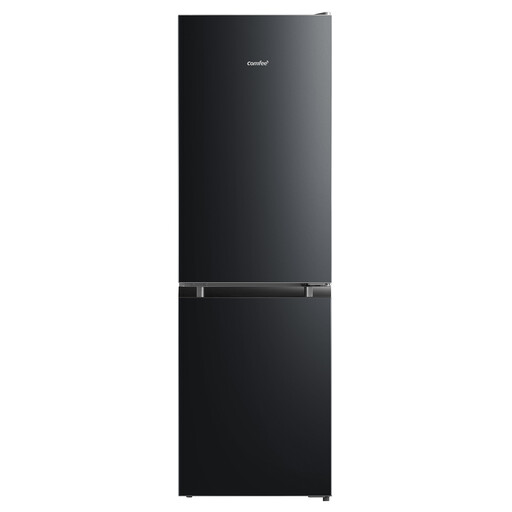 Image unavailable
Comfee' by Midea RCB230BL2EU(E), 174 L fridge-freezer
For keeping fresh and frozen food together in a 174 L format. The product name lists a reversible door and Low Frost function; this doesn’t mean you’ll never need to defrost it.
If ongoing energy use is a key factor in your choice, check the kWh/year on the energy label before comparing this model with other fridge-freezers.
View on Joybuy
 Image unavailable
Sonlu CC-520WE, 444 L fridge-freezer
For keeping fresh and frozen food in one appliance. The product name lists a 444 L capacity, Total No Frost, 40 dB and an energy class of E.
Before choosing this total capacity, check how the space is divided between the compartments and the dimensions required for installation.
View on Joybuy
Frequently asked questions
What should I compare on a fridge or freezer’s energy label?
Compare the annual kWh and the fresh and frozen compartment capacities of appliances that meet the same needs. The European Commission says the label also shows the energy efficiency class and noise emissions.
Does a fridge-freezer always use less energy than two separate appliances?
No. The format alone isn’t enough to make that comparison. If a fridge-freezer’s freezer compartment meets your needs, you can avoid adding another appliance. If not, compare the annual energy use shown on the labels and the capacities you need for each set-up.
Should No Frost determine my choice?
No Frost may be important if you want to reduce the need for defrosting. Whirlpool describes this feature on the models that include it. Check that it’s available on the specific model you’re considering, and compare the annual kWh and capacities separately.
What should I do with my old appliance in France?
You can look into the collection, return-to-store and social-economy organisation options outlined by the French ministry responsible for ecological transition. If you want your old appliance collected when your new one is delivered, check the arrangements for your order with the retailer.
What should I measure before a new appliance is delivered?
Measure the space where it will go and the entire route to the kitchen. Then check that the doors can open and allow for the clearances specified in the model’s manual. Also confirm which delivery and installation services are included with your order.


