Start by working out how much usable space you need for your shopping and meals. Then consider how much room you need for frozen food and whether the dimensions will fit your kitchen. A fridge-freezer is a good choice if you regularly store fresh and frozen food in one appliance. If you rarely freeze food or are short on space, consider a fridge-only model or a smaller capacity too. Finally, compare annual energy consumption in kWh/year across appliances with similar configurations and capacities, rather than relying on the energy rating alone.
Who is this guide for?
Households adjusting their storage capacity
If the size of your household or your shopping habits change, check the fridge’s usable capacity and dimensions before looking at extra features. You need enough room for your food, without choosing a capacity you’re unlikely to use.
Households that regularly store frozen food
A fridge-freezer lets you keep fresh and frozen food in one appliance. However, check the capacity of each compartment separately: a large total capacity doesn’t guarantee you’ll have enough freezer space.
Households keeping an eye on energy use
As a fridge runs continuously, you can compare the kWh/year figures for appliances with similar capacities and configurations. ADEME points out that a larger size and extra features can increase energy consumption.
Which criteria should you consider first?
When choosing an appliance for your household’s shopping and meals, decide what matters most to you: space for fresh food, room for frozen food, energy use or installation requirements. Once you’ve set that priority, check the other criteria too.
| Criteria |
What to check |
Who it’s for |
| Capacity for fresh food |
Compare the usable capacity of the fridge compartment with your shopping habits and available space. UFC-Que Choisir suggests 100 to 150 l for one person, then around 50 l for each additional person. Adjust this to suit your household’s habits. |
If I cook often or leave longer between shops, I want enough room to store fresh food without choosing an unnecessarily large appliance. Around 34% of consumers put this need for capacity first. |
| Space for frozen food |
Check the usable capacities of the fridge and freezer separately. If ease of maintenance matters to you, also check the defrosting system on the specific model. |
If I regularly store frozen food, the freezer capacity matters more to my choice than the advertised total capacity. Around 22% of consumers are said to prioritise this. |
| Energy consumption |
Check the kWh/year figure alongside the energy rating, and compare appliances with similar configurations and capacities. ADEME notes that a larger size and extra features can increase the energy consumption of an appliance that runs continuously. |
I want to keep energy use down over time without giving up the capacity my household needs. Around 33% of consumers are said to make this their top criterion. |
| Installation |
Measure the space and delivery route. For a built-in model, also check the cabinet niche, ventilation requirements and instructions in the manual. |
If my kitchen has a cabinet niche or narrow access, I need to know the appliance can be delivered and installed properly before choosing its features. Around 11% of consumers are said to prioritise this compatibility. |
Which mistakes should you avoid?
-
Choosing a fridge-freezer based on total capacity alone
The total doesn’t show how much space is reserved for fresh and frozen food. For example, Whirlpool lists 340 l of fridge space and 150 l of freezer space for the WHK2 6493 X4E.
Work out how much room you need in each compartment, then compare their usable capacities separately.
-
Relying on the energy rating alone
The letter isn’t enough to assess the energy use of appliances with different sizes and configurations. ADEME points out that refrigeration appliances run continuously.
Also compare the kWh/year figures for models with similar capacities and uses.
-
Measuring only the width of your kitchen
Depth, height, door clearance and ventilation gaps can all make a model unsuitable for the space you have in mind.
Measure the height, width and depth, as well as the delivery route. For a built-in model, follow the cabinet niche dimensions and ventilation instructions in the manual.
-
Arranging delivery without preparing for installation
Taking away your old appliance and connecting the new one requires some advance planning. Instructions for after transport vary by model: Electrolux recommends waiting at least four hours before plugging in its refrigeration appliances.
Ask the retailer how to arrange removal of your old appliance, and check the manual for the model being delivered before installing and plugging it in.
Brands to consider by fridge type
Bosch
Worth considering if you’re comparing freestanding fridge-freezers and how their compartments are arranged.
- Bosch lists 302 l of fridge space and 117 l of freezer space for the KGE49AICA, along with a C energy rating.
- These specifications apply to the KGE49AICA, not all Bosch fridge-freezers. Check the product details for the model you’re considering.
Whirlpool
Freestanding and built-in fridge-freezers to compare by compartment capacity and kitchen requirements.
- Whirlpool lists 340 l of fridge space and 150 l of freezer space for the freestanding WHK2 6493 X4E. The built-in WH SP70 T121 is listed with 295 l and 99 l respectively.
- These two compartment layouts aren’t interchangeable. For a built-in model, also check the measurements and installation instructions.
Electrolux
Worth exploring if you’re looking for a built-in fridge-freezer. Give the installation instructions just as much attention as the advertised features.
- Electrolux describes the ENS3LE18S as a built-in fridge-freezer with an E energy rating, LowFrost and a door alarm.
- The brand recommends ensuring adequate air circulation and waiting at least four hours before plugging the appliance in after transport. Check the instructions for the model you buy.
Liebherr
Worth considering if you’re choosing between a small single-door fridge, a larger fridge without a freezer and a fridge-freezer.
- Liebherr offers a 141 l table-top model, providing a useful point of comparison for kitchens where space is limited.
- Size alone isn’t enough to make a decision: check the usable capacity, whether there’s a freezer compartment and the energy label for each model.
Fridges to explore on Joybuy
These models combine refrigeration and freezing in one appliance: four are freestanding and one is built-in. Compare their advertised total capacity with the space you need in each compartment, then check the dimensions and energy consumption figures that matter to your choice.
 Image unavailable
Haier HTW5618ENMG, 360 L three-door fridge-freezer
Worth considering if you’d like to store fresh and frozen food in a three-door appliance. The product name lists a total capacity of 360 L, Total No Frost, an E energy rating, Wi-Fi and My Zone. Before choosing, check that you have room for the appliance, including space to open the doors and allow for ventilation.
View on Joybuy
 Image unavailable
Candy CFQQ5T817EPS, 467 L four-door fridge-freezer
Worth considering if you’re looking for a multi-door appliance for fresh and frozen food. The product name lists a total capacity of 467 L, Total No Frost and an E energy rating. Measure the space and required clearances before choosing this style.
View on Joybuy
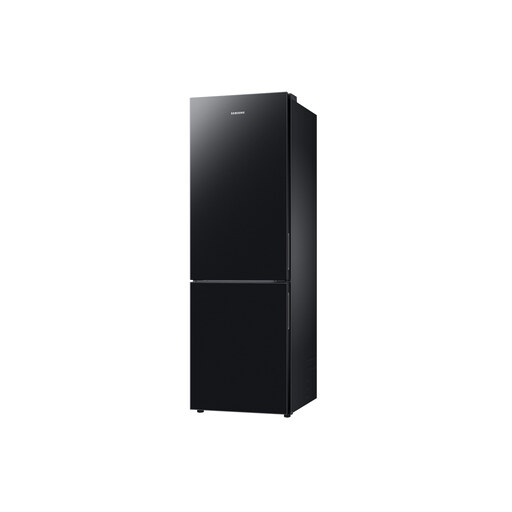 Image unavailable
Samsung RB33B612EBN, 344 L black fridge-freezer
Worth comparing if you need a fridge-freezer with an advertised total capacity of 344 L for fresh and frozen food. The product name lists an E energy rating. Check the capacity of each compartment and make sure the dimensions suit your kitchen.
View on Joybuy
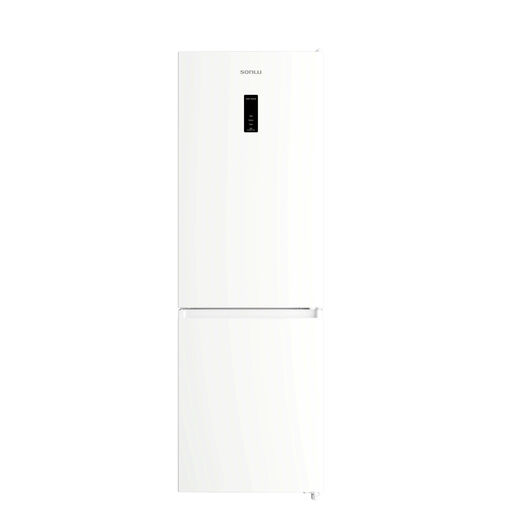 Image unavailable
Sonlu CD‑350RW, 310 L fridge-freezer
Worth considering if the advertised width of 60 cm suits your space and you’d like a reversible door. The product name lists 211 L for the fridge, 99 L for the freezer, electronic controls and an E energy rating. Also check the full dimensions and kWh/year figure before comparing how it will fit and how much energy it uses.
View on Joybuy
 Image unavailable
AEG NSC6M18FES, 249 L built-in fridge-freezer
Worth considering if your kitchen needs a built-in fridge-freezer. The product name lists a total capacity of 249 L, TwinTech No Frost and an E energy rating. The advertised total doesn’t match the sum of the compartment capacities: confirm the net capacities, cabinet niche dimensions and kWh/year figure before choosing.
View on Joybuy
Frequently asked questions
What usable capacity does my household need?
Start with your shopping habits and the number of people you need to shop for. UFC-Que Choisir suggests 100 to 150 l for one person, then around 50 l for each additional person. Adjust this if you cook often, keep ready meals or regularly store frozen food.
Is a better energy rating enough to make a choice?
No. Check the kWh/year figure and usable capacity too, then compare appliances with similar configurations. ADEME points out that a fridge runs continuously and that its size and features can affect its energy consumption.
Can I plug my fridge in as soon as it’s delivered?
Follow the waiting time given in the manual for the model delivered before plugging it in. Electrolux recommends waiting at least four hours after transporting its refrigeration appliances. Don’t assume this instruction applies to models from other brands.
Will a No Frost fridge-freezer always suit my needs better?
No. The defrosting system doesn’t replace checking the usable capacities and dimensions. If you use the freezer often and want to avoid manual defrosting, check the system specified for the particular model. Also compare its kWh/year figure with those of appliances suited to the same use.


