First, work out how much fridge and freezer space your household needs. Then compare the annual energy use of models that meet those needs. The European Commission says the energy label shows this information, along with the energy rating and noise level. If your current appliance has broken down, ask for a diagnosis and quote before replacing it. In France, the Bonus Réparation scheme run by ecosystem may apply, subject to conditions.
Who is this guide for?
Households mindful of energy use
Your fridge runs continuously, and you want to compare its stated energy use rather than rely on a general promise. The European Commission explains that the label shows information including the energy rating and energy consumption.
Households looking to avoid unnecessary capacity
You’re choosing between a fridge and a fridge freezer because your needs for fresh and frozen food differ. According to UFC-Que Choisir, different formats suit different uses; the label lets you check the capacity of each compartment separately.
Households dealing with a breakdown
You’re considering a new appliance but want to know whether repair is still an option. In France, ecosystem’s Bonus Réparation scheme applies to eligible appliances and faults, including cases where the appliance is owned by a household, was bought in France and is no longer covered by a warranty or insurance.
Which criteria should you consider first?
First decide how much space you need for fresh and frozen food. Once you’ve narrowed down the appliances that suit your needs, use the energy label to compare kWh/year, energy ratings and noise levels. If your appliance has broken down, also consider whether it can be repaired before buying a new one.
| Criterion |
What to check |
Who it matters to |
| Annual energy use |
Compare the kWh/year and energy ratings of appliances with the capacity and layout you need. |
If I’m replacing an appliance that runs day and night, I want to assess its energy use over time without compromising on the storage space I need. Around 42% of consumers would put this comparison first. |
| Capacity and freezing |
Check the litres of fridge and freezer space, then the external dimensions and installation type. |
If I rarely freeze food, a large freezer compartment takes up space I may not need. If I often store frozen food, though, I need enough capacity. Around 33% of consumers would prioritise getting the right balance of capacity. |
| Repair and installation |
If the appliance has broken down, ask for a diagnosis and quote. For a new appliance, measure the space and check the stated noise level in dB. |
If my fridge breaks down, I want to consider repair before choosing a replacement that will fit in my kitchen. Around 25% of consumers would put this practical decision first. |
Mistakes to avoid
-
Choosing based only on the energy rating letter
The rating alone won’t tell you whether two appliances offer the same storage capacity. According to the European Commission, the label also shows their energy consumption, compartment capacities and noise levels.
First rule out layouts that don’t suit your needs. Then compare the kWh/year, energy ratings and noise levels of the models you’re considering.
-
Choosing a large freezer you don’t need
A fridge freezer gives you separate spaces for fresh and frozen food, but not every household needs a large freezer compartment.
Start with your storage habits: compare the fridge and freezer capacities separately before choosing a format.
-
Assuming a breakdown means you need a new appliance
Whether an appliance can be repaired depends on the fault and its condition. In France, ecosystem’s Bonus Réparation scheme covers certain household appliances bought in France and owned by households, provided they’re no longer under warranty or insurance and the fault is eligible.
Ask for a diagnosis and quote, then check the scheme’s requirements with the repairer before making a decision.
-
Relying on capacity without measuring your kitchen
The right capacity doesn’t guarantee that the appliance will fit through your doorways or in its intended space. Noise is also worth considering, especially if your kitchen is open to a living area.
Measure the space and access routes, check the dimensions and clearances required for the exact model, then check its noise level.
Brands to consider by model
Cooling features and capacities vary within each brand, so always compare the exact model with your storage needs and its energy label.
Bosch
Bosch offers freestanding and built-in fridge freezers, with features that vary by model.
- Bosch lists Total NoFrost on the KGN39AIAU and individual temperature controls on the KGN36VLED.
- These features aren’t available across the whole range. Check the capacity, kWh/year, dimensions and noise level of the model you’re considering.
Liebherr
Depending on the model, Liebherr fridge freezers may feature BioFresh or NoFrost.
- Liebherr’s product information for the CBNsfc 5223 Plus BioFresh NoFrost gives a total capacity of 320 L and a noise level of 35 dB.
- These specifications apply to this model. Compare the dimensions and capacity of each model with your available space and storage needs.
Beko
The Beko range includes fridges and fridge freezers with different cooling features, depending on the model.
- For selected models, Beko describes NeoFrost Dual Cooling as separating the airflow between the fridge and freezer.
- This brand description doesn’t replace checking the capacity, kWh/year, dimensions and noise level of your chosen model.
Whirlpool
Whirlpool offers freestanding and built-in fridge freezers with a range of cooling configurations.
- Whirlpool’s product information for the WHC18T132FR built-in fridge freezer lists 182 L for the fridge and 68 L for the freezer.
- Capacity and cooling systems vary by model. Check the energy label and dimensions of the model you’re interested in.
Fridges and fridge freezers available on Joybuy
These appliances show different ways to divide capacity between fresh and frozen food: fridge freezers with a separate freezer, a one-door model with a small freezer compartment, and a model without a freezer. Choose the layout that suits your storage needs, then check the label for the exact model to compare its annual energy use.
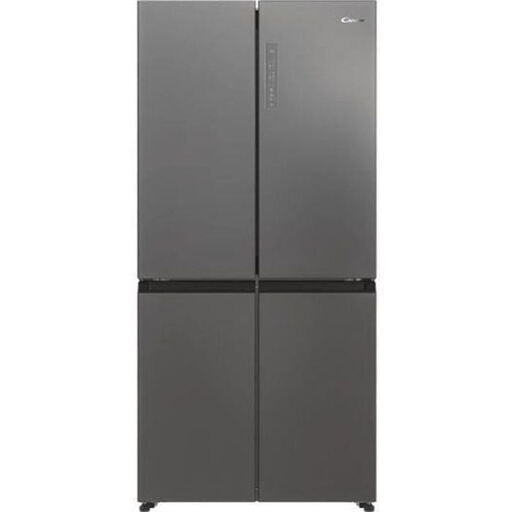 Image unavailable
Candy CFQQ5T817EPS, 4-door fridge freezer, 467 L
Worth considering if you regularly use both fridge and freezer space and have room for a multi-door appliance.
The model name indicates a total capacity of 467 L, an E energy rating and Total No Frost. Check the capacity of each compartment and the kWh/year on its energy label before comparing it with a smaller format.
View on Joybuy
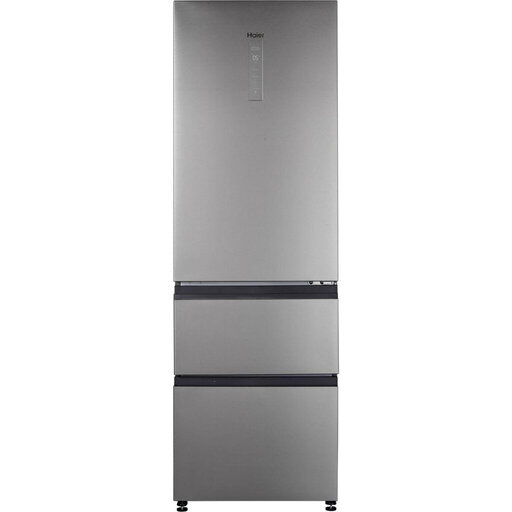 Image unavailable
Haier HTW5618ENMG, 3-door fridge freezer, 360 L
This fridge freezer is suited to households looking to store fresh and frozen food in separate compartments.
The model name indicates a total capacity of 360 L, an E energy rating, Total No Frost, Wi-Fi and My Zone. Check the capacity of each compartment, the kWh/year and the dimensions of the exact model before choosing.
View on Joybuy
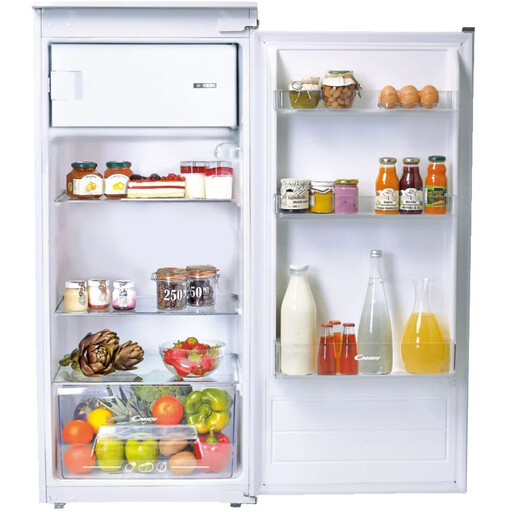 Image unavailable
Candy CIO 225 EE/N, one-door fridge, 179 L
This format is worth considering if you mainly store fresh food and only need a small amount of freezer space.
The model name indicates a total capacity of 179 L. Check how many litres are allocated to the freezer compartment and how it needs to be defrosted, as well as the model’s annual energy use on its label.
View on Joybuy
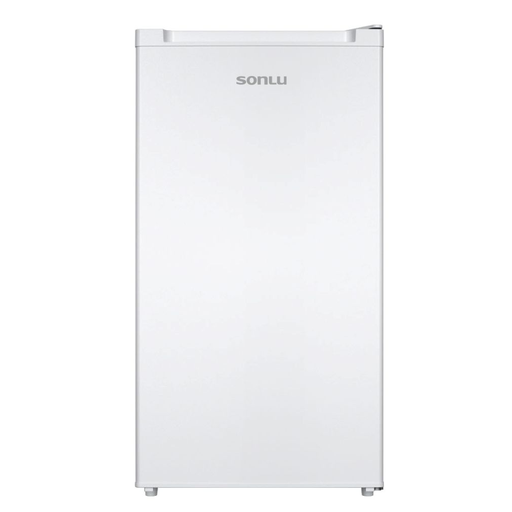 Image unavailable
Sonlu CS-100L, one-door fridge, 82 L
Consider this for modest fresh food storage needs, only if you don’t need to freeze food in this appliance.
The model name indicates an 82 L capacity and an E energy rating. Check that it has no freezer compartment, confirm the space needed for installation and check the kWh/year in the documentation for the exact model.
View on Joybuy
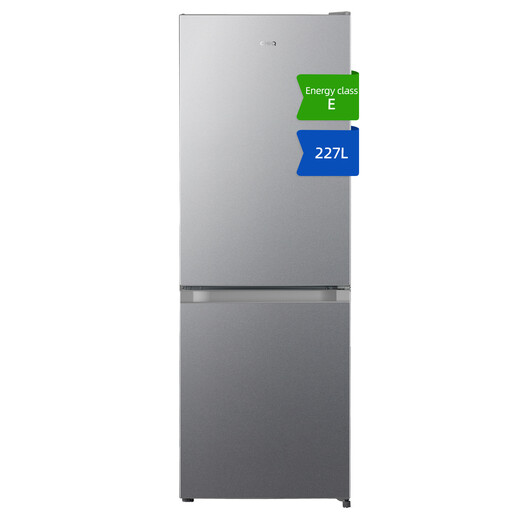 Image unavailable
CHiQ JR227LSE, fridge freezer, 227 L
This layout may suit you if you want a separate freezer compartment without opting for a large fridge freezer.
The model name indicates 153 L of fridge space, 74 L of freezer space, a width of 54 cm, an E energy rating and Low Frost. Low Frost doesn’t mean you’ll never need to defrost it; check the height and kWh/year in the documentation for the exact model.
View on Joybuy
Frequently asked questions
What should I look for on a fridge’s energy label?
Check the capacity of each compartment, annual energy use in kWh/year, the energy rating and the noise level. The European Commission says this information appears on the energy labels for fridges and freezers. Compare energy use once you’ve shortlisted models that offer the storage capacity you need.
Is a fridge freezer right for every household?
No. A fridge freezer is best suited to households that regularly need separate space for fresh and frozen food. If you rarely freeze food, also consider a one-door fridge or one with a small freezer compartment, checking how many litres are available for each use.
Should I replace a fridge as soon as it breaks down?
No. A breakdown doesn’t automatically rule out repair, so ask for a diagnosis and quote before making a decision. In France, ecosystem’s Bonus Réparation scheme may cover an appliance owned by a household and bought in France, if it’s no longer under warranty or insurance and the fault is eligible. Check the applicable conditions with your repairer.
Can I check the energy label before buying online?
Yes. ADEME says you can check the energy label for fridges online as well as in store. If it isn’t shown on the product page, ask for the details of the exact model or search for its reference in the European EPREL database before comparing its features.


