What to compare
Measure the space and delivery route before choosing a size, then check that the balance of fresh and frozen storage suits what you usually keep in stock.
| What matters |
What to check before buying |
Who it matters most to |
| Size and installation |
Measure the height, width and depth, as well as the delivery route. Check the manual for ventilation requirements, hinges and door clearance. |
In a studio flat, I need to make sure the appliance fits the space and the door opens without blocking the way. Around 33% of consumers prioritise the appliance’s size. |
| Fresh food capacity |
Compare the fridge capacity in litres and the layout of the shelves and drawers with what you put away after shopping. |
If I shop for several days at a time, I want to be able to put my fresh food away without running out of space. Around 25% of consumers prioritise this capacity. |
| Freezer capacity |
Compare the freezer capacity in litres separately. If you freeze fresh food, check the compartment’s specifications and star rating. |
If I regularly store frozen food, freezer capacity matters more than the total capacity on its own. Around 25% of consumers put this criterion first. |
| Energy use and noise |
Compare the kWh/year and dB(A) ratings of models with similar capacities and configurations. Also check the appliance’s stated climate class. |
In a studio flat where the fridge is close to the living area, I want to take its energy use and stated noise level into account. Around 17% of consumers make these their priority. |
Fridges available on Joybuy
This selection includes compact models, fridge-freezers and a multi-door fridge, so you can compare fresh and frozen storage options according to the space available and how often you shop.
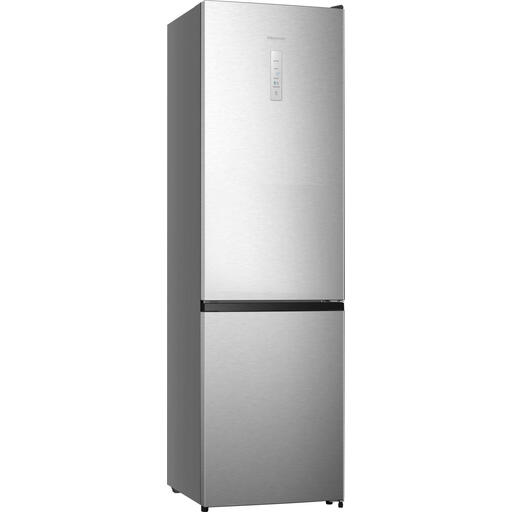 Image unavailable
Hisense RB440N4CCB, 336 L
Worth considering if you want to store fresh and frozen food in separate compartments. The product sheet lists 238 L for the fridge and 98 L for the freezer, Total No Frost, 135 kWh/year, an energy rating of B and 35 dB(A).
Joybuy
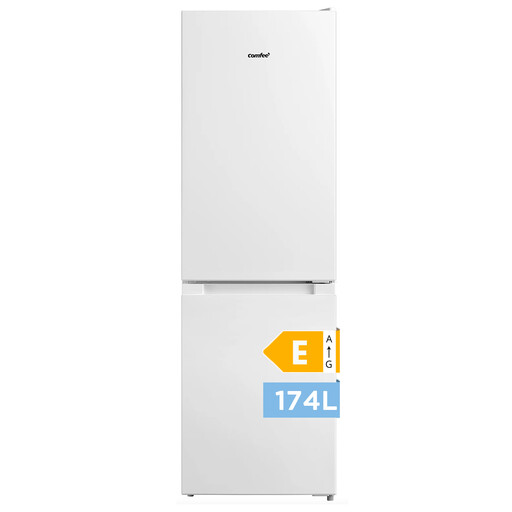 Image unavailable
Comfee' RCB169WH2(E), 174 L
This fridge-freezer is worth considering if you want separate storage for fresh and frozen food at home. The product sheet lists 115 L for the fridge and 59 L for the freezer, Low Frost, a height of 150 cm, a reversible door, three freezer drawers, 39 dB and an energy rating of E.
Joybuy
 Image unavailable
Samsung RF50C530EB1, 495 L
Consider this model if you need a large capacity and have a suitable space for it. The product sheet lists 330 L for fresh food and 165 L for frozen food. It also gives dimensions of 177,6 × 81,7 × 71,5 cm, energy consumption of 301 kWh/year, 40 dB, No Frost and an energy rating of E.
Joybuy
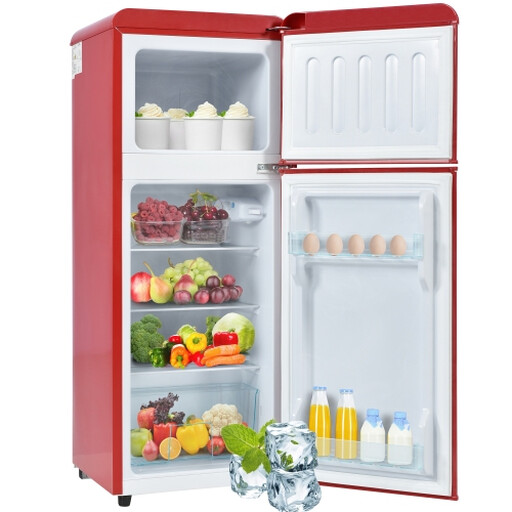 Image unavailable
Retro mini fridge, 92 L
Worth considering if you want a compact model with space for a few frozen items. The product sheet lists 64 L for the fridge and 28 L for the freezer compartment, annual energy consumption of 116 kWh and an energy rating of D.
Joybuy
 Image unavailable
CHiQ JR227LSE, 227 L
Compare this fridge-freezer if you want separate fresh and frozen food capacities in an appliance stated to be 54 cm wide. The product sheet lists 153 L for the fridge and 74 L for the freezer, a 4-star freezer rating, Low Frost, 39 dB and a reversible door.
Joybuy
Frequently asked questions
How can I check that a fridge will fit through my home and open in my kitchen?
Measure the space and delivery route, then check the model’s manual for ventilation requirements, hinge direction and the clearance needed to open the door. Instructions for one manufacturer’s model aren’t a universal clearance requirement for every appliance.
What capacity should I look for if I live alone or shop less often?
UFC-Que Choisir gives 100 to 150 l of usable capacity for one person as a general guide, plus 50 l for each additional person. Compare this with what you actually buy and, if you shop less often, check the capacity for fresh and frozen food separately: the guide doesn’t set a ratio between the two.
How do I read the energy label and climate class?
In France, the EU energy label for the household fridges it covers has used a scale from A to G since 1 March 2021. It also gives information including energy consumption, capacity and noise, according to the European Commission and the DGCCRF. The climate class indicates the ambient temperature range the appliance is designed for. Check the class for your model on its product sheet or rating plate, and don’t confuse it with the energy rating.
Is a freezer compartment enough to freeze fresh food?
Not necessarily: freezer capacity and compartment specifications vary by model. If you want to freeze fresh food or regularly store frozen food, check the compartment’s capacity, star rating and the manufacturer’s guidance before buying.
What temperature should I set to keep food fresh?
Anses recommends keeping the coldest part of the fridge between 0 and +4 °C. Check the temperature regularly, clean the appliance and follow its manual. Avoid overfilling it so that cold air can circulate.


