People living in a studio flat or with a small kitchen
A compact fridge can free up space, but check that its usable capacity and any freezer compartment will suit your shopping.


First, choose a size that fits in your kitchen. Then work out how much space you need for fresh and frozen food, based on how often you shop. A tabletop fridge or a fridge with a single door may suit you if space or your need for freezer storage is limited. A fridge-freezer gives you a separate freezer compartment, while a multi-door model needs more room and offers greater storage capacity. Finally, compare compartment sizes, annual energy consumption and noise levels on the energy label.
A compact fridge can free up space, but check that its usable capacity and any freezer compartment will suit your shopping.
If you top up fresh food regularly and buy few frozen products, focus on the fridge compartment capacity rather than the appliance’s total capacity.
Compare the two compartments separately in a fridge-freezer. A multi-door model is also worth considering if your storage needs and kitchen space make it a suitable choice.
Measure the space, estimate how much room you need for your usual shopping, then compare the specifications of appliances that meet both requirements.
| Factor | What to check | To suit my needs |
|---|---|---|
| Space and size | Measure the height, width and depth, as well as delivery access and the space needed to open the doors. Consider a tabletop fridge for a small kitchen, and choose a multi-door model only if there’s room for this larger format. | My kitchen is narrow, so I want to be able to install the appliance and open its doors without disrupting everyday use. |
| Fridge capacity | Compare the capacity in litres of the fresh food compartment, not just the total capacity. UFC-Que Choisir suggests an average guide of 100 to 150 L for one person, plus 50 L for each additional person. Compare this guide with how often you shop. | I shop frequently and mainly buy fresh food, so a fridge with a single door may suit me if its fridge compartment is big enough. |
| Freezer space | Check whether there’s a freezer compartment and how many litres it holds, separately from the fridge capacity. If you regularly buy frozen food, compare the compartment layouts offered by fridge-freezers in particular. | I shop for several days at a time and buy frozen food, so I want a freezer compartment that suits what I actually store. |
| Energy consumption and noise | According to the European Commission, the energy label shows details including annual consumption in kWh, capacities and airborne acoustical noise emissions. Compare these details across appliances with a similar capacity and layout. | If the fridge is in an open-plan kitchen, its stated noise level matters too. I won’t base my choice on the energy rating alone. |
This figure doesn’t tell you how much space is set aside for fresh or frozen food. A small built-in compartment may not suit you if you regularly buy frozen food.
Compare the capacity in litres of each compartment with the food you usually buy.
An appliance might fit in the space you’ve set aside but not leave enough room to open the doors. It may also be difficult to get through during delivery.
Measure the space, the route to the kitchen and the clearance needed to open the doors of your chosen model.
The rating doesn’t replace the annual energy consumption shown on the label. Capacity and layout also matter when making a useful comparison.
Compare kWh/year across models with similar storage capacity, then check the other information on the label.
Operating noise may matter more when the appliance is near a living or sleeping area.
When comparing models that suit your kitchen, check the noise emissions shown on the energy label.
This selection includes fridge-freezers for storing fresh and frozen food, a compact fridge with a single door, and a multi-door model for greater storage capacity. Check the dimensions and capacity of each compartment to make sure it suits your kitchen and shopping habits.
 Image unavailable
This three-door fridge-freezer has a stated total capacity of 360 L. If you buy both fresh and frozen food, check the capacity of each compartment and measure the space needed to open the doors. The product details list an E energy rating and Total No Frost.
 Image unavailable
This 333 L fridge-freezer may suit you if your shopping calls for separate spaces for fresh and frozen food. Check the capacity of each compartment before choosing. The product details list a C energy rating.
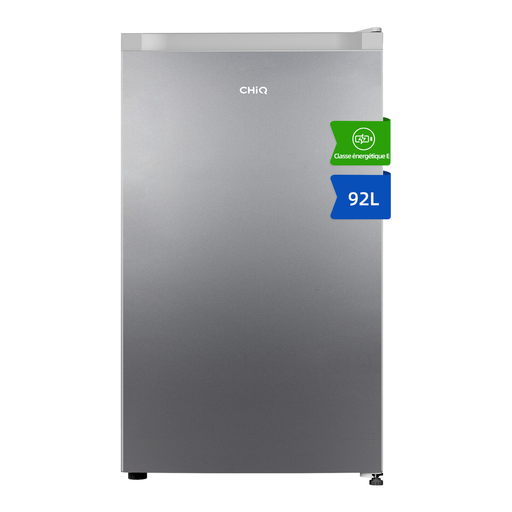 Image unavailable
This 92 L model has a compact freezer compartment and may suit a small kitchen and modest shopping needs. If you buy frozen food, check the freezer compartment capacity. The product details list an E energy rating.
 Image unavailable
This 467 L multi-door model is designed for greater storage needs, provided your kitchen has room for it and its four doors to open. Compare the space for fresh and frozen food with what you usually buy. The product details list an E energy rating and Total No Frost.
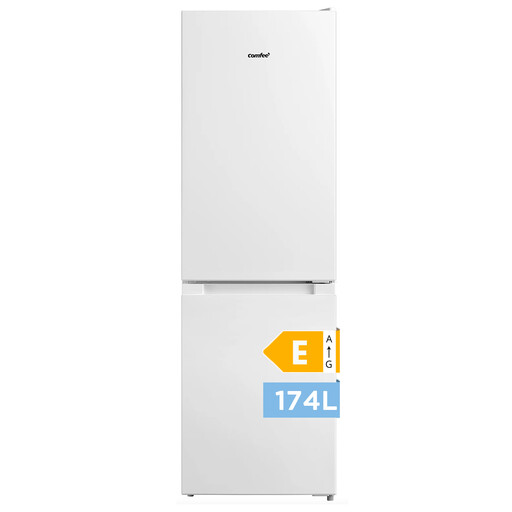 Image unavailable
This 174 L fridge-freezer offers a freezer compartment for a modest-sized kitchen. Check the separate compartment capacities before choosing. The product details list a height of 150 cm, a reversible door, 39 dB, an E energy rating and Low Frost defrosting. Also check the annual energy consumption in kWh on the energy label.
Compare annual energy consumption in kWh, storage capacities and noise emissions across appliances with a similar size and capacity. The European Commission says the label also provides the energy rating and indicates whether the appliance has a freezer compartment. None of these details alone is enough to help you choose a fridge that suits your needs.
It depends on how much you store between shopping trips. Check the freezer compartment capacity in litres separately from the fridge’s total capacity, then compare it with what you usually buy.
Compare the noise emissions shown on the labels of models with a suitable capacity and size. This is particularly important if the appliance is near a living or sleeping area.
Check the fridge’s actual temperature and adjust the settings to suit the food you’re storing. Anses notes that keeping food at a low temperature slows the growth of micro-organisms, so choosing the right capacity doesn’t replace checking the temperature.