Single person or small home
If every centimetre counts, compare the usable capacity with the space available and your freezer needs before choosing a compact appliance.


Start by choosing a capacity that suits your household, how often you shop and how much freezer space you need, then check your kitchen measurements. If space is limited, consider a compact model; if you want separate sections for fresh and frozen food, look at a fridge freezer. A larger model calls for careful checks of both the space available and the route into your kitchen. For an integrated appliance, the housing unit and ventilation must also meet the model’s requirements.
If every centimetre counts, compare the usable capacity with the space available and your freezer needs before choosing a compact appliance.
If you store fresh and frozen food between shops, check the capacity of each compartment in a fridge freezer separately.
A larger model may suit your storage needs, provided you check its width, the route into your kitchen and its annual energy consumption.
Start with what you need to store, then rule out models that won’t fit the intended space before comparing their energy labels.
| Criteria | What to check | My needs |
|---|---|---|
| Usable capacity | Compare the usable litres with the number of people in your household and how often you shop. UFC-Que Choisir suggests 100 to 150 L for one person, then an extra 50 L per additional person as a starting point to adjust to your needs. | I don’t stock up much, so I don’t need a large overall capacity. If I shop less often, I’ll need enough room to store everything. |
| Freezer capacity | Check the fridge and freezer capacities separately. Make sure the freezer section in the format you’re considering suits how much frozen food you buy. | I regularly buy frozen food, so the space set aside for it matters just as much as the total capacity shown. |
| Installation | Measure the appliance, the space and the delivery route. For an integrated model, check the housing unit, hinges and ventilation against the model’s instructions; Electrolux says an integrated appliance needs a ventilated housing unit. | My kitchen has a housing unit, or the route to it is narrow, so I need to check these measurements before choosing a format. |
| Energy and noise | Compare the kWh/year figures for appliances with similar formats and capacities, then compare their noise emissions if noise is a concern. The European Commission says the label also shows the energy efficiency class and storage capacities. | In an open-plan kitchen, I want to compare noise levels. As the appliance runs continuously, I’ll also check its annual energy consumption. |
| Temperature | Check the instructions to find out how to set and monitor the coldest part of the fridge. Anses recommends keeping an eye on the temperature in this area, which should be 4 °C. | I want to be able to check the temperature where I store food that needs to be kept cold. |
This figure doesn’t show how much space is set aside for fresh and frozen food. How the capacity is divided may matter more than the overall figure for your shopping habits.
Estimate your needs for each section separately. Use UFC-Que Choisir’s capacity guide as a starting point, then adjust it to suit your habits.
A cabinet with similar dimensions doesn’t necessarily mean an appliance will fit: the housing unit, door fitting and ventilation all need to be suitable.
Before ordering, measure the housing unit and check the model’s instructions for hinge and ventilation requirements.
The letter on its own doesn’t tell you everything on the label. The European Commission says it also shows details such as annual energy consumption, storage capacities and noise emissions.
Compare the kWh/year figures and noise levels of models with similar formats and capacities.
UFC-Que Choisir says an American-style fridge may need around 1 m of width. So the space where it will stand isn’t the only measurement to consider.
Measure doorways, corridors and turns along the delivery route, then check the dimensions of the model you’ve chosen.
These product ranges can help guide your search; always check compatibility and specifications for the exact model.
A brand worth considering if you’re planning to fit a fridge into your kitchen cabinetry.
A brand to consider if your kitchen has a housing unit for an integrated fridge.
A brand to consider if you’re looking for a fridge freezer with separate sections for fresh and frozen food.
A brand to consider when comparing fridge freezers and larger appliances.
This selection includes fridge freezers and models described as multi-door, so you can compare different capacities to suit your shopping habits and available space. Check the specifications for each model before choosing.
 Image unavailable
Worth considering if your shopping needs space for both fresh and frozen food. The model name lists a 360 L capacity, three doors, Total No Frost and an energy efficiency class of E. Compare the capacity of each compartment and check the dimensions of the space, along with the clearances specified in the instructions.
 Image unavailable
This format is worth comparing if you store large quantities of fresh and frozen food. The model name lists a 467 L capacity, four doors, Total No Frost and an energy efficiency class of E. Measure the space and delivery route, then compare the compartment capacities with your needs.
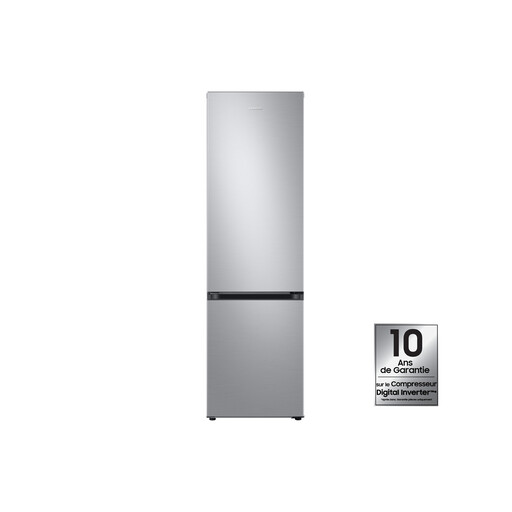 Image unavailable
A fridge freezer to compare if you want to divide your shopping between chilled and frozen food. The model name lists a 390 L capacity and an energy efficiency class of C. Before choosing, check the separate capacities, dimensions and clearance needed for installation.
 Image unavailable
Worth considering if you need plenty of capacity and have a suitable space. The model name lists a 495 L capacity and an energy efficiency class of E. The configuration is described differently in the title and product listing: confirm the door and compartment layout, then measure the delivery route.
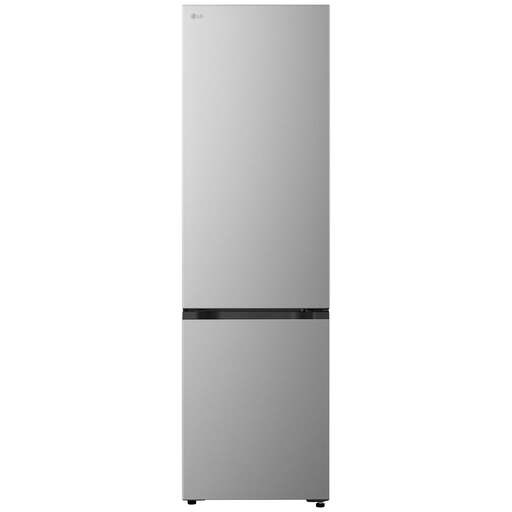 Image unavailable
This freestanding fridge freezer is worth considering if you’re looking for a total capacity of 375 L. The model name lists Total No Frost and an energy efficiency class of B. To see how well it suits your shopping needs, check the separate fridge and freezer capacities. Also check the model’s kWh/year figure on its label and the clearances specified in the instructions.
As well as the energy efficiency class, compare annual consumption in kWh, storage capacities and noise emissions. The European Commission says these details are shown on the label. To compare appliances fairly, look at models with a format and capacity that suit the same needs.
No. An integrated fridge must fit the housing unit and meet its ventilation requirements. Electrolux specifies this for its integrated models; check the instructions for the dimensions, door fitting and ventilation required for the model you’re considering.
Anses recommends keeping an eye on the temperature in the coldest part of the fridge, which should be 4 °C. Check the instructions to find this area and set the appliance correctly.
If you’re buying an appliance of the same type, ask the retailer about taking your old one away. The French Ministry for Ecological Transition says that in-store ‘one-for-one’ take-back is linked to the purchase. Ask the retailer how it works before moving your old appliance.