To keep everything fresh between shops, start by working out how much room you need for fresh and frozen food, then check the dimensions, noise level and energy consumption of the model you’re considering. A fridge-freezer suits regular use of both compartments; a table-top or single-door model may be enough if you have limited space and don’t buy many frozen foods. Choose a multi-door fridge only if your need for extra capacity and organised storage justifies the space it takes up.
Who is this advice for?
Households that stock up on fresh food for the week
If fruit, vegetables, dairy products and prepared meals make up most of your shop, look at the fridge compartment’s capacity in litres rather than the total capacity alone. Shelf layout matters too, so you can fit the containers you usually use.
Households that regularly buy frozen food too
A fridge-freezer gives you two separate compartments to consider. Compare their capacities individually: a large total capacity doesn’t tell you how much room is allocated to the freezer, as you can see from the compartment-by-compartment data in EPREL, the European Commission’s database.
Households with limited kitchen space
In a small kitchen or an alcove, measure the space before choosing between a table-top, single-door or fridge-freezer model. Also check the depth, delivery route and clearances specified for your chosen model.
Which features should you prioritise?
Table-top fridge
Consider this : if your kitchen is very short on space and you don’t have much food to store.
Bear in mind : storage space is more limited, particularly for frozen food, depending on the model. Que Choisir describes table-top fridges as a suitable option for studio flats.
Single-door fridge with freezer compartment
Consider this : if fresh food makes up most of your shop and you only buy frozen food occasionally.
Check : the actual capacity of the freezer compartment, separately from the fridge.
Fridge-freezer
Consider this : if both fresh and frozen food are regular parts of your weekly shop.
Bear in mind : these appliances are generally taller, and the capacity split between the two compartments varies by model.
Multi-door fridge
Consider this : if your shopping genuinely calls for a large capacity and several storage zones.
Check : the space available and the energy consumption of the specific model, rather than choosing a large format by default.
| What to consider |
What to check before buying |
Who should consider it? |
| Space for fresh food |
Compare the fridge compartment’s capacity in litres and the shelf layout with the food you usually buy. |
If you need to store fruit, vegetables and prepared meals until your next shop, fridge space matters more than freezer space. Around 36% of consumers would prioritise this need. |
| Space for frozen food |
Check the freezer compartment’s capacity in litres separately and, if you freeze food, look at the model’s freezing performance too. |
When frozen food is a regular part of your meals, I want to be able to store it without relying on the appliance’s total capacity. This would be the priority for around 29% of consumers. |
| Size |
Measure the height, width and depth, as well as the delivery route; check the manual for clearances and door-opening requirements. |
In a narrow kitchen or one with a fitted alcove, the fridge first needs to fit and be practical to use. Around 21% of consumers would put this constraint first. |
| Energy consumption and noise |
Compare the stated kWh/year and dB figures for appliances of a similar capacity and format. |
If your kitchen is open-plan, I pay as much attention to noise as I do to day-to-day energy consumption. These factors would come first for around 14% of consumers. |
Mistakes to avoid
-
Looking only at total capacity
Two appliances with a similar total capacity may allocate space differently between the fridge and freezer compartments. The total alone therefore won’t tell you whether there’s enough room for your shopping.
Compare the capacity in litres of each compartment on the model’s product information or in EPREL, the European Commission’s database.
-
Choosing a large model without planning how it will be installed
An appliance may be the right size for your shopping but still not fit through the doorway or allow the doors to open fully once it’s in place.
Measure the delivery route and the space where it will go, then check the manual for ventilation clearances and door-opening requirements.
-
Assuming frost-free means more storage space
No Frost technology deals with frost; it doesn’t tell you the available capacity or how it’s divided between compartments. Check which parts of the appliance the feature applies to as well.
Consider this a separate maintenance feature, after comparing the capacities that suit your shopping.
-
Forgetting about noise and energy consumption once you’ve chosen the capacity
The right capacity isn’t enough to distinguish between appliances designed for an open-plan kitchen. ADEME describes the energy label as a useful tool when choosing an appliance.
Compare the stated annual energy consumption and noise level of models with a similar format and capacity.
Brands to consider
Bosch
Freestanding and integrated fridge-freezers to consider based on the space you need for fresh and frozen food and the installation requirements.
- Bosch lists the KGN36VLED with Total NoFrost and the KIS87EDD0 with Vario Zone and Big Box storage features.
- These features apply to these specific models: check the capacity, dimensions, energy rating and noise level of the model you’re considering.
Electrolux
Integrated fridge-freezers to consider if your kitchen has an alcove and you still need a built-in freezer.
- Electrolux lists the KNT6ME18S4 and ENT6MD18S4 as 177.2 cm integrated fridge-freezers with TwinTech No Frost.
- Check the installation requirements and the capacity of each compartment; this technology label doesn’t tell you either.
Whirlpool
Integrated and freestanding fridge-freezers, offering different capacity splits between the fridge and freezer.
- For its freestanding WHK2 6493 X4E, Whirlpool lists a 340 L fridge and a 150 L freezer. The capacity of each section is more useful when choosing than the general ‘fridge-freezer’ label alone.
- These capacities apply to this model and don’t describe the brand’s other fridge-freezers.
LG
Multi-door fridges to consider if your weekly shop really calls for a large capacity and storage divided into zones.
- LG lists a capacity of 645 L for its GMF960EV4E multi-door fridge.
- Compare the capacity of your chosen model with its dimensions and energy consumption; a large capacity isn’t necessary for every household.
Haier
A range that lets you compare different formats before choosing one to suit your kitchen and storage habits.
- Haier offers single-door, double-door, fridge-freezer and multi-door models.
- The format alone doesn’t determine capacity, dimensions or energy consumption: compare the specifications of the specific model.
Fridges to suit your needs
These Joybuy models are designed to store fresh and frozen food between shops. The selection includes mainly fridge-freezers, as well as a multi-door model for households that need a larger capacity. First choose the layout and format that suit your household, then check the specifications of the model.
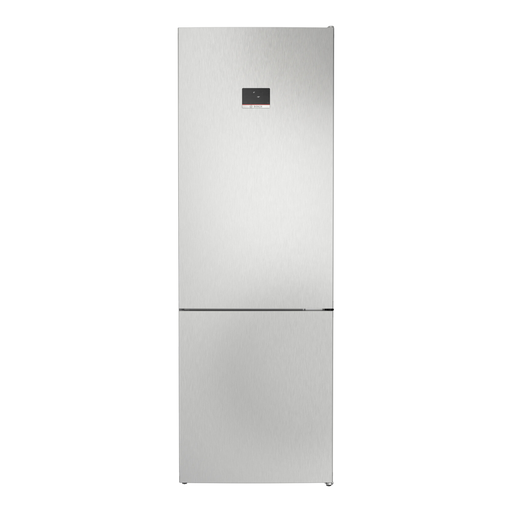 Image unavailable
Bosch KGN497LDF, 440 L grey fridge-freezer, D rating
Worth considering if your shopping calls for separate space for fresh and frozen food, and you have enough room in your kitchen.
The product name gives a capacity of 440 L and an energy rating of D. Check the capacity of each compartment and the dimensions before choosing.
View on Joybuy
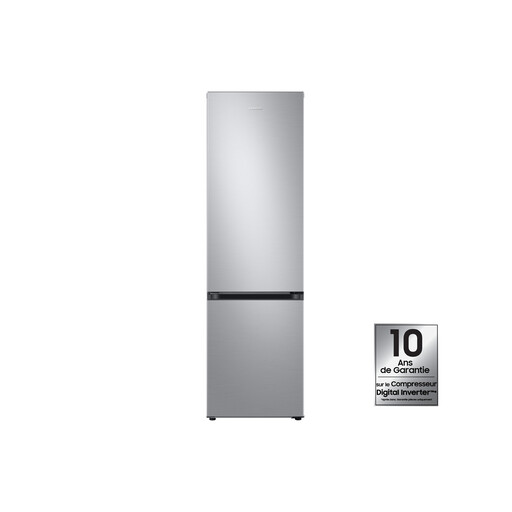 Image unavailable
Samsung RL38C602CSA, 390 L grey fridge-freezer, C rating
An option to consider if you regularly buy fresh and frozen food and are looking for a fridge-freezer.
The product name gives a capacity of 390 L and an energy rating of C. Compare the capacity of each compartment and check how much space you’ll need to open the door.
View on Joybuy
 Image unavailable
Candy CFQQ5T817EPS, 467 L silver four-door multi-door fridge-freezer, Total No Frost, E rating
Consider this if your shopping needs plenty of storage space and your kitchen can accommodate a multi-door fridge.
The product name lists a 467 L capacity, four doors, Total No Frost, Smart Inverter and an energy rating of E. Check the capacity of each zone, the delivery route and the door-opening space.
View on Joybuy
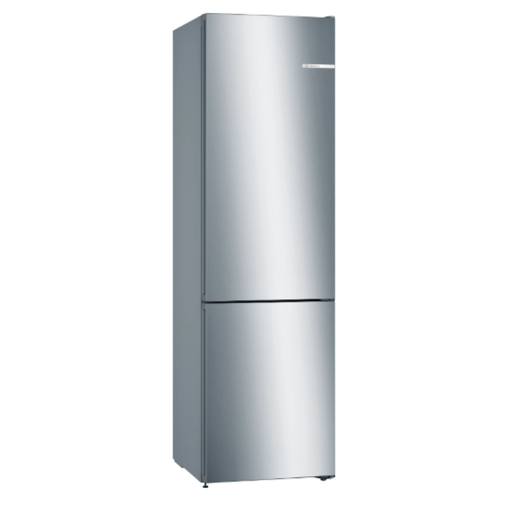 Image unavailable
Bosch KGN39VLEB, 368 L stainless steel-effect fridge-freezer, E rating
Worth considering for a shop that includes both fresh and frozen food, once you’ve checked the space available in your kitchen.
The product name gives a capacity of 368 L and an energy rating of E. Compare the capacity of each compartment and check the stated noise level if the appliance will be near a living area.
View on Joybuy
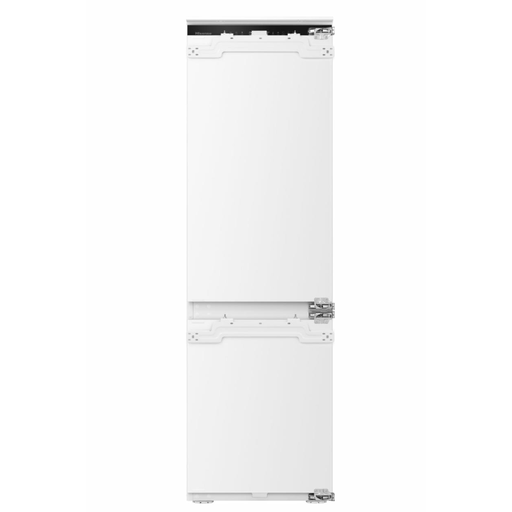 Image unavailable
Hisense RB3B250SAWC, 252 L integrated fridge-freezer, No Frost, C rating
Worth considering if your kitchen needs an integrated appliance to store both fresh and frozen food.
The product name lists a 252 L capacity, No Frost, an Inverter compressor and an energy rating of C. Before buying, check the manual against the dimensions of your alcove and the door-fixing system.
View on Joybuy
Frequently asked questions
Is the energy label enough to help me choose a fridge?
No. It helps you compare the stated specifications, but the fridge also needs to suit your shopping and your kitchen. ADEME recommends using the label as a guide when choosing; also check the capacity of both compartments, the dimensions and the model’s noise level.
Which capacity should I compare if I buy fresh and frozen food?
Compare the capacity in litres of the fridge and freezer compartments separately. The European Commission’s EPREL database lists these capacities individually, as the total alone won’t tell you how much room there is for each type of food.
How should I check the temperature after installation?
Set and check the fridge temperature rather than relying on your choice of model alone. Anses recommends a temperature below 4 °C and highlights the importance of keeping it consistent to store food safely.
Is a multi-door fridge right for every family that shops once a week?
No. A multi-door model makes sense mainly if the amount you buy and the need for separate storage zones genuinely call for it. Make sure it fits in your kitchen and compare its energy consumption with appliances that suit your needs. Que Choisir notes that American-style fridges generally use more energy than standard models, although this doesn’t apply to every multi-door fridge.


