Households that shop for fresh and frozen food every week
Compare the fridge and freezer capacities separately. A fridge freezer is worth considering if you use both compartments regularly, but the split between them varies by model.


If your regular shop includes fresh and frozen food, compare the capacity of both compartments in a fridge freezer. A top-freezer fridge or a fridge with no freezer may be a better fit if space is limited or you mainly need room for fresh food. UFC-Que Choisir suggests starting with 100 to 150 L for one person, then adding 50 L for each additional person. Adjust this guide to suit your habits, and check the dimensions and installation requirements of the model you choose.
The space available and how much frozen food you need to store are just as important as the size of your household when choosing a format.
Compare the fridge and freezer capacities separately. A fridge freezer is worth considering if you use both compartments regularly, but the split between them varies by model.
A top-freezer fridge may be a good fit if height is a constraint. Before choosing between this format, a fridge with no freezer and a small fridge freezer, compare the usable capacity with your shopping needs and measure the space.
For a built-in appliance, measure the housing unit and check the door-panel fixing and ventilation requirements. A freestanding model also needs the clearances specified in its manual.
First work out how much space you need for your shopping, then check that the model can be installed and used in your kitchen.
| What to consider | What to check | My needs |
|---|---|---|
| Usable capacity | Compare the usable capacity in litres with the number of people in your household and how often you shop. UFC-Que Choisir suggests 100 to 150 L for one person, then 50 L for each additional person. | I shop for several days at a time, so I need room for groceries and meals. I shouldn’t choose based on total capacity alone. |
| Freezing | Check the fridge and freezer capacities separately. If you freeze food, also check the specifications of the compartment designed for this purpose. | Frozen food is a regular part of my shop. As UFC-Que Choisir points out, a small freezer compartment may not be suitable for this use. |
| Installation | Measure the height, width and depth, the delivery route and the space needed to open the doors. For a built-in model, also check the housing unit, door-panel fixing and ventilation requirements in the manual. | In my kitchen, the appliance needs to fit through to its designated spot, and its doors must open without obstructing the way. |
| Noise | Compare the stated noise level in dB(A) on the product pages for the models you’re considering, especially if your kitchen opens onto your living space. | My kitchen is open-plan, so I want to take the appliance’s noise level into account when choosing where to put it. |
| Energy | Compare annual energy consumption in kWh between appliances of a similar format and capacity. The European Commission’s EPREL database includes details such as dimensions, capacity and annual consumption. | I want to compare the energy use of models with a capacity that suits my shopping needs, rather than looking at the class letter alone. |
Two fridges with a similar total capacity may have different amounts of space for fresh and frozen food. A small freezer compartment may also be too small for regular shops that include frozen food.
Work out how much space you need in each compartment, then compare their usable capacities on the product page.
Available height alone won’t tell you whether it will fit. Depth, door-panel fixing and ventilation requirements also matter.
Compare your measurements and door system with the installation manual for the model you’ve chosen.
Depending on the housing unit, installation may require adjustments to the cabinet or door panel.
The appliance needs to be able to release heat. Whirlpool recommends a clearance of 5 cm above and 10 cm behind in its ventilation advice; check the requirements in the manual for the model you choose.
Allow for the clearances specified in addition to the appliance’s dimensions, and consider how close it will be to an oven or another heat source.
UFC-Que Choisir notes that a multi-door fridge freezer can weigh and measure about the same as an American-style fridge freezer. So it’s not just the space in your kitchen you need to measure.
Measure the route to its final position, the available depth and the space needed to open the doors. If the model has a water dispenser, check how it’s supplied with water.
These models include freestanding fridge freezers for storing fresh and frozen food, as well as four-door appliances with different capacities and configurations to compare. Check the capacity of each compartment and the installation measurements to make sure they suit your shopping and kitchen.
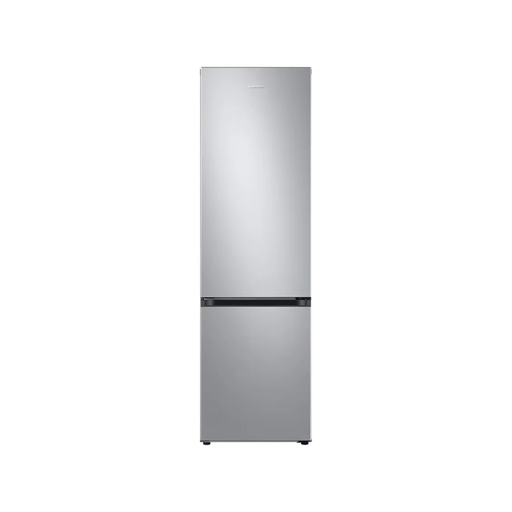 Image unavailable
This D-rated fridge freezer is worth considering if your shopping includes fresh and frozen food. Compare the usable capacity of each compartment with your needs, then check the clearances and door opening in your kitchen.
 Image unavailable
This E-rated model is listed as featuring Total No Frost technology. If you’re looking for more room for your shopping, compare the fresh and frozen capacities, then measure the route in and the space needed to open all four doors.
 Image unavailable
This E-rated fridge freezer is listed as featuring Total No Frost, with separate compartments for fresh and frozen food. Check the capacity of each compartment and the dimensions needed for installation.
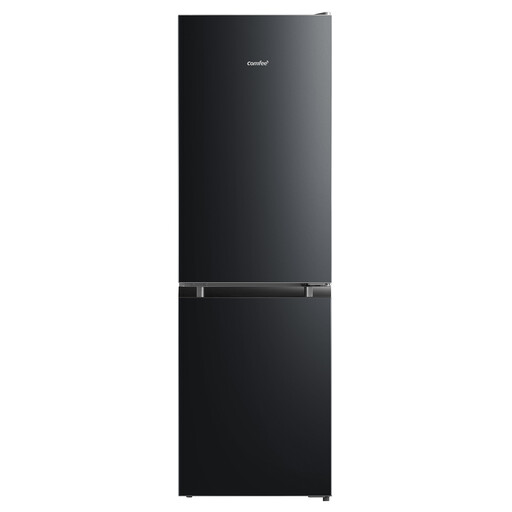 Image unavailable
This freestanding model is listed as featuring Low Frost and a reversible door. It may be worth considering if space is limited but you still need a freezer compartment. Compare the capacity of each compartment with your shopping needs, and check the installation measurements, noise and energy consumption figures before choosing.
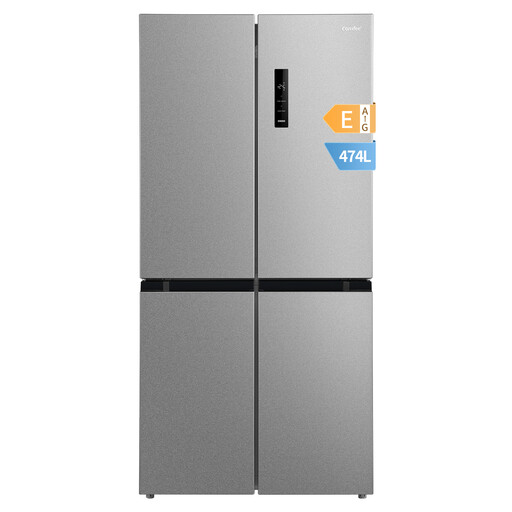 Image unavailable
This E-rated model has a stated total capacity of 474 L. If you need room for both fresh and frozen food, check how the capacity is divided between compartments, then measure the delivery route and the space needed to open the doors.
UFC-Que Choisir suggests starting with 100 to 150 L for one person, then adding 50 L for each additional person. Adjust this guide to how often you shop, and compare the space for fresh and frozen food separately.
Not necessarily if you regularly buy frozen food, as UFC-Que Choisir points out. In that case, compare models with a separate freezer compartment and check its usable capacity and specifications.
Measure the space, the route to the kitchen and the room needed to open the door. Allow for the clearances specified in the manual: Whirlpool’s ventilation advice, for example, recommends 5 cm above and 10 cm behind.
Check all three dimensions of the housing unit, the door-panel fixing, the door-opening direction and the ventilation requirements for the model you’ve chosen. Bosch’s ventilation requirements vary according to the installation, so follow the manual for your model rather than relying on measurements for another appliance.
Compare their annual consumption in kWh alongside their capacity and format, rather than looking at the energy class alone. The European Commission’s EPREL database includes details such as dimensions, annual consumption and capacity for the appliances listed.