First, choose a format that fits the space, the delivery route and, for a built-in appliance, the housing, door front and planned ventilation. A fridge-freezer is a good choice if you regularly store fresh and frozen food; a table-top model suits more modest needs, while an American-style fridge needs to justify the space it takes up based on your storage habits. Then compare the capacity of each compartment, the annual energy consumption and the noise level of the model you’re considering.
Who is this choice for ?
Households renovating a fitted kitchen
If your fridge will sit behind a door front, measure the housing and check the hinge system and delivery access. Bosch Home Appliances recommends checking the dimensions and door fixing when replacing a built-in appliance; ventilation requirements also depend on the instructions for the model you choose.
Households storing fresh and frozen food
A fridge-freezer lets you cater for both needs in one appliance. Compare the fridge and freezer capacities separately: the total capacity doesn’t tell you how much space you’ll have for your usual shop.
Households whose space or storage needs call for a particular format
In a very small kitchen, a table-top model is worth considering if its capacity is sufficient. For larger food shops, an American-style fridge means checking the space for the appliance, door clearance and the entire delivery route, as Whirlpool France points out.
What should you check before buying ?
First rule out any formats that can’t be installed, then choose a storage layout that suits your shopping habits. For each model on your shortlist, also compare the annual energy consumption and noise level shown on its energy label and product page.
| Criteria |
What to check |
Who it matters to |
| Fit and installation |
Measure the housing or available space, as well as the delivery route. For a built-in model, also check the hinges and ventilation requirements against the instructions. |
If I’m replacing an appliance behind a door front, the door and cabinet need to remain compatible; around 39 % of consumers put these installation requirements at the heart of their decision. |
| Space for fresh and frozen food |
Compare the capacity and layout of each compartment, rather than looking at the total capacity alone. |
If I regularly use both compartments for my meals, I want to avoid running out of space in one while leaving the other underused. This balance is the top priority for around 31 % of consumers. |
| Compact size |
Check the available height, usable capacity and whether the table-top model you’re considering has a freezer compartment. |
In a small kitchen, saving space can matter more than storing a large amount of food; around 15 % of consumers prioritise a compact appliance. |
| Large capacity and delivery |
Measure the space, door clearance and access routes the appliance will need to pass through, including with its packaging. |
If I do large food shops, I may be happy with a bigger appliance, as long as I can get it into the kitchen and use it without obstructing movement. Capacity comes first for around 15 % of consumers. |
Mistakes to avoid
-
Assuming the appliance dimensions are the same as the housing dimensions
A fridge might look suitable for your kitchen but still fail to fit in the cabinet, allow the door front to be attached or pass through the access routes with its packaging.
Take three separate sets of measurements: the space or housing, door clearance and delivery route. For a built-in model, also check the hinge type and the appliance’s ventilation diagram.
-
Choosing based on total capacity alone
If the split between the two compartments doesn’t suit your shopping habits, a large total capacity may not be very useful day to day.
Make a note of what you usually keep chilled and frozen, then compare the capacity and layout of each compartment on the product pages for the models you’re considering.
-
Overlooking installation requirements
Available space alone isn’t enough to determine whether an appliance can be installed properly. Electrolux recommends allowing for air circulation, keeping the appliance away from heat sources and observing the specified ambient temperature.
Follow the instructions for your chosen model for clearances and installation requirements; don’t assume they’re the same as for another model.
-
Forgetting what to do with your old fridge
When replacing an appliance, arrange for the old one to be removed at the same time as the new one is delivered. ADEME says that refrigeration appliances can be handed in through a take-back scheme or taken to the designated area at a recycling centre.
Before you set a replacement date, ask the retailer what take-back options are available with your delivery.
Brands to consider by format
Bosch
The Bosch Home Appliances range includes built-in and freestanding fridge-freezers, as well as compact and large-format appliances.
- The range includes several formats to suit different kitchen projects.
- For a built-in model, check the dimensions and hinge type of the specific model; the fact that a format is available in the range doesn’t guarantee it will fit your kitchen.
Electrolux
Electrolux France product pages for built-in fridge-freezers specify details such as housing dimensions and the capacity of each compartment.
- This information helps you check how a model will fit your kitchen and storage habits.
- The dimensions and energy consumption of one model don’t apply to the others; consult its own instructions for installation and ventilation.
Whirlpool
Whirlpool France guides cover everything from compact fridges to American-style models.
- They highlight how much space a table-top model needs, as well as the access required for a large appliance.
- Check the dimensions and capacities of the model you choose, and, if you want a dispenser, check how it’s supplied with water.
Samsung
Samsung France offers American-style fridges for kitchens with suitable space and access routes.
- The dimensions and specifications of a particular model can help you plan its installation and delivery.
- The RS68N8320S9/EF is listed with a tank-fed dispenser; don’t assume other models use the same water supply.
Fridges to explore on Joybuy
These models let you compare several fridge-freezers, including a built-in option, as well as an American-style fridge. Check each one against your available space and the capacity you need in each compartment.
 Image unavailable
Bosch KGN33NLEB, 282 L fridge-freezer
Worth considering if you want to store fresh and frozen food in one fridge-freezer with a bottom freezer.
Listed capacity of 282 L, energy rating E and stainless-steel finish. Check the installation dimensions, noise level and delivery access for your kitchen.
View on Joybuy
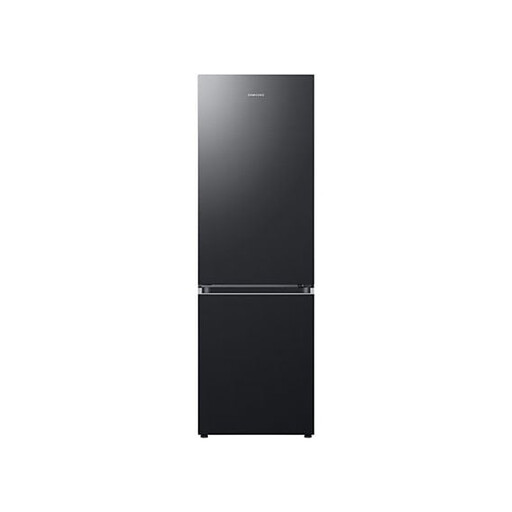 Image unavailable
Samsung RB34C704DB1, 344 L fridge-freezer
Consider this if you’re looking for one appliance to keep both fresh and frozen food.
Listed capacity of 344 L, energy rating D and black finish. Compare the capacity of each compartment, and check the depth, annual energy consumption and delivery access before choosing.
View on Joybuy
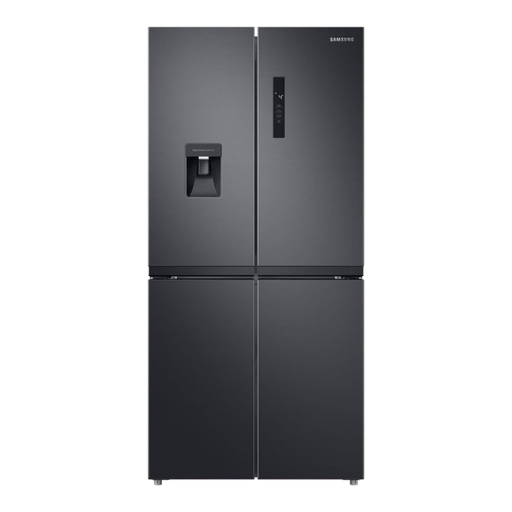 Image unavailable
Samsung RF48A401EB4, 488 L American-style fridge
Consider this if your storage needs call for a large format and your kitchen and delivery access can accommodate it.
Listed capacity of 488 L, energy rating E and black finish. If a dispenser is important to you, confirm how it’s supplied with water for this specific model.
View on Joybuy
 Image unavailable
CHiQ JR227LSE, 227 L fridge-freezer
Worth considering in a kitchen where width is a priority, without giving up separate compartments for fresh and frozen food.
Listed width of 54 cm, with 153 L for the fridge and 74 L for the freezer. The title specifies Low Frost, a reversible door and energy rating E; also check the height, depth and annual energy consumption.
View on Joybuy
 Image unavailable
AEG NSC6M18FES, 249 L built-in fridge-freezer
Consider this for a fitted kitchen if the housing, door front and planned installation are compatible with this model.
Listed capacity of 249 L, TwinTech No Frost technology and energy rating E. Check the housing dimensions, hinges, ventilation and annual energy consumption in the model documentation.
View on Joybuy
Frequently asked questions
What should I measure before buying a built-in fridge ?
Measure the height, width and depth of the housing, then compare them with the installation diagram for the model. If you plan to reuse a door front, check the hinge system too: Bosch Home Appliances recommends checking the fixing when replacing an appliance. Follow the ventilation instructions for your chosen model.
Does an American-style fridge with a dispenser need a water supply ?
Not always: Samsung France says its RS68N8320S9/EF uses a tank and doesn’t need to be connected to a water supply. For other models, check how the dispenser is supplied with water on the product page before planning the installation.
What should I compare on a fridge energy label ?
Compare the annual energy consumption and noise information for the model you’re considering, then weigh these against the capacity of each compartment. ADEME presents the energy label as a way to compare relevant appliances; the energy rating alone doesn’t replace checking capacity and fit.
How should I arrange for my old fridge to be taken away ?
Ask the retailer about take-back options before arranging the replacement. In France, the decree of 8 October 2014 published by Légifrance provides, among other things, for used equipment to be taken back at the point of sale when the appliance being sold is collected there; confirm with the retailer what arrangements apply to your order. ADEME also says refrigeration appliances can be taken to the designated area at a recycling centre.
What temperature should I check after installation ?
Anses recommends a temperature between 0 and +4 °C at the coldest point in the fridge. Check this after installation and avoid overfilling the appliance, so that cold air can circulate freely.


