People furnishing a small kitchen
In a kitchenette, under a worktop or in an alcove, the appliance’s dimensions aren’t the only thing to consider. You’ll also need to allow for the door to open and for the ventilation specified in the manual.


First, choose a fridge that will fit in your kitchen and whose door can open properly. Then decide how much usable space you need for fresh and frozen food, based on the size of your household and how often you shop. A compact fridge suits a tight space, a larder fridge prioritises chilled storage, a fridge-freezer gives you two separate compartments, while a multi-door model needs more room. Before you decide, compare the capacity of each compartment, annual energy consumption, noise levels and the installation requirements for each model.
In a kitchenette, under a worktop or in an alcove, the appliance’s dimensions aren’t the only thing to consider. You’ll also need to allow for the door to open and for the ventilation specified in the manual.
The space for fresh food should suit your usual shopping, without taking up all the room you need for frozen food.
If you shop less often or prepare meals in advance, check the freezer capacity. A small freezer compartment in the fridge may not be enough.
First rule out formats that won’t fit your space or storage needs. Then compare the features of the models that remain.
Consider it : for a kitchenette or smaller shops, when saving space is the priority.
Bear in mind : its compact size means less room for food, and freezer capacity varies by model.
Consider it : if you prioritise space for fresh food and rarely buy frozen food, or store it elsewhere.
Bear in mind : depending on the model, the freezer compartment may be small or absent.
Consider it : if you regularly shop for both fresh and frozen food.
Bear in mind : the two compartments share the total capacity, so how that space is divided matters just as much as the overall capacity.
Consider it : for a household that will make good use of a large capacity and has a suitable space for it.
Bear in mind : check its width and depth, the delivery access route and annual energy consumption before choosing this format.
| Criteria | What to check | Who it matters to |
|---|---|---|
| Space and installation | Measure the height, width and depth, and check the door clearance. Refer to the model’s manual for its ventilation requirements. | In a narrow kitchen, I need to be able to install and open the appliance without obstruction. This would be a priority for around 29% of consumers. |
| Fresh food capacity | Compare the fridge’s usable capacity with the number of people in your household and how often you shop. Que Choisir Ensemble suggests 100 to 150 litres for one person as a starting point, plus 50 litres for each additional person. Adjust this to suit your household’s habits. | If I shop for several days at a time, I need enough room for the fresh food I usually buy. Around 29% of consumers would prioritise this capacity. |
| Freezer capacity | Check the freezer’s own capacity and distinguish it from a small freezer compartment. | If I shop less often or prepare meals in advance, I need enough room to store frozen food. Around 24% of consumers would put this capacity first. |
| Everyday use | Compare the stated kWh/year and noise levels of models with similar formats and capacities. Also consider the cooling system. | In a home where I can hear the appliance running, noise matters just as much as energy consumption and maintenance. Around 18% of consumers would put these factors first. |
An appliance may look spacious enough, but its freezer compartment could be too small for the frozen food you buy regularly. A small freezer compartment may not suit the same needs as a full-sized freezer.
Work out how much space you need for fresh food and how much for frozen food, then compare the two compartments separately.
The right depth doesn’t guarantee that the appliance will fit through the access route on delivery or that its doors will open properly. Inadequate ventilation can also affect how it works.
Measure the space and the access route, then follow the clearances and installation requirements in the manual for your chosen model.
The letter rating doesn’t tell you the annual kWh consumption or usable capacity. The Directorate-General for Competition, Consumer Affairs and Fraud Control notes that the old A+, A++ and A+++ ratings were phased out when the scale changed in 2021.
Compare the annual energy consumption of models with similar capacities and formats, then check how the space is divided between the fridge and freezer.
Frost-free or No Frost cooling doesn’t remove the need to set the appliance correctly, check its temperature and leave space for air to circulate between food items.
Choose a cooling system that suits your maintenance needs and how you want the cold air distributed. For food storage, Anses recommends keeping the coldest part of the fridge between 0 and +4 °C.
These appliances come in two formats for storing fresh and frozen food: fridge-freezers and multi-door models. Compare their capacities and check that they’ll fit in your kitchen. The same criteria apply when choosing a compact or larder fridge, even though neither is included in this selection.
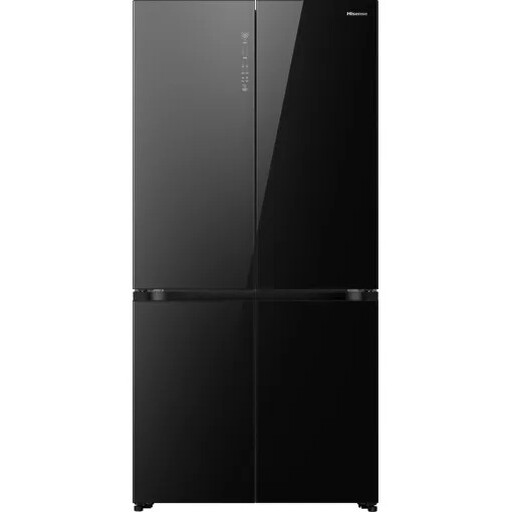 Image unavailable
Worth considering if you need plenty of space for fresh and frozen food and have room in your kitchen for a multi-door model.
Stated capacity: 591 L; energy rating E. Check the manual for the required clearances and how the capacity is divided to make sure the convertible compartment suits your needs.
 Image unavailable
Worth considering if you regularly store both fresh and frozen food in a fridge-freezer.
Stated capacity: 360 L, Total No Frost system and energy rating E. Check the capacity of each compartment and the ventilation requirements before deciding where to put it.
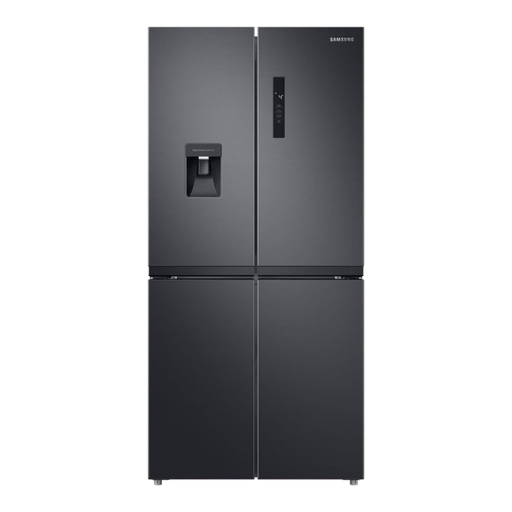 Image unavailable
Worth considering for a household that stores both fresh and frozen food and has enough room for a multi-door model.
Stated capacity: 488 L; energy rating E. Measure the space, door clearance and delivery access route before choosing this format.
 Image unavailable
Worth considering if you’re looking for separate doors for easy access to fresh and frozen food.
Stated capacity: 467 L, four doors, Total No Frost system and energy rating E. Check that you have enough room for the appliance, the doors to open and adequate ventilation.
 Image unavailable
Worth considering if space is limited but you still want a separate compartment for frozen food.
Stated capacities: 153 L for the fridge and 74 L for the freezer; 54 cm wide, Low Frost system and energy rating E. Before buying, also check the model’s height, depth, clearances, kWh/year and noise level.
Que Choisir Ensemble suggests 100 to 150 litres of usable capacity for one person as a starting point, plus 50 litres for each additional person. Adjust this guide to how often you shop, and check separately how much room you need for frozen food.
No. Follow the installation instructions for your chosen model. Bosch’s guidance for its appliances and Electrolux’s advice on air circulation show why the clearance specified for one model shouldn’t be applied to all others.
Check the model number, energy rating and annual consumption in kWh, then compare these details with the capacity you need. France’s Ministry of the Economy says that fridges sold both in shops and online must carry an energy label. The Directorate-General for Competition, Consumer Affairs and Fraud Control explains that the A to G scale replaced the old ratings with ‘+’ symbols in 2021.
Anses recommends keeping the coldest part of the fridge between 0 and +4 °C. Check the temperature after installation and avoid overfilling the appliance so that air can circulate.