First, choose a fridge that will fit in your kitchen, then compare the space for fresh food with the space for frozen food. A table-top or single-door model is better suited to households with limited freezer needs; a fridge-freezer gives you separate spaces for both when you shop less often. A multi-door model is only worth considering if the extra capacity suits your habits and there’s enough room for it in your kitchen.
Who is this guide for?
Someone living alone with a small kitchen
In a studio flat or kitchenette, the available space may make a table-top fridge the best option. To estimate the capacity you need, Que Choisir gives an average guide of 100 to 150 L of usable capacity for one person. Adjust this according to the food you keep between shops.
A household that shops less often
If you shop once a week or less often, consider how much room you need for fresh food and, separately, for frozen food you keep in reserve. Que Choisir includes shopping frequency and frozen food consumption among the factors to consider.
A growing household
An appliance chosen for a previous home or a smaller household may no longer suit your current needs. Que Choisir suggests starting with an additional 50 L of usable capacity per person. If you’re considering a larger model, also check how much space it will take up and whether you can get it into your kitchen.
What to consider
Start with the available space and what you need to store between shops: a single-door fridge if you mainly need refrigeration, a fridge-freezer if you need a separate space for frozen food, or a multi-door model if you need the extra capacity and have room for it. For an integrated appliance, also check the required housing dimensions and door system.
| Factor |
What to check |
Who should consider it? |
| Space and installation |
Measure the space, check how the doors open and make sure the appliance will fit through the delivery route. Consult the manual for the clearances required for that model. |
In a small kitchen, I need to be able to install the appliance without blocking a walkway or stopping the doors from opening properly. Around 29% of consumers would rank this as their main consideration. |
| Fridge capacity |
Compare the litres available for fresh food with the size of your household and the amount you keep between shops. |
If my household has grown, I want to avoid fresh food quickly filling an appliance chosen for fewer people. This would be a priority for around 29% of consumers. |
| Freezer space |
Check the freezer capacity separately from the fridge capacity, especially if you stock up on frozen food. |
If I shop less often, I need enough room to store frozen food without relying on a small compartment that can’t accommodate my supplies. Around 24% of consumers would put this capacity ahead of other factors. |
| Noise and energy use |
Compare the kWh/year and noise emissions shown on the energy label for appliances of a similar capacity. |
In a studio flat or open-plan kitchen, I pay attention to the appliance’s everyday noise and energy use. This would be the main concern for around 18% of consumers. |
Mistakes to avoid
-
Looking only at the total capacity
Two appliances with a similar total capacity may divide the space differently between the fridge and freezer. The energy label shows the capacity of each compartment, as explained by the European Commission.
Work out what you keep between shops, then compare the two capacities separately.
-
Measuring only the visible space
An appliance may fit in its space but still get in the way when you open a door or lack enough clearance for ventilation. Installation requirements vary by model.
Before ordering, check the delivery route, door swing and the requirements in the manual.
-
Choosing a multi-door model just for its capacity
A large capacity can suit a household that stores a lot of food, but the appliance still needs to fit in your kitchen. In its guide to this style, Que Choisir says that American-style fridges use more energy than conventional fridges.
Make sure the extra capacity suits your usual shopping habits, then compare the dimensions and annual energy use.
-
Overlooking noise and kWh/year
Everyday operation can be particularly important in an open-plan kitchen or a small home. The European Commission explains that the energy label provides information about energy use and noise emissions.
Once you’ve worked out how much space and storage you need, compare these figures across models with a similar capacity.
Brands to consider for this choice
Compare models by usable capacity, compartment layout, installation dimensions and energy label to find the right fit for your kitchen and shopping habits.
Fridges available on Joybuy
These models include fridge-freezers in a range of capacities, a multi-door model and an integrated option. Compare their layouts and the balance of fridge and freezer space to find one that suits your kitchen and shopping habits.
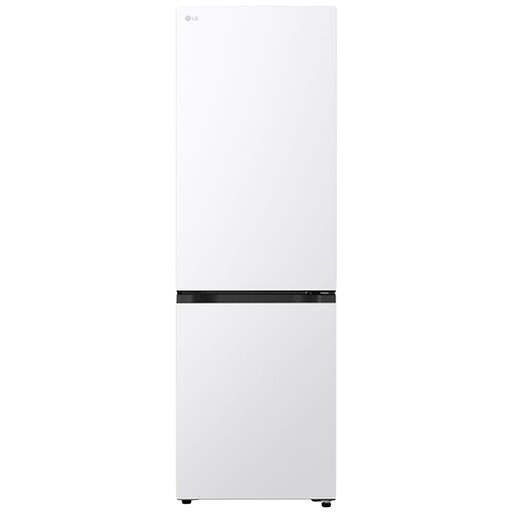 Image unavailable
LG GBBSJ1CCSW, white 333 L fridge-freezer
A fridge-freezer to consider if you want to keep fresh and frozen food in the same appliance.
Stated total capacity: 333 L; stated energy class: C. Check the capacity of each compartment and the installation clearances before choosing where to put it.
View on Joybuy
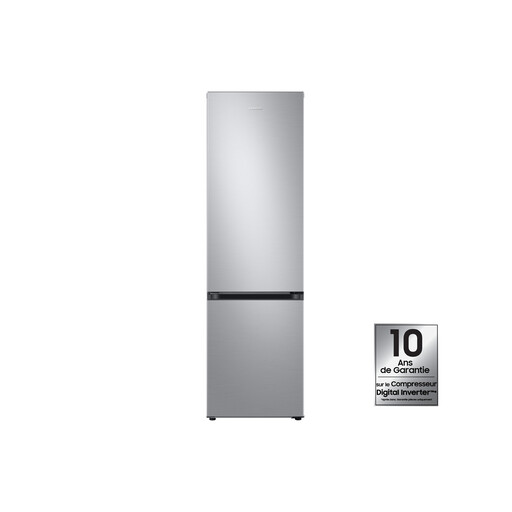 Image unavailable
Samsung RL38C602CSA, grey 390 L fridge-freezer
A fridge-freezer to consider if your household needs room for fresh and frozen food between shops.
Stated total capacity: 390 L; stated energy class: C. Compare the compartment capacities and check the door opening and clearances specified in the manual.
View on Joybuy
 Image unavailable
Candy CFQQ5T817EPS, 467 L multi-door fridge-freezer
A style to consider if your household stores large quantities of food and has enough room in the kitchen.
Four doors, stated total capacity of 467 L and stated energy class E. Check the delivery route, door opening and installation clearances.
View on Joybuy
 Image unavailable
AEG NSC6M18FES, white 249 L integrated fridge-freezer
An integrated model to consider if your kitchen has a housing unit designed for this type of appliance.
Stated total capacity: 249 L; stated energy class: E. Check the housing dimensions, door system and compartment capacities on the model’s label.
View on Joybuy
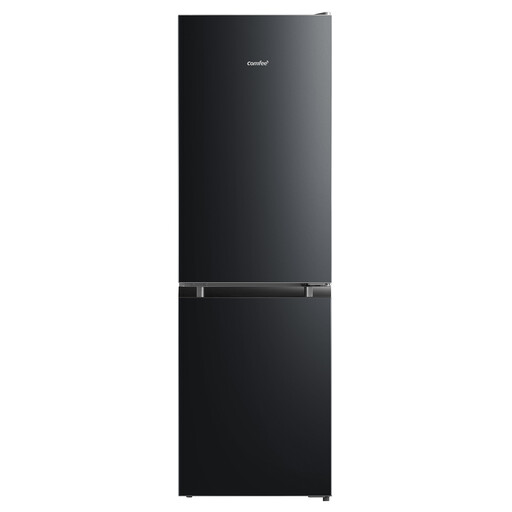 Image unavailable
Comfee’ by Midea RCB230BL2EU(E), black 174 L fridge-freezer
A smaller-capacity fridge-freezer to consider for a small household that also wants to keep frozen food.
Stated total capacity: 174 L; Low Frost technology and a reversible door are stated in the product title. Check the compartment capacities, energy label and required clearances.
View on Joybuy
Frequently asked questions
How do you compare fridges in different styles?
First compare the usable space for fresh and frozen food, then look at the figures on the energy labels for models with a similar capacity. The European Commission says the label includes information such as compartment capacities, energy use and noise emissions.
What temperature should your fridge be?
Anses recommends keeping the coldest part of your fridge between 0 °C and 4 °C. Avoid overcrowding it too, so that air can circulate.
How much clearance should you leave around the appliance?
Follow the clearances specified in the manual for your chosen model rather than assuming the same distance applies to every fridge. Also make sure air can circulate and the doors can open where you plan to install it.
Can you plug in a fridge as soon as it’s delivered?
Check the manual for your model before plugging it in. In its installation advice, Electrolux recommends waiting at least 4 hours to let the oil flow back into the compressor. Check the instructions for your appliance rather than applying this waiting time automatically.


