Households that do a weekly shop
Compare the space for fresh and frozen food with the amount you bring home in one go. Que Choisir’s testing protocol looks, among other things, at how fridge-freezers cope with a weekly shop.


Start by choosing a usable capacity and style to suit your usual shopping habits and available space, then compare the fridge and freezer compartments separately. A small appliance may be suitable if you shop frequently and buy small quantities; for a weekly shop or lots of frozen food, check the capacity of each compartment rather than relying on the total volume. Before ordering, also check how the doors open, the ventilation clearances specified in the manual, the noise level and the energy label.
Compare the space for fresh and frozen food with the amount you bring home in one go. Que Choisir’s testing protocol looks, among other things, at how fridge-freezers cope with a weekly shop.
A smaller model frees up space in the kitchen, but check that its usable capacity and any freezer compartment are sufficient between shopping trips.
Look at the freezer capacity in litres separately from the total volume. If it won’t suit your usual stock levels, also compare the layout of a larger appliance or consider adding a separate freezer.
Start with the food you store between shopping trips, then rule out any styles that can’t be installed properly in your kitchen.
| Criteria | What to check | What I need |
|---|---|---|
| Style | Compare the footprint and layout of an under-counter, single-door, fridge-freezer or multi-door model. For a fitted kitchen, check whether an integrated model will fit the housing unit. | I shop little and often and have limited space: a compact model may be enough if I don’t store much. If I want to organise more food, I’ll compare larger styles without assuming their capacity will automatically suit me. |
| Fridge capacity | Check the usable capacity of the fridge, not just the total volume. Que Choisir suggests 100 to 150 L as a general guide for one person, plus 50 L for each additional person. Compare this with what you actually store. | If I do a weekly shop or prepare several meals in advance, I need enough room for fresh food. I shouldn’t choose based only on the number of people in my household. |
| Freezer capacity | Compare the freezer capacity in litres separately and, if you plan to add a lot of food at once, check the model’s stated freezing capacity. A separate freezer is another option if you need to size your fresh and frozen storage independently. | I keep lots of frozen food: a large total capacity won’t help if the freezer compartment is too small for what I buy. |
| Installation | Measure the height, width and depth, the delivery route and the space needed to open the doors. Check the ventilation clearances and climate class in the manual; for an integrated model, also check the housing unit dimensions and door-fixing system. | In a narrow kitchen or next to a wall, I need to be able to open the door and pull out the drawers. An appliance that fits into the space with the doors shut may not meet this need. |
| Noise and energy | Compare the stated noise level in dB(A), energy class and annual consumption for appliances with similar styles and capacities. Que Choisir considers fridges rated below 40 dBA among the quietest. | My kitchen opens onto the living area, so noise matters as much as storage space. I’ll also compare the energy information rather than assuming consumption based on the appliance’s external size alone. |
| Features | Check whether No Frost, a door alarm or a compartment with a dedicated temperature setting would be useful for your regular needs. Read the model’s operating conditions rather than assuming that features with similar names all work in the same way. | I want to cut down on manual defrosting or be alerted if a door is left open. These features may be useful, but they’re no substitute for suitable capacity or installation in line with the manual. |
Two appliances with a similar total capacity may divide the space differently between fresh and frozen food. This matters particularly if you buy in bulk or prepare meals in advance.
Compare the usable capacity of each compartment with what you usually store.
A wall may obstruct the doors or prevent you from reaching the drawers. An integrated model must also suit the housing unit, door fixing and ventilation requirements specified for that model.
Before ordering, check the delivery route, door swing, whether the doors are reversible and the instructions in the manual.
No Frost and a door alarm are designed for specific needs, but they won’t make up for a compartment that’s too small for your food.
Work out how much storage space you need first, then consider which features you’ll actually use.
A noise rating or energy class on its own doesn’t tell you how much storage space the appliance offers or what’s needed to install it. For a meaningful comparison, the styles and capacities should be similar.
In an open-plan kitchen, compare the stated noise level alongside usable capacities, annual consumption and the clearance needed around the appliance.
These manufacturer examples show what information to compare for a specific model; they don’t represent every model from each brand.
The freestanding KGN39VLCT-B fridge-freezer is an example of a product listing that gives separate capacities for fresh and frozen food.
The WHSD184011A1FR is an example of the installation requirements to check for an integrated fridge.
The EXB3AE82R under-counter integrated fridge is worth considering if you have limited height in your housing unit.
These Joybuy models let you compare fridge-freezers, a four-door model and a side-by-side appliance if you need space for both fresh and frozen food. Check the capacity of each compartment and the installation requirements before choosing.
 Image unavailable
A fridge-freezer to consider if you want to store fresh and frozen food in one appliance. The product title lists 360 L, Total No Frost and an E energy class. Check how the capacity is divided and the installation clearances in the product listing and manual.
 Image unavailable
This four-door style is worth comparing if you store large quantities of fresh and frozen food. The product title lists 467 L, Total No Frost and an E energy class. Also measure the delivery route and the space needed to open the doors.
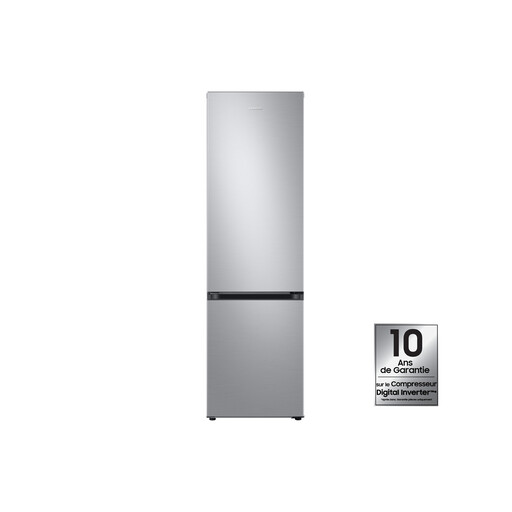 Image unavailable
This fridge-freezer is for households looking to compare fresh and frozen storage in one appliance. The product title lists 390 L and a C energy class. Check the capacity of each compartment, as well as the height, delivery route and clearances specified in the manual.
 Image unavailable
This fridge-freezer is worth comparing if you shop regularly and want to balance fresh food space with freezer capacity. The product title lists 333 L and a C energy class. Check how the compartments are divided and confirm in the manual how much clearance the appliance needs.
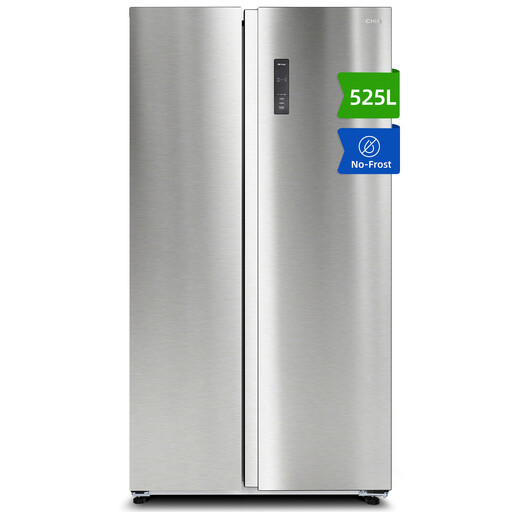 Image unavailable
This side-by-side model gives you the chance to look at a large amount of storage in both compartments. Its product title lists 333 L of fridge space and 192 L of freezer space, for a total of 525 L, and specifies No Frost and an E energy class. Check its dimensions, door clearance and annual consumption before deciding.
Start with the food you have just after shopping and how long you store it for. Que Choisir suggests 100 to 150 L as a general guide for one person, plus 50 L for each additional person. Adjust this guide to the amount of fresh and frozen food you actually keep.
Measure the space and delivery route, then check how much room you need to open the doors and access the drawers. For an integrated model, also check the housing unit and door fixing against the model details. In every case, follow the ventilation clearance instructions in the manual.
Don’t assume this location is suitable. Electrolux recommends keeping the appliance away from heat sources. Also check the climate class and installation requirements in the manual for the model you’re considering.
No. This feature is mainly for people who want to reduce frost build-up and manual defrosting. Check capacity, layout and installation first, then compare this feature alongside the noise level and energy consumption of models that suit your needs.
Check the energy class and annual consumption shown, ideally for appliances with a similar style and capacity. The EU rules for energy labelling of household refrigeration appliances, as outlined by the European Union, govern this information. The appliance’s external size alone won’t tell you how much energy it uses.