Fitting out a small space
In a studio flat or small kitchen, first check the space, the route in, how the doors open and the ventilation. Capacity comes next.


First, measure the space and the route into your kitchen. Then choose the capacity you need based on the size of your household, how often you shop and how much room you need for frozen food. A table-top fridge is a good fit when space is tight and your storage needs are limited; a fridge freezer is better suited to regular use of the freezer. A freestanding model avoids the need for a cabinet recess, while a built-in model requires you to check that the recess, door and ventilation are suitable for the exact model.
In a studio flat or small kitchen, first check the space, the route in, how the doors open and the ventilation. Capacity comes next.
If you regularly bring home a full shop, choose fridge capacity to suit the number of people in your household and the amount of fresh food you need to store.
If you stock up on frozen food or freeze fresh ingredients, look at the freezer compartment separately rather than relying on the total capacity alone.
First choose the storage capacity you need, then make sure it will fit in your kitchen. Table-top and fridge-freezer formats describe how storage is arranged, while freestanding or built-in refers to how the appliance is installed.
| What matters | What to check | Who is it for ? |
|---|---|---|
| Space and access | Measure the space and delivery route, including doors and handles. Check the door swing and the ventilation clearances specified for the model. | In a small kitchen, I need to be able to get the appliance in and open its doors without obstruction ; around 31 % of consumers make this a priority. |
| Capacity for fresh food | Compare the fridge's usable capacity. UFC-Que Choisir suggests 100 to 150 L for one person, plus 50 L for each additional person, adjusted to suit your shopping habits. | For a household that cooks and regularly brings home fresh food, I want enough room to put the shopping away without filling the fridge to capacity ; around 31 % of consumers prioritise this capacity. |
| Freezing | Compare the freezer compartment's capacity separately and check its type based on the food you want to store or freeze. | If I keep frozen food in stock or freeze fresh food, a small freezer may not meet my needs ; around 23 % of consumers prioritise freezing capacity. |
| Energy use and noise | Among appliances suited to your needs, compare the annual kWh consumption and noise emissions shown on the energy label. If you are replacing an appliance, also check the arrangements for taking the old one away. | If I have an open-plan kitchen or am replacing an old appliance, I want to take noise, energy use and removal into account ; these are the main considerations for around 15 % of consumers. |
The capacity you want is no good if the appliance cannot get into your kitchen, its doors cannot open properly or you cannot meet the manufacturer's ventilation requirements.
Measure the delivery route and the space, then check the full dimensions and clearances in the instructions for the exact model.
If you regularly store frozen food or freeze fresh ingredients, the space and type of compartment matter more than the appliance's total capacity.
Check the freezer capacity separately and make sure the compartment suits the way you plan to use it.
Extra capacity takes up more space in your kitchen and does not remove the need to check annual energy consumption.
Choose fridge and freezer capacity to suit your shopping habits, then compare annual kWh consumption across models with a suitable capacity.
When replacing a fridge, you need to coordinate the removal of the old one with the delivery of the new one.
Confirm the removal arrangements with the retailer when you order, and keep your receipt and the sales description.
These models include freestanding fridges in a range of capacities and a built-in model to consider if your kitchen has a compatible recess. Choose based on the space available and how you want to divide the capacity between fresh and frozen food.
 Image unavailable
Worth considering if you want plenty of space for fresh and frozen food, provided you have a suitable space and access route. The model name indicates four doors, Total No Frost technology and an E energy rating ; compare the capacity of each compartment before choosing.
 Image unavailable
An option to consider for regular shopping trips that include fresh and frozen food. The model name indicates Total No Frost, an E energy rating, Wi-Fi and My Zone ; check how the capacity is divided and how much space is needed to open the doors.
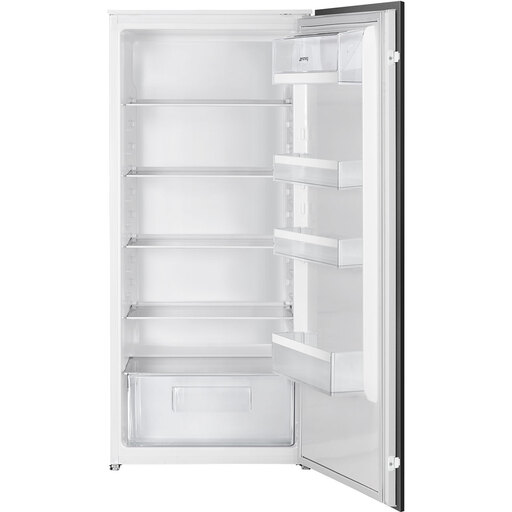 Image unavailable
Worth considering for a kitchen that already has a cabinet recess, once you have checked its dimensions, the door system and the required ventilation. The model name indicates an E energy rating ; check the energy label for the exact model to confirm the compartment capacities and annual energy consumption.
 Image unavailable
Worth comparing if width is limited and you also need space for frozen food. The model name indicates a 153 L fridge, a 74 L freezer, Low Frost, a four-star compartment and an E energy rating. Also check the height, access route and required clearances.
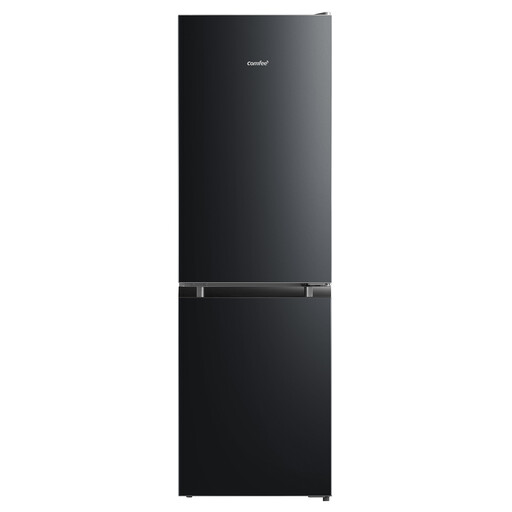 Image unavailable
An option to consider if you want a total capacity of 174 L for your kitchen, including a compartment for frozen food. The model name indicates a freestanding design, Low Frost, an adjustable thermostat and a reversible door. Check it will fit using the full dimensions, and consult the energy label for the exact model.
UFC-Que Choisir gives a general guide of 100 to 150 L for one person, plus 50 L for each additional person. Adjust fridge capacity to suit your shopping habits, and check freezer capacity separately if you store frozen food.
Measure the width, height and depth of the space, as well as the route into your kitchen. Allow for the doors, handles and how they open ; for ventilation, follow the clearances specified in the instructions for the model you choose.
For domestic fridges and freezers, the European Commission states that the energy label has used a scale from A to G since 1 March 2021. Compare annual energy consumption in kWh, compartment capacities and noise levels across appliances that suit your needs.
Tell the retailer you are replacing an appliance and confirm the removal arrangements when you order, especially if your new fridge is being delivered to your home. Make sure the delivery and collection route is clear, too.
In France, according to the Ministry of the Economy, the statutory guarantee of conformity applies to goods sold by a trader to a consumer, whether new, second-hand or refurbished. Contact the retailer and keep your receipt and the sales description so you can explain the fault.