Household that does a big weekly shop
You spread several days’ worth of shopping and prepared meals between the fridge and freezer: compare the capacity of each compartment.


Start by considering the space available and how much you actually need to keep chilled and frozen: total capacity alone isn’t enough. A table-top model is a compact option, a single-door fridge prioritises fresh food, a fridge freezer balances both, and a multi-door model needs more space. For an integrated appliance, the housing and ventilation are key.
You spread several days’ worth of shopping and prepared meals between the fridge and freezer: compare the capacity of each compartment.
You’re looking for an appliance that fits into a compact kitchen, without assuming its small freezer compartment will be enough for your frozen food.
You’re replacing an appliance in a space with restrictions due to the housing, ventilation or delivery route. Check it will fit before choosing convenience features.
First, measure the space and access points, then consider your chilled and frozen storage needs separately. You can then compare models by their energy label and noise level.
| What matters | What to check | Who it matters to |
|---|---|---|
| Capacity for shopping and meals | Compare the fridge’s usable capacity with the amount you buy. As a guide, UFC-Que Choisir recommends 100 to 150 L for one person, then an additional 50 L per person, adjusted to suit your household’s habits. | If I prepare meals and shop for several days, I want enough chilled storage without relying on the total capacity alone. Around 31 % of consumers prioritise capacity for fresh shopping and prepared meals. |
| Space for frozen food | Check the freezer compartment’s capacity and layout, then compare them with how much you want to store. | If I regularly freeze portions or buy frozen food, I compare freezer capacity rather than the total alone. Around 25 % of consumers make this their top priority. |
| Size, installation and delivery | Measure the appliance, the space and the delivery route. For an integrated model, also check the housing, door fixing and ventilation requirements in the model’s instructions. | In a fitted kitchen or where access is narrow, I need to check that the appliance can be delivered and installed in the intended space. Around 25 % of consumers prioritise whether it will fit their kitchen and access points. |
| Energy use and noise | ADEME recommends using the energy label as a guide. For each model, compare the energy class, kWh/year and stated noise emissions. | If my kitchen is next to a living area, I want to compare the energy use and noise of the models I’m considering. Around 19 % of consumers put these features first. |
A small freezer compartment may not be enough, even if the total capacity seems suitable for your shopping.
Make a note of your chilled and frozen storage needs separately, then compare the capacity of each compartment across the models you’re considering.
Delivery access, door clearance and ventilation can prevent an appliance from being installed, even if it has enough storage for your needs.
Measure the route and the space, then follow the installation instructions for your chosen model, particularly if it’s an integrated appliance.
If the measurements don’t work, installing or returning the appliance may also require some extra planning.
Energy class, noise, capacity and cooling technology vary from one specific model to another.
Note down the full model number and check its energy label and product details before you decide.
The TSE1285N is an example of a freestanding table-top fridge for a small space.
The Ksfd1820 is an example of a freestanding single-door fridge for when chilled storage is the priority.
The KGN392I1F is an example of the features to compare on a specific fridge freezer.
The RF24BB620EB1EF is an example of a high-capacity multi-door fridge.
The models listed here show two different installation options: a freestanding fridge freezer and an integrated fridge.
This selection includes compact fridges with a freezer compartment, fridge freezers, an integrated model and multi-door or side-by-side designs.
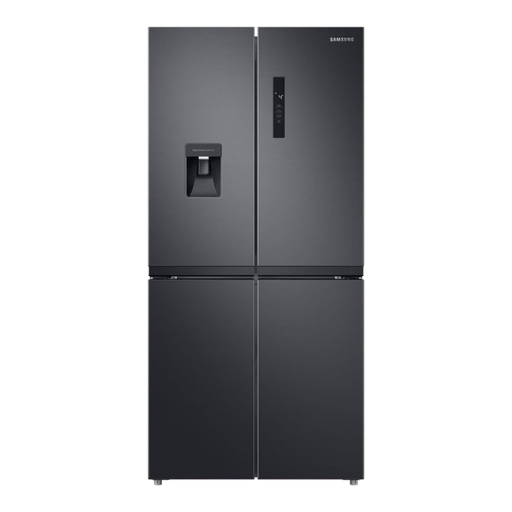 Image unavailable
A good option if you want to split a big shop between several chilled and frozen compartments.
Stated capacity: 488 L, including 329 L for the fridge and 159 L for the freezer. E energy class, 298 kWh/year and 41 dB. The product details list Twin Cooling.
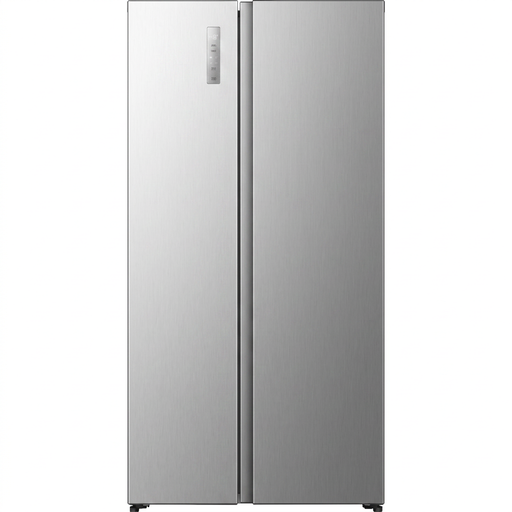 Image unavailable
Worth considering if you want to keep chilled and frozen food in side-by-side compartments.
Stated capacity: 544 L, including 347 L for the fridge and 197 L for the freezer. D energy class, 254 kWh/year and 37 dB. The product details list Total No Frost.
 Image unavailable
Worth considering for a fitted kitchen if the housing and sliding door installation match the model’s specifications.
The product details list 186 L for the fridge and 62 L for the freezer, an E energy class and 37 dB(A). Stated dimensions: 59,2 × 58,5 × 186,2 cm. TwinTech Total No Frost is also listed.
 Image unavailable
This freestanding fridge freezer could suit you if you want to store shopping and prepared meals in one appliance.
Stated capacity: 360 L, split between 235 L for the fridge and 125 L for the freezer. E energy class, 271 kWh/year and 35 dB(A). The product details list Total No Frost and dimensions of 59,5 × 66,7 × 185 cm.
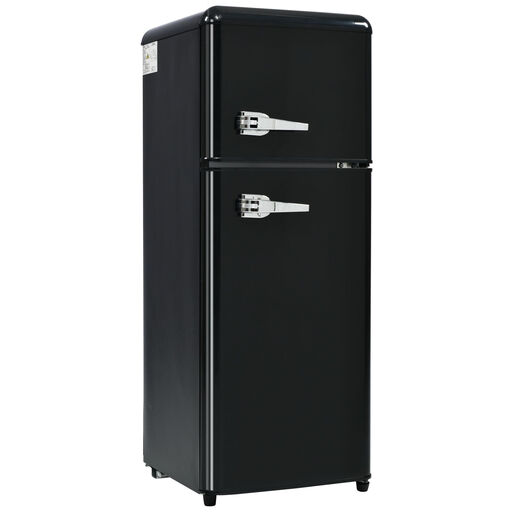 Image unavailable
Its compact design is worth considering if you have modest storage needs and live in a small home.
Capacity stated in the product title: 92 L in total, including 28 L for the freezer. D energy class and a noise level of 45 dB, according to the product title.
Compare the litres of chilled and frozen capacity separately on each model’s energy label and product details. UFC-Que Choisir’s guide of 100 to 150 L for one person, then an additional 50 L per person, is a starting point. Adjust it to suit your shopping routine and household habits.
For an integrated model, check the housing, door fixing and ventilation against the instructions for that model. For any large appliance, measure doorways, corridors and lifts along the delivery route. Ventilation requirements vary depending on the model and how it’s installed.
Anses recommends checking the temperature regularly, keeping the coldest area between 0 and +4 °C, avoiding overfilling the appliance and covering food once opened. It also recommends cleaning the fridge regularly and refrigerating cooked dishes within two hours.
For fridges covered by the European Union energy label, compare the A to G energy class, kWh/year, compartment capacities and noise emissions listed for each model. The cost in pounds will then depend on your electricity tariff.
When you buy a new appliance, the DGCCRF reminds retailers that they must offer free take-back of an equivalent used appliance on a « one for one » basis. Ask the retailer how to arrange this. For a purchase by an individual from a professional seller, the Ministry of the Economy states that the legal guarantee of conformity is compulsory and should be claimed from the seller; it is separate from an extended commercial warranty.