Households shopping for several days at a time
If you store food until your next shop, consider separately how much room you need for fresh and frozen food. UFC-Que Choisir links the choice of format and capacity to a household’s shopping habits.


Start by choosing how much space you need for fresh and frozen food, based on what you keep between shops, then check the appliance’s dimensions and how the doors open. A fridge with a top-mounted freezer or a larder fridge could suit you if you store very little frozen food; a fridge-freezer gives you two separate compartments, while a multi-door model offers more capacity if your kitchen can accommodate it. Also compare the noise level and stated annual energy consumption of the models you’re considering.
If you store food until your next shop, consider separately how much room you need for fresh and frozen food. UFC-Que Choisir links the choice of format and capacity to a household’s shopping habits.
A compact model is worth considering if space is limited or you only buy a few things at a time. However, check that its capacity and any freezer compartment suit your frozen food shopping, as the guides from UFC-Que Choisir and Boulanger suggest.
In an open-plan living space, compare the stated noise level and noise class alongside the dimensions. Côté Maison highlights noise as an important comfort factor in this type of layout.
Start with a format that gives you the right balance of fresh and frozen storage. Then compare dimensions, noise and energy consumption to find the best match for your shopping habits.
Worth considering : if you buy a few things at a time and need a low-profile appliance for a small kitchen.
Bear in mind : storage capacity is limited; check whether any freezer compartment is large enough for your frozen food shopping.
Worth considering : if fresh food storage is your priority and you rarely buy frozen food.
Bear in mind : whether it has a freezer compartment, and its capacity, depend on the model.
Worth considering : if you regularly shop for fresh and frozen food that needs to be stored in two separate compartments.
Bear in mind : the capacity split varies by model, so total capacity alone won’t tell you which one to choose.
Worth considering : if you buy large quantities or shop less often, and have enough space for the appliance.
Bear in mind : measure carefully to make sure it will fit, including delivery access and room to open the doors.
| Feature | What to check | Who it matters to |
|---|---|---|
| Space for fresh food | Usable fridge capacity in litres; don’t rely on the total capacity alone. | I want enough room for fresh food bought for several days, without running out of space before my next shop. Around 31% of shoppers concerned would prioritise this capacity. |
| Balance of fresh and frozen storage | Separate usable capacities for the fridge and freezer; whether it has NoFrost, if easy maintenance matters to you. | I regularly buy both types of food, so I need each compartment to hold the amount I usually keep. Around 25% of shoppers concerned would prioritise this balance. |
| Size and noise | Width, height, depth, door clearance, noise level in dB(A) and noise class. | In a small kitchen or open-plan space, I want to fit the appliance without obstructing access or compromising on noise comfort. Around 19% of shoppers concerned would put these constraints first. |
| Large storage capacity | Capacity of each compartment, dimensions and stated annual energy consumption in kWh. | When I shop in large quantities or less often, I need more space for fresh and frozen food. Around 25% of shoppers concerned would put this need first. |
For one person, UFC-Que Choisir suggests 100 to 150 litres of usable capacity as a guide, which you should adapt to your shopping habits. To compare the energy consumption and noise levels of the appliances you’re considering, ADEME recommends checking their energy labels. Remember to consider their individual compartment capacities too.
Two fridges with a similar total capacity may offer different amounts of space for fresh and frozen food. The overall figure won’t tell you whether each compartment can hold the food you usually store.
Compare the usable capacity of each compartment separately, then consider how much food you keep between shops.
An appliance may fit in its space, but the doors might not open properly or there may not be enough room to deliver it.
Measure the available width, height and depth, as well as the access route and the clearance needed for the doors.
Extra capacity is only useful if you need it. UFC-Que Choisir notes that American-style fridge-freezers can use more energy than standard models; compare specific appliances before making a decision.
Work out how much capacity you really need, then compare the stated annual energy consumption, dimensions and noise levels of the models you’re considering.
Food preservation, defrosting and connected features vary by model and may depend on how the appliance is used. Their names don’t replace the storage features you need.
Read the conditions for the specific model, particularly for connected features, after checking its capacity, size, noise level and energy consumption.
Bosch’s freestanding fridge-freezer range may appeal to households looking for two compartments in a standard-width appliance.
Some Liebherr fridge-freezers offer features for organising fresh food and managing frost.
Some Samsung fridge-freezers are designed to offer generous internal capacity while keeping to a standard width.
These fridge-freezers and multi-door models offer different ways to balance fresh and frozen storage for shopping that needs to last several days. Compare the stated capacity of each model with the space available in your kitchen. This selection doesn’t include models with a top-mounted freezer or larder fridges.
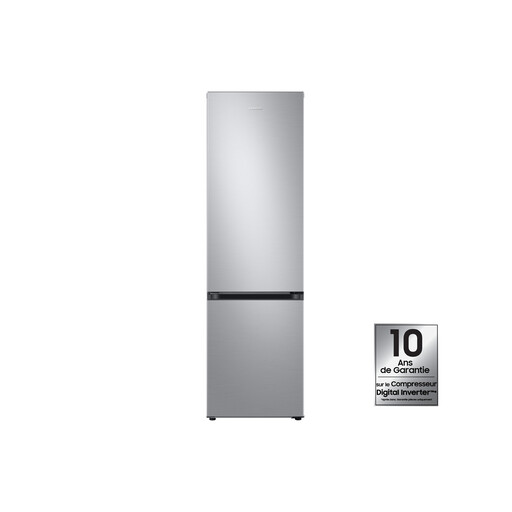 Image unavailable
A fridge-freezer to consider if you store fresh and frozen food between shops.
Stated total capacity of 390 L and energy rating C. Check the capacity of each compartment and make sure you have enough clearance in your kitchen.
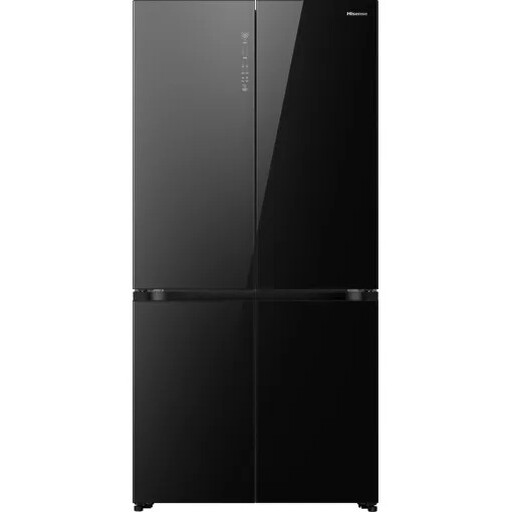 Image unavailable
A large-capacity model to consider if you shop in large quantities and have enough space in your kitchen.
Stated capacity of 591 L and energy rating E. Check that the 105 L convertible compartment offers the configuration you need, and make sure the appliance will fit and can be delivered.
 Image unavailable
This four-door model is designed for households looking for plenty of space for fresh and frozen food.
Stated capacity of 467 L, energy rating E and Total No Frost function. The doors are listed as non-reversible, so check that they can open fully and that there’s enough clearance before buying.
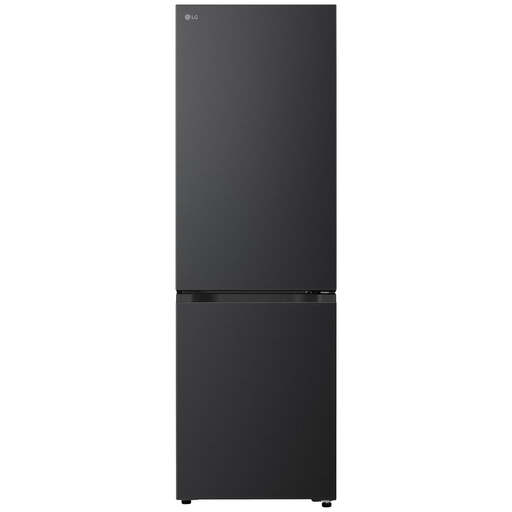 Image unavailable
A fridge-freezer to consider if you want to store fresh and frozen food in two separate compartments.
Stated total capacity of 333 L and energy rating C. Allow at least 5 cm of clearance at the back, above and on the sides, and check that the door can open properly in your kitchen.
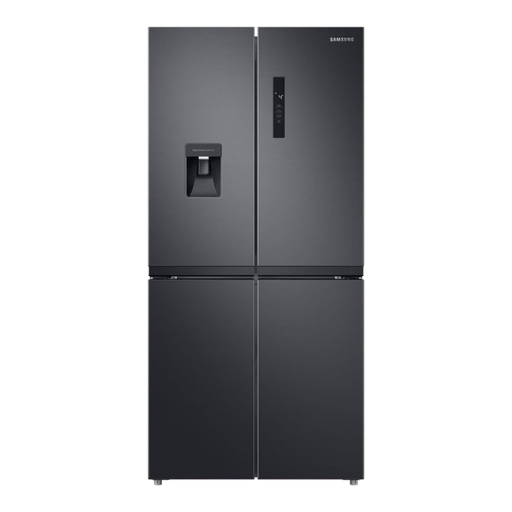 Image unavailable
This large-capacity model may suit bigger shops if you have enough room for it in your kitchen.
Stated capacity of 488 L and energy rating E. Its stated noise level of 41 dB is worth bearing in mind in an open-plan kitchen; also check the door clearance and space around the appliance.
Compare the energy rating and stated annual energy consumption, as well as compartment capacities and noise information. The European Commission explains the energy labelling requirements for fridges, and ADEME recommends using labels to compare factors including energy consumption and noise. Compare figures for appliances that offer similar storage capacity.
Côté Maison suggests this as a guide to comfort in an open-plan space, not as a threshold that will necessarily suit every household. Compare the stated noise level in dB(A) and noise class of models with the capacity you need.
Measure the width, height and depth of the space, then check the delivery route and the room needed to open the doors. An appliance that fits in the space must also be deliverable, installable and usable in your actual kitchen layout.
A new fridge bought from a professional seller in France is covered by the statutory legal guarantee of conformity. The French Ministry of the Economy states that you have two years to make a claim; the DGCCRF notes that any commercial warranty is optional and does not replace your statutory rights.