To choose a fridge, consider separately how much space you need for fresh and frozen food, then measure the space available and how far the doors need to open. A table-top fridge may suit someone who shops little and often; if your weekly shop includes frozen food, look at the freezer capacity of a fridge-freezer instead. A multi-door model needs more room, so compare its dimensions, annual energy consumption and noise level with the details on the label for the model you’re considering.
Who are the different styles for ?
The size of your household is a good starting point, but how often you shop and how much freezer space you need can affect which style is right for you.
One person in a studio flat or small kitchen
A table-top fridge could be a compact option. Before choosing one, check that its fridge and freezer capacities suit your shopping habits. Beko’s guide lists it as one possible option for a single person, but not as the answer to every storage need.
A couple or small household doing a weekly shop
If your shopping regularly includes both fresh and frozen food, a fridge-freezer is worth considering for its two separate compartments. Compare their usable capacities and measure the space available in your kitchen before choosing a model.
A family needing more storage
A large fridge-freezer and a multi-door model can offer different ways to divide space between fresh and frozen food. Your choice depends on the capacity you need, as well as the available width, delivery access, annual energy consumption and the noise level of the specific model.
What should you check before choosing ?
Start by comparing usable capacity and overall dimensions: a table-top fridge, a single-door fridge, a fridge-freezer and a multi-door model suit different shopping habits. The energy label can then help you compare models that fit your space and storage needs.
| What to consider | What to check | What you need |
|---|
| Usable capacity |
Compare the fridge and freezer capacities separately, rather than looking only at the total. Que Choisir suggests 100 to 150 L for one person, plus 50 L for each additional person; Beko suggests around 40 L of freezer space for one person. |
I want enough room for my usual shopping without choosing an appliance that’s too big for what I store. If I buy frozen food every week, the freezer capacity matters just as much as the space for fresh food. |
| Style and freezer capacity |
For a table-top or single-door model, check whether it has a freezer compartment, along with its capacity and features. For a fridge-freezer or multi-door model, look at how the space is divided between compartments before comparing styles. |
Smaller, more frequent shops might lead me to choose a compact appliance. For a weekly shop that includes fresh and frozen food, I’ll look for compartments with enough room for each. |
| Kitchen space |
Measure the height, width and depth, then check that the doors can open fully and that the delivery route is wide enough. For large American-style appliances, Que Choisir says you may need to allow around 1 m of width; always check the dimensions of the model you choose. |
The appliance needs to fit in my kitchen without blocking access or making the doors difficult to open. A large capacity won’t help if the route into my home or the space available is too narrow. |
| Energy and noise |
Check the energy efficiency rating, annual kWh consumption, capacities, noise level and noise class together on the EU label described by the European Commission. Ideally, compare appliances of a similar size and capacity. Que Choisir notes that the decibel rating alone doesn’t tell you how noticeable the noise will be. |
In an open-plan kitchen, I’ll pay attention to noise without assuming that one figure tells me everything about the sounds the appliance makes. I also want to know its annual energy consumption, not just its rating. |
| Keeping fresh food |
Make sure you can adjust and check the temperature. Anses recommends keeping the coldest part of the fridge between 0 °C and +4 °C. Also check that the compartments are laid out to suit the food you store. |
I want enough space for my fresh food and a way to check the temperature once the fridge is installed. More capacity is no substitute for storing food carefully. |
What mistakes should you avoid ?
-
Choosing based only on the number of people in your household
Two households of the same size can store different amounts of food, depending on how they shop and how much frozen food they eat. A small freezer compartment can limit your options, even if the total capacity seems sufficient.
Make a note of what you usually keep in each compartment, then compare your needs with the model’s usable capacities. The per-person guidelines from Que Choisir and Beko are a starting point for comparison, not a fixed capacity requirement.
-
Measuring the space, but not the access route or door clearance
An appliance may fit in the space you’ve set aside but still block a doorway when its doors are open, or be difficult to get into the kitchen. Que Choisir highlights the size of large American-style models in particular.
Measure the space, access routes and clearance needed for the doors to open. If access is restricted, check the packaged dimensions of the appliance too before arranging delivery.
A narrow access route can make delivery difficult or mean you have to rethink your plans for the space.
-
Comparing only the energy rating or decibel level
The energy rating alone doesn’t tell you the annual energy consumption. In an open-plan kitchen, how noticeable the noise is also depends on its character. Que Choisir advises looking beyond the stated figure.
For models with similar capacities, compare their annual kWh consumption and energy rating, then check their noise level and noise class. If quiet operation is a priority, look for independent listening tests too.
-
Relying on capacity alone to keep food fresh
A spacious fridge doesn’t mean you can stop checking its temperature or arranging food so that cold air can circulate.
Once it’s installed, check the temperature: Anses recommends between 0 °C and +4 °C in the coldest part. Store perishable foods in the right area and avoid overfilling the compartments.
A few brands to know
These brands offer examples of styles and features to consider. Their ranges are no substitute for checking the specifications of the model you’re thinking of buying.
Beko
Beko’s French guide covers several styles, from table-top fridges to multi-door models, and suggests capacities based on household size.
- For one person, Beko suggests starting with 100 to 150 L of fridge space and around 40 L of freezer space.
- These guidelines don’t tell you how much room you’ll need for your shopping. Check both capacities, the dimensions and the label for the model you choose.
Bosch
Bosch’s range includes fridges with different energy ratings, as well as wider models.
- Bosch features models with A, B or C ratings, including models 70 to 80 cm wide or more.
- Ratings, widths and features vary by model, so compare the specifications of the particular model rather than those of the range as a whole.
Electrolux
Electrolux’s UK range includes compact fridges and built-in models.
- These installation styles give you options to consider for different kitchen layouts.
- For a built-in model, check its dimensions and installation requirements before comparing usable capacities.
Fridges available on Joybuy
This selection includes fridge-freezers for shops that combine fresh and frozen food, a multi-door model for greater storage needs and a single-door fridge to consider when space is limited. Compare the compartments and installation requirements to find the right fit for your habits.
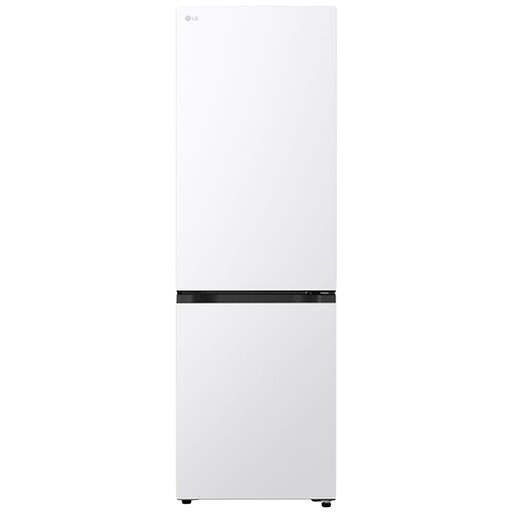 Image unavailable
LG GBBSJ1CCSW, white 333 L fridge-freezer, class C
A fridge-freezer worth considering if your shopping includes both fresh and frozen food. Its product name indicates a capacity of 333 L and a class C energy rating. Check the capacity of each compartment, the dimensions and the clearance needed in your kitchen.
View on Joybuy
 Image unavailable
Haier HTW5618ENMG, 360 L three-door fridge-freezer, class E
A three-door model may suit a household that wants to keep fresh and frozen shopping separate. Its product name indicates a capacity of 360 L, Total No Frost and a class E energy rating. Measure the space and delivery route before choosing this model.
View on Joybuy
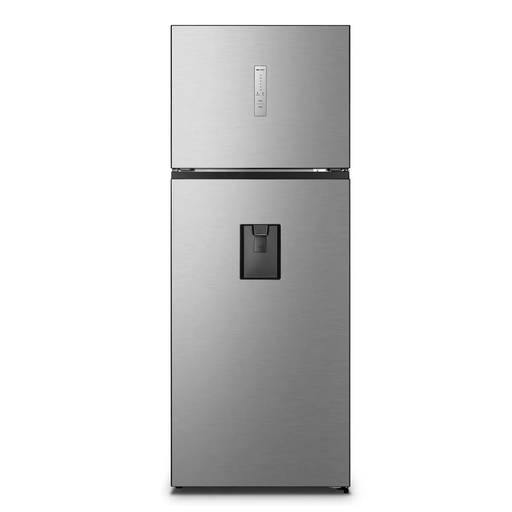 Image unavailable
Hisense FTN461WCE1, 467 L fridge-freezer, class E
This fridge-freezer is suited to a household planning to store a lot of food and with enough space to accommodate it. Its product name indicates a capacity of 467 L and a class E energy rating. Check how the capacity is divided, the width required and the defrosting method for each compartment before buying.
View on Joybuy
 Image unavailable
Samsung RF50C530EB1, black 495 L multi-door fridge, class E
A multi-door model is worth considering if you buy in larger quantities and your kitchen has room for it. Its product name indicates a capacity of 495 L and a class E energy rating. Check the fridge and freezer capacities, delivery access and the space needed to open the doors.
View on Joybuy
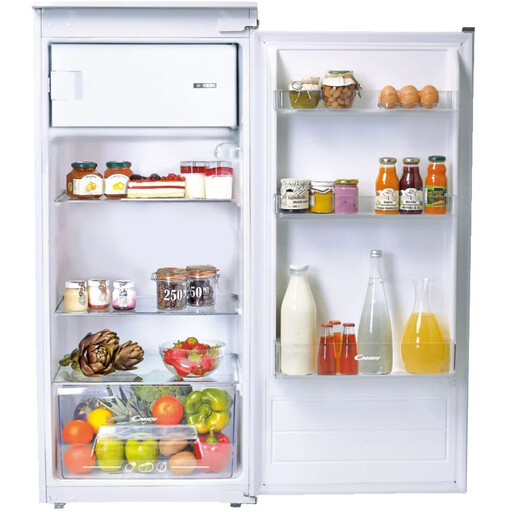 Image unavailable
Candy CIO 225 EE/N, 179 L single-door fridge
This single-door model may suit your everyday refrigeration needs in a kitchen where space is limited. Its product name indicates a capacity of 179 L. If you keep frozen food, check the freezer capacity, as well as the installation type and clearance required.
View on Joybuy
Frequently asked questions
How can I compare the energy consumption of two fridges ?
Compare models of a similar style and capacity, checking both their energy ratings and annual consumption in kWh. The European Commission says that the label for household fridges also shows capacity and noise information. These details help you put energy consumption in context with the storage space on offer.
Are decibels enough to choose an appliance for an open-plan kitchen ?
No. The stated noise level is useful, but it doesn’t tell you on its own how noticeable the noise will be. Que Choisir gives a level below 40 dBA as a guide to quiet operation and points out that how you perceive noise varies depending on the sound. If this is a deciding factor, look for independent listening tests too.
What temperature should I aim for when storing fresh food ?
Anses recommends keeping the coldest part of the fridge between 0 °C and +4 °C. Check the temperature once the fridge is installed and arrange food without overfilling the appliance, particularly when storing perishable items.
What should I do with my old fridge when replacing it ?
Ask about having your old appliance taken away before arranging delivery of the new one. The French Ministry for Ecological Transition describes a ‘one-for-one’ take-back scheme when you buy a product of the same type. Agree the practical arrangements with the seller.


