What to look for
First decide how you want to divide the space between fresh and frozen food, then make sure the format can be delivered, installed and used in your kitchen.
| Priority |
What to check |
Your needs |
| Capacity and compartments |
Calculate an initial usable capacity based on your household. Compare the fridge and freezer capacities separately. Check the drawers, shelves and packaging you usually store. |
I want to put the shopping away without paying for unused space. Que Choisir recommends 100 to 150 L for one person, followed by 50 L for each additional person, adjusted according to your shopping habits and frozen-food needs. |
| Installation and access |
Measure the width, height, depth, access route and door-opening clearance. For a built-in model, also check the housing unit, hinges and specified ventilation requirements. |
My appliance must fit through the doors and into position without obstructing neighbouring cupboards. A multi-door model may require considerably more width and access space. |
| Energy and noise |
Compare the kWh/year, litres and dB between similar models. Read the energy class alongside the format and compartments, rather than in isolation. |
I want an appliance that runs continuously without excessive noise in an open-plan kitchen. The European label brings together annual consumption, capacities and noise emissions. |
| Cooling system |
Identify static, fan-assisted or ventilated cooling. Check whether No Frost applies to the fridge, the freezer or both compartments. |
I want to keep food in good conditions while limiting ice build-up. Anses recommends a temperature between 0 and +4 °C in the coldest part. |
| Parts and guarantees |
Ask about the availability of parts for the exact model and the terms of the after-sales service. Distinguish between your statutory rights and any commercial guarantee. |
I want to use the appliance for as long as possible without confusing parts availability with the cost of a repair. European regulations provide minimum availability periods for certain parts and seals, depending on the appliances concerned. |
Fridges on Joybuy
Joybuy options for households wanting to keep fresh and frozen food between shopping trips, including compact, family-sized and multi-door fridge-freezer formats.
 Image unavailable
CHiQ JR263LGE 262 L Low Frost
A fridge-freezer for comparing a stated split of 187 L of fridge capacity and 75 L of freezer capacity for regular shopping trips.
262 L, 70/30 format, 54 cm wide, 176 cm high, 4-star freezer, electronic controls and reversible door. Low Frost is specified for the freezer; check ventilation clearances, access and the door-opening direction.
Joybuy
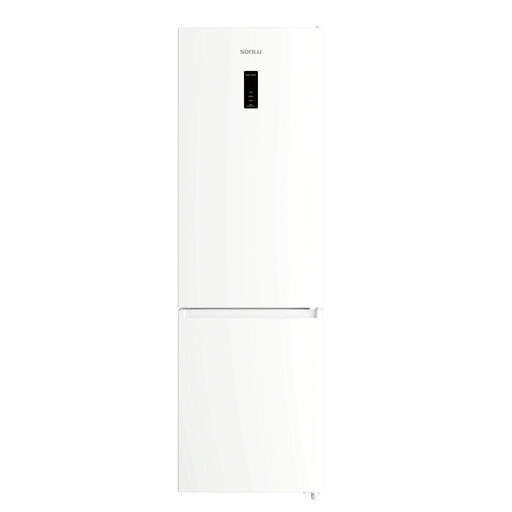 Image unavailable
Sonlu CD-400RW 355 L fridge-freezer
This fridge-freezer offers stated capacities of 252 L for fresh food and 103 L for frozen food.
60 cm wide, with reversible doors, electronic controls, a Quick-Freeze function and Frost-Free cooling advertised in both compartments. Check the height, depth, annual consumption, noise level, access and required clearances.
Joybuy
 Image unavailable
CHiQ JR227LSE 227 L Low Frost
A compact option for a narrow kitchen and a moderate frozen-food stock, with stated capacities of 153 L for the fridge and 74 L for the freezer.
54 cm wide, with a 4-star freezer, three drawers, reversible door and adjustable feet. Low Frost does not mean that defrosting is unnecessary; check the full dimensions, weight and delivery conditions.
Joybuy
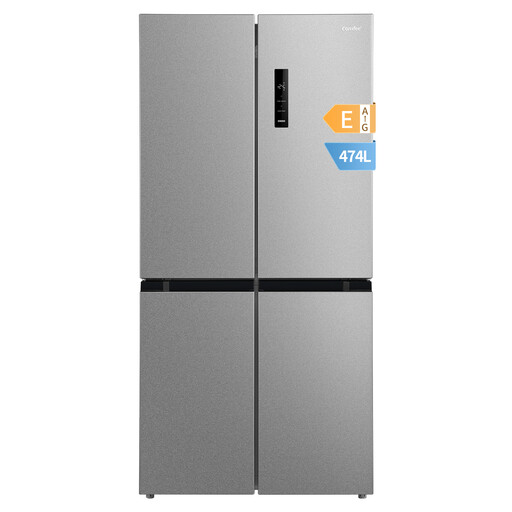 Image unavailable
COMFEE RCF470LS2EU(E) 474 L four-door
A multi-door format for households needing plenty of storage, provided the kitchen and access routes are suitable.
474 L, stated width of 83.8 cm, four doors, a three-temperature-zone drawer and adjustable freezer drawers. Check the fresh-to-frozen split, noise level, kWh/year, ventilation, weight and delivery dimensions.
Joybuy
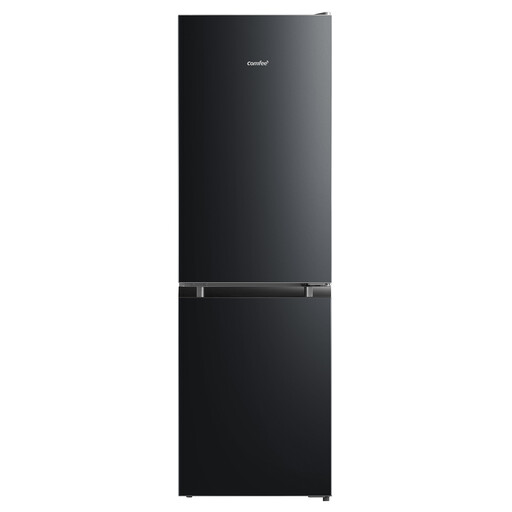 Image unavailable
Comfee by Midea RCB230BL2EU(E) 174 L
A compact fridge-freezer for a small household storing moderate amounts of fresh and frozen food.
115 L of fridge capacity, 59 L of freezer capacity, stated dimensions of 470 × 511 × 1500 mm, 4-star freezer, Low Frost, reversible door and adjustable feet. Check the kWh/year, noise level, weight and packaged dimensions.
Joybuy
Frequently asked questions
How much usable capacity does my household need?
Use 100 to 150 L for one person as a starting point, then add around 50 L for each additional person, according to Que Choisir. Adjust this capacity according to how often you shop, your drinks, ready meals and, above all, the amount of frozen food you store, comparing the two compartments separately.
When should I choose a fridge-freezer instead of a single-door fridge with a freezer compartment?
Choose a fridge-freezer if your household regularly uses frozen food between shopping trips. A single-door fridge with a small freezer compartment may be suitable if your freezing needs are limited; Que Choisir states that a basic freezer compartment is not sufficient when you regularly consume large amounts of frozen food.
What should I look for on the energy label?
The European label shows the energy class from A to G, annual consumption in kWh, the capacities of the compartments in litres and noise emissions. Prioritise comparisons between appliances with a similar format and capacity, as the class letter alone does not describe your storage needs.
Is fan-assisted cooling or No Frost useful?
It can be useful if you want a more even temperature and less ice build-up, but check which areas are actually covered. Static cooling creates greater differences between zones, while fan-assisted cooling distributes the air more evenly; depending on the model, the No Frost function may apply to the fridge, the freezer or both.
What temperature should I aim for when storing food?
Anses recommends a temperature between 0 and +4 °C in the coldest part of the fridge. Check the actual cold zone, as the setting shown on the control panel does not necessarily correspond to the temperature measured in each area.


