Households with a small kitchen
In a studio flat or kitchenette, check the space available, access and door clearance before choosing a capacity. Que Choisir specifically recommends tabletop fridges for studio flats.


First, choose a fridge that fits in your kitchen, with doors that can open fully and installation that follows the model’s instructions. A compact model suits smaller shops and households that buy few frozen foods. A fridge-freezer keeps fresh and frozen food separate for regular shops, while a multi-door model needs more space and is only worth considering if its capacity and layout suit your needs. Then compare the capacity of each compartment, annual energy consumption and noise level, rather than looking only at the total capacity.
In a studio flat or kitchenette, check the space available, access and door clearance before choosing a capacity. Que Choisir specifically recommends tabletop fridges for studio flats.
Freezer capacity matters just as much as space for fresh food. Que Choisir recommends matching your fridge format to how often you shop and how much frozen food you buy.
If the appliance needs to fit into a housing unit, check its dimensions, the door fixing system and the model’s ventilation requirements. Bosch and Whirlpool’s guides distinguish these requirements from those for a freestanding appliance.
Start with the space available, then choose a fresh-to-frozen capacity split that suits your shopping habits. Your kitchen will also determine whether you need a built-in or freestanding model: a built-in appliance must fit its housing unit and meet its ventilation requirements, while a freestanding model gives you more flexibility over where you place it, according to Whirlpool’s guide.
Consider it: for a studio flat or smaller, frequent shops when space is very limited.
Bear in mind: there will be less room for groceries, especially if you store a lot of frozen food.
Consider it: if you prioritise refrigeration and rarely use a freezer, or have a separate freezer.
Check: a small freezer compartment may not be large enough for all your frozen food.
Consider it: if you want your main appliance to provide both refrigeration and a separate freezer.
Check: the capacity of each compartment, as the total capacity doesn’t show how much space is available for frozen food.
Consider it: if you buy large quantities and want separate storage zones.
Bear in mind: its large size must be suitable for your kitchen and delivery route, with enough room for the doors to open.
| Criteria | What to check | Who it matters to |
|---|---|---|
| Size and access | Overall dimensions and route into the kitchen; door clearance and ventilation requirements in the instructions. | In a narrow kitchen, I need to be able to install the appliance without blocking access or preventing the door from opening. Around 31% of consumers say that fitting the available space is their top concern. |
| Balance of fresh and frozen storage | Usable capacity of each compartment, shown separately; freezer layout. | If I regularly shop for both fresh and frozen food, I want enough room for each. This balance is said to be the priority for around 31% of consumers. |
| Storage and organisation | Capacity of each compartment and the layout of drawers, shelves or dedicated zones; external dimensions. | For a big shop or a large household, I want storage that’s easy to access without overfilling the shelves. Around 25% of consumers would prioritise storage and organisation above all else. |
| Fitting and everyday use | Whether it fits the housing unit, if required; energy consumption in kWh/year and noise level in dB(A). | In a fitted or open-plan kitchen, I first consider how well the appliance will fit, as well as its noise level and energy consumption. These are said to be the priorities for around 13% of consumers. |
A high total capacity can hide a freezer that’s too small for your shopping needs. Que Choisir links your choice to how often you shop and how much frozen food you buy; the European EPREL database lists the capacity of each compartment separately.
Compare the litres available for fresh and frozen food, then check that the drawers and shelves suit the food you store.
A built-in appliance must fit the kitchen unit and be installed according to the instructions. Bosch recommends using a professional installer, while Whirlpool says professional installation is often necessary.
Before ordering, check the housing unit’s dimensions, the front panel fixing, the door system and ventilation openings against the model’s instructions.
Installation may require a professional or modifications to your kitchen unit.
Adjustable zones or connected features won’t make an appliance suitable for a narrow front door, access route or kitchen. Les Numériques highlights the large size of this category.
Measure the delivery route and the space where the appliance will go, then allow enough room for the doors to open before looking at extra features.
For purchases from a professional seller in France, the legal guarantee of conformity is mandatory, according to the Ministry of the Economy. A commercial warranty is optional, so consider what extra protection it genuinely provides.
Before taking out an extended warranty, compare the faults covered, exclusions, service conditions and length of the additional cover.
Worth considering if you’re comparing built-in models or a single-door fridge for a fitted kitchen.
Worth considering if your choice between a freestanding and built-in model depends on your kitchen unit and installation requirements.
Worth considering if you’re looking at a freestanding fridge-freezer or multi-door model with drawers and separate zones.
Worth considering if you’re comparing fridge-freezers and multi-door models for capacity and available space.
These models include fridge-freezers that keep fresh and frozen food separate, plus a multi-door model for larger shops. Compare their dimensions and compartments with your kitchen and shopping habits.
 Image unavailable
Worth a look if you want separate fresh and frozen storage in a kitchen where width is a key consideration.
The model name indicates a 153 L fridge, a 74 L 4-star freezer, a width of 54 cm, a reversible door, Low Frost and an E energy rating.
Also measure the height, depth and door clearance. Compare the kWh/year and noise level if these matter to you.
 Image unavailable
Worth considering if you shop regularly and want one appliance for both fresh and frozen food.
The model name indicates a total capacity of 344 L and an E energy rating.
Check the capacity of each compartment, the dimensions, ventilation clearance and door opening space for your kitchen.
 Image unavailable
Worth considering if you need plenty of storage and have room for a multi-door appliance.
The model name indicates a total capacity of 495 L and an E energy rating. Check the capacity of each compartment against your needs for fresh and frozen food.
Check the floor space it will take up, the delivery route and the room needed to open the doors.
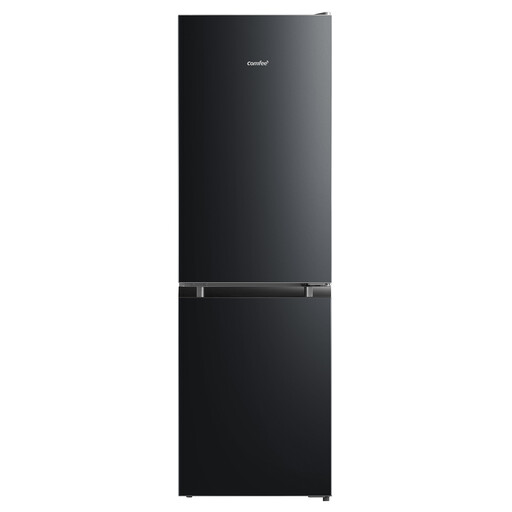 Image unavailable
Worth a look if you want separate fresh and frozen storage while keeping an eye on how much space the appliance takes up.
The model name indicates a total capacity of 174 L, a freestanding design, Low Frost, an adjustable thermostat, LED lighting and a reversible door.
Compare the capacity of each compartment with your shopping needs, and check the dimensions, kWh/year and noise level before choosing.
 Image unavailable
Worth considering if you’re looking for a main appliance with a separate freezer for regular shops.
The model name indicates a total capacity of 282 L, a bottom freezer and an E energy rating.
Check how the capacity is split between compartments, the noise level if your kitchen opens onto your living area, and the clearances specified in the instructions.
Measure the space, the delivery route and the room needed to open the doors. For a built-in model, also measure the housing unit and check the front panel fixing and ventilation requirements in the instructions. Bosch’s guidance for certain cabinets is no substitute for the instructions for your chosen model.
Check the fridge and freezer capacities separately, then compare annual energy consumption in kWh/year and noise level in dB(A). The European EPREL database lists these details for registered models. Compare them with how often you shop and the space available.
No. It’s a good choice if the extra storage and layout justify its size, and your kitchen has room for it. Before choosing this format, check the capacity of each compartment, the route into the room and the space needed to open the doors.
No, it isn’t essential. In France, the legal guarantee of conformity applies to goods sold by a professional to a private customer, as the Ministry of the Economy explains. Check what a commercial warranty actually adds, including its exclusions and service conditions.