People cooking for one who want to avoid leftovers
If you’re making just one serving and don’t have another meal planned, start by looking at 90 g packs and products divided into separate portions.


For a single serving of fresh pasta, start with the pack size: a 90 g portion or separately portioned packs help keep leftovers to a minimum, while a 185–200 g jar is a better fit if you have another use in mind. Then choose between a tomato sauce you can customise and pesto, depending on the recipe you fancy. Finally, check the ingredients, allergens and storage instructions for the product you buy.
If you’re making just one serving and don’t have another meal planned, start by looking at 90 g packs and products divided into separate portions.
If you fancy this recipe with fresh pasta, check the ingredients: Barilla’s Pesto alla Genovese, for example, contains cheese, cashew nuts and garlic.
If you need to avoid an ingredient or keep the sauce for later, the label on the specific product matters just as much as the pack size. Check the allergens, date and instructions for storing it after opening.
For a serving of fresh pasta on its own, first choose an amount that suits how you’ll use it, then pick a recipe and check what to do if you’re keeping any sauce.
| What to consider | What to check | Who is it for? |
|---|---|---|
| Pack size | Net weight and packaging: a 90 g portion, separate portions or a larger jar. | I’m making just one serving and don’t plan to use an opened jar another time. Around 33% of consumers would put minimising leftovers first. |
| Recipe | Type of sauce and listed ingredients: tomato, basil pesto or another recipe. | I want to choose a flavour to go with my fresh pasta before deciding on the pack size. This would be the top priority for around 25% of consumers. |
| Ingredients | Ingredients list and allergens shown on the specific product. | I need to rule out anything that doesn’t suit my needs before choosing a sauce. Around 25% of consumers would make this their priority. |
| Storing leftovers | Instructions for after opening and the date shown on the packaging. | I want to prepare a meal without any fuss, but I may reuse the sauce. Around 17% of consumers would put managing an opened jar first. |
A 185–200 g jar of pesto isn’t necessarily a single portion. If you don’t have another use in mind, you’ll need to store the leftovers after opening.
Compare the net weight and actual packaging. If you don’t plan to keep any sauce, look at single portions and separately portioned packs.
Claims such as “fresh basil” and “fresh tomatoes” may describe the recipe without telling you how to store the sauce.
Follow the storage conditions, date and instructions for after opening shown on the product you buy.
Ingredients vary between recipes. Barilla’s Pesto alla Genovese, for example, contains cheese and cashew nuts; this doesn’t apply to every pesto.
If you have an allergy or need to avoid certain foods, check the ingredients and allergens on the packaging of the specific variety.
Storage instructions vary by product. For opened perishable foods, Anses recommends refrigerating them immediately and using them within three days; the product information for Barilla’s 190 g pesto says to use that product within five days of opening.
Read the instructions on the jar you buy, and don’t assume it will keep as long as another sauce.
Panzani offers basil pesto and a fresh tomato sauce sold in 190 g tins. These pack sizes are worth comparing for a meal for one.
Barilla offers its Pesto alla Genovese in 90 g and 190 g sizes; Carrefour also stocks a 90 g single portion.
Carrefour’s range includes basil pesto and pesto rosso in 190 g jars.
E.Leclerc lists Turini pesto in 185 g and 190 g jars, as well as 420 g tomato sauces.
Auchan’s own-brand range includes 190 g jars of pesto verde and pesto rosso.
This selection of pasta sauces includes pestos, a Neapolitan sauce and a spaghetti sauce. Compare the pack size with your serving and check the storage instructions if you’re planning to use any sauce later.
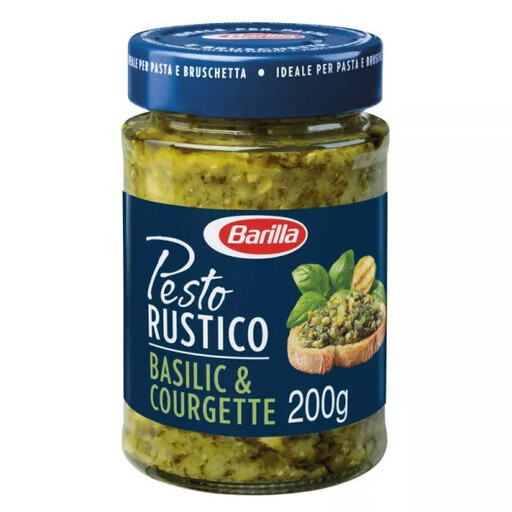 Image unavailable
Worth considering if you’re looking for pesto to go with your pasta and can make use of any leftovers. The stated pack size is 200 g; check the ingredients and instructions for after opening on the packaging.
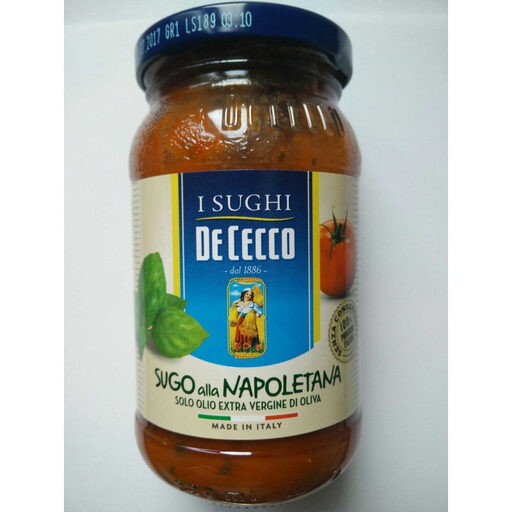 Image unavailable
A Neapolitan sauce to consider for serving with pasta. The jar contains 200 g, so if you plan to keep any for later, check the instructions for after opening.
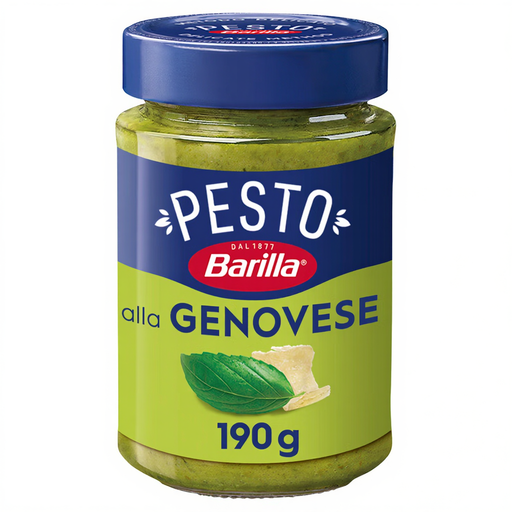 Image unavailable
For pesto pasta, if the recipe suits your needs. According to the Joybuy product information, this 190 g jar contains milk, cashew nuts and pine nuts. It says to refrigerate after opening and use within five days.
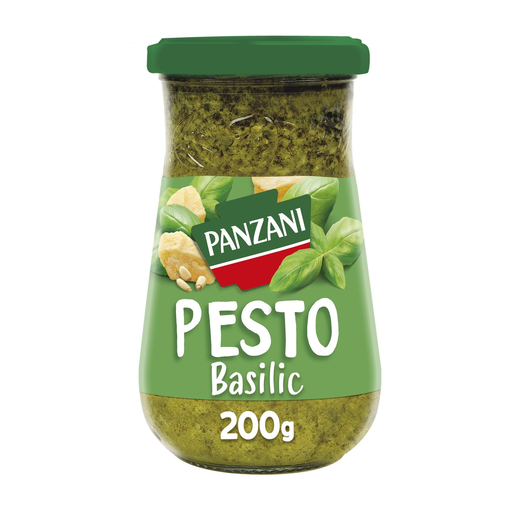 Image unavailable
A basil pesto to serve with pasta, with another use to plan for if you don’t use all 200 g. Panzani also offers “2 × 90 g” packs, so check the net weight and number of portions in the product you choose.
 Image unavailable
Worth a look if you want a spaghetti sauce in a 53,4 g pack, but don’t assume the weight means it’s a single portion. Check the number of portions, ingredients and instructions for after opening on the packaging.
No, that wording alone doesn’t tell you how to store it. “Extra fresh basil” on Panzani products and “fresh tomatoes” in a recipe refer to the ingredients being highlighted. Follow the storage instructions for the product you buy.
Read the ingredients and highlighted allergens on the packaging of the specific pesto. The DGCCRF sets out this labelling requirement for prepacked foods. Barilla’s Pesto alla Genovese, for example, lists cheese and cashew nuts, while the Joybuy product information for the 190 g jar also lists pine nuts.
Follow the instructions for after opening on the product you buy. For opened perishable foods, Anses recommends refrigerating them immediately and using them within three days. The Joybuy product information for Barilla’s 190 g pesto, meanwhile, says to refrigerate that product and use it within five days.
Check the date actually printed on the packaging, as well as the instructions for after opening. The DGCCRF distinguishes between a use-by date (DLC) and a best-before date (DDM). You can’t work out either date from the size of the jar or the appearance of the sauce.