Parents preparing a plain snack
You’d like to serve plain fresh cheese, perhaps with a piece of fruit, and compare sugar, salt and fat using the nutrition information per 100 g.


For a child’s snack, choose according to the recipe, the milk allergen and the storage conditions for the specific product, rather than assuming that ‘fresh cheese’ will keep for a long time. The fresh cheeses covered here need to be kept in the fridge. Individual pots make serving easier, but they still need to be kept chilled. If you’re looking for a product that can be stored outside the fridge before opening, check the packaging rather than assuming that ‘filtered’ tells you how long it will keep.
You’d like to serve plain fresh cheese, perhaps with a piece of fruit, and compare sugar, salt and fat using the nutrition information per 100 g.
You’re looking for a format that’s easy to serve at school or on an outing. For chilled fresh cheese, your choice also depends on whether you can keep it at the temperature stated on the packaging while you’re travelling.
You need to check the dairy ingredients and allergen information for each product. According to the DGCCRF, allergens must be highlighted in the ingredients list of prepacked foods.
Start by checking the ingredients and storage instructions for the conditions in which the snack will be eaten. Then compare plain, sweetened or spreadable options using their labels, without assuming they’re all suitable for the same purpose.
| What to check | Check this | Who is it for? |
|---|---|---|
| Allergens and ingredients | Read the ingredients list and check which allergens are highlighted. Also look for any ‘may contain traces’ information on the packaging. | If your child needs to avoid milk proteins, check the ingredients before choosing a texture or brand. Around 36% of consumers put this check first. |
| Storage | Check the stated temperature, use-by date and instructions for storage after opening. | For a snack taken out with you, you’ll need to be able to keep the product at the right temperature until it’s served. Keeping it chilled is the priority for around 29% of consumers. |
| Recipe and sugars | Check whether it’s plain, sweetened or flavoured. Compare the ‘of which sugars’ figure per 100 g with the ingredients list. | If you want a plain recipe, check whether any sugars come from ingredients added to sweeten it. Around 21% of consumers put this distinction ahead of other criteria. |
| Size and texture | Check the amount in each pot and how it’s intended to be used. To compare recipes, look at the fat and salt figures per 100 g. | At home, you might prefer to portion out a larger pot; for toast, you’ll need something spreadable. Around 14% of consumers prioritise the format and how it’s served. |
The Carrefour, Philadelphia and Galbani products mentioned here all state that they need to be kept in the fridge. A smaller pack doesn’t change those instructions.
If you’re taking a snack out with you, check the storage temperature and use-by date for the product you’ve chosen. Use an insulated bag only if you can keep the product within the stated conditions.
The same chiller aisle can contain fromage blanc and fresh cheeses made to different recipes. According to Anses, lactose is one of the sugars naturally present in dairy products, so the ‘of which sugars’ figure doesn’t tell you on its own whether any sweetening ingredients have been added.
Check the product name, ingredients and nutrition information per 100 g before making your choice.
The Philadelphia Original and Boursin Nature products mentioned here are designed to be spread. Their fat and salt content differs from that of the small pots of plain fresh cheese covered here.
Choose a spread for toast, then compare the figures per 100 g for the products you’re considering.
The dairy products mentioned contain milk or ingredients derived from it. A product name or soft texture is no substitute for checking the allergen information.
Check the label each time you buy, and follow any medical or school guidance specific to your child.
The retailer offers, among other things, plain fresh cheese in individual pots.
Its range includes plain, sweetened and flavoured fromage blanc, faisselle and plain fresh cheese.
The retailer offers, among other things, whipped fromage blanc made with Bresse AOP cream under the Nos Régions ont du Talent brand.
Petit Yoplait Nature is a fresh cheese that’s available in 60 g pots, among other formats.
Its ricotta offers a different texture for a snack-time dish.
Philadelphia Original is a spreadable cheese, better suited to toast than as a plain pot of fresh cheese.
Boursin Nature is available in 16 g portions through the Foodservice channel, among other formats.
This fromage blanc dairy dessert in pots could be an option for a young child’s snack. Don’t confuse it with traditional fresh cheese or assume from its name that it’s filtered or can be stored without refrigeration.
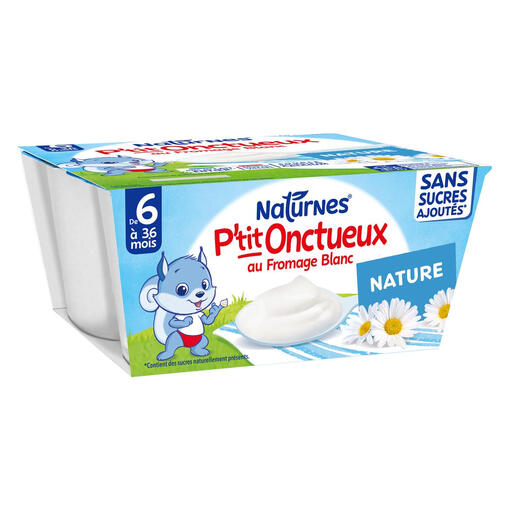 Image unavailable
The pots make it easy to serve individual portions as a snack for a child aged 6 months and over. Before choosing it for a snack to take out with you, check the packaging for the ingredients, nutrition information and storage instructions.
Read the ingredients list: according to the DGCCRF, allergens in prepacked foods must be highlighted there. Look in particular for milk, cream, whey or milk proteins. If your child has a diagnosed allergy, follow the guidance specific to them rather than relying on the word ‘plain’.
Only if you can keep the specific product under its stated storage conditions for the whole time. Carrefour says its Classic’ fresh cheese should be kept between 0 °C and +6 °C, while Galbani says its ricotta should be kept between +4 °C and +8 °C. Check the packaging before planning how to transport it.
Start with the figures per 100 g to compare products on the same basis, then check the amount in the pot you’ll actually serve. The DGCCRF says that presenting information this way makes comparisons easier. Check the ingredients too, as Anses points out that lactose is naturally present in dairy products.
No. Those words alone don’t tell you how a product should be stored. The Carrefour fresh cheese and Galbani ricotta mentioned here both state that they need to be kept in the fridge. For any other product, check the storage instructions and date on the packaging.
It may work well on toast, but it won’t necessarily have the same recipe or be served in the same way as a pot of plain fresh cheese. The Philadelphia Original and Boursin Nature products mentioned here have different fat and salt levels from the small pots of plain fresh cheese covered here. Compare their labels per 100 g according to how you plan to use them.