
Livraison le jour même ou le lendemain

Qualité garantie

Débloquez vos offres de bienvenue: Livraison GRATUITE | Jusqu'à -80 % | 30 jours d'essai gratuits à JoyPlus
Téléchargez l'application
A French press coffee maker, also known as a cafetière française or coffee press, lets you prepare richly flavoured coffee without capsules or paper filters. The principle is remarkably simple: ground coffee is infused directly in hot water, then a plunger fitted with a filter separates the grounds from the drink.
But simple does not mean that all models are created equal. Capacity, carafe material, filter quality and ease of cleaning can make all the difference in everyday use. Here are the criteria to consider before you buy.
Manufacturers often talk about “cups”, but these usually refer to small servings. So a 1-litre coffee maker advertised as serving 8 cups will not necessarily fill eight large mugs.
To give you an idea:
If you only make one coffee in the morning, a one-litre coffee maker may produce quite a lot of leftovers. Conversely, a compact model will soon become frustrating for a family or a coffee break at work.
A glass French press coffee maker lets you monitor the colour of the coffee and the brewing time. Borosilicate glass is valued for its resistance to temperature changes, but it is not unbreakable. A protective handle, a stable base and careful handling are still essential.
You should also pay attention to models with natural wood components if you prioritise quick cleaning. Acacia adds a warm, elegant finish, but it should generally be washed by hand and must not be left submerged.
A filter that is too fine or poorly adjusted can make the plunger difficult to press down. An overly fine grind increases the resistance further and leaves more sediment at the bottom of the cup. By contrast, a metal filter allows the coffee’s natural oils through, along with the occasional fine particle, for a richer, fuller-bodied texture.
A reusable stainless-steel filter eliminates disposable consumables, but it should be removed and rinsed regularly to limit the build-up of coffee oils.
For one person, a 350 or 500 ml model is easier to measure and store. For two people, a 500 ml coffee maker, providing around 4 small cups, may be suitable. Families, people who enjoy several coffees in a row and workplaces will generally be better off choosing a one-litre model.
Leave a little space at the top of the carafe so you can mix the water and coffee without risking an overflow when lowering the plunger.
Borosilicate glass provides good visibility and does not affect the taste of the coffee. However, it should never be placed on a hob or flame, or on a cold, wet surface immediately after heating. A French press is not a saucepan: the water must be heated separately.
The plunger and filter made from stainless steel are designed for long-lasting use. Depending on the model, the frame, handle and lid may be made from BPA-free plastic. An acacia finish places greater emphasis on aesthetics and a natural feel.
A French press generally works best with a coarse grind. A grind that is too fine can clog the filter and make pressing difficult. To achieve consistent results:
An adjustable manual grinder can complement your coffee press. Models capable of producing a grind suitable for a French press let you adjust the grind size according to the coffee you are using.
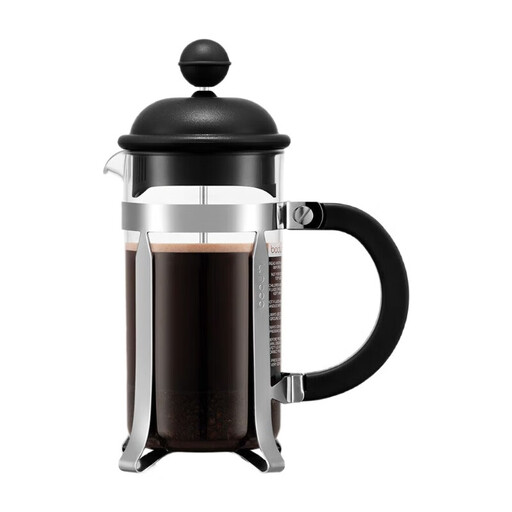
Why this choice suits this profile : Its compact size is ideal for one person, a small office or a couple looking to ditch capsules without cluttering up the kitchen.
With its 350 ml capacity, it minimises leftovers, while the reusable stainless-steel filter means you do not need to keep buying capsules or paper filters.
Borosilicate glass carafe, stainless-steel plunger and parts that are dishwasher-safe according to the manufacturer’s instructions.
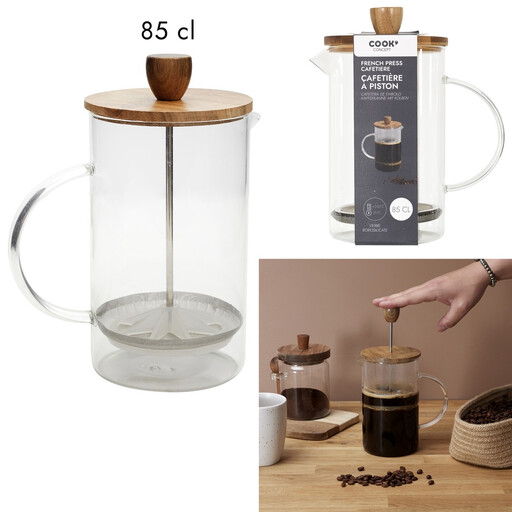
Why this choice suits this profile : The transparent glass and acacia components combine visible brewing with an elegant presentation, ideal for serving at the table or showcasing a kitchen you take pride in.
The fine stainless-steel filter is reusable, while the recommended coarse grind reduces the risk of the plunger becoming blocked.
85 cl capacity, borosilicate carafe and acacia handle. Hand washing is recommended to preserve the wood.
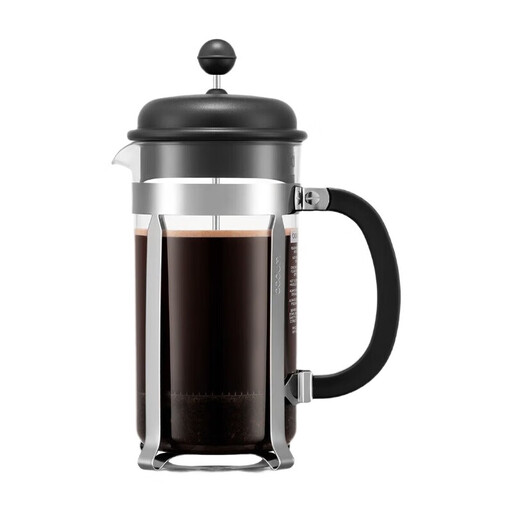
Why this choice suits this profile : Its one-litre capacity is ideal for families, guests and group coffee breaks, whether at home or in the office.
Its large capacity means you do not need to brew several batches, while the metal filter eliminates single-use consumables.
One-litre borosilicate glass carafe, stainless-steel plunger and filter, with the carafe and filter suitable for dishwasher cleaning.
We have put together a complete, real-time updated selection of products that meet these demanding criteria and European safety standards.
After each use, empty the grounds, remove the plunger and rinse the filter thoroughly. Coffee oils can build up in the mesh and eventually affect the taste. Use a soft sponge and a little washing-up liquid, then dry all the parts completely before reassembling.
To protect the carafe:
The lifespan mainly depends on how often it is knocked, the quality of cleaning and the condition of the filter. Reusable metal parts can remain functional for years, but the glass should be inspected regularly.
Choose a coarse, even grind. Powder that is too fine passes through the filter more easily and can increase the pressure when lowering the plunger. An adjustable grinder lets you adapt the grind for a French press, moka pot or other brewing methods.
The amount depends on the coffee you use and your personal taste. Start with a moderate amount of coarsely ground coffee in relation to the volume of water, then adjust it as you make more brews. Above all, make sure you do not exceed the carafe’s maximum capacity and leave enough room for mixing.
It requires neither capsules nor paper filters, reducing the number of consumables you need to buy. The total cost then depends on the price of the coffee, the dosage and how often you use it. A reusable stainless-steel filter is a simple way to reduce waste from your daily coffee preparation.