
Livraison le jour même ou le lendemain

Qualité garantie

Débloquez vos offres de bienvenue: Livraison GRATUITE | Jusqu'à -80 % | 30 jours d'essai gratuits à JoyPlus
Téléchargez l'application
Choosing a jam seems simple… until you end up with a jar that is too sweet, a texture that is impossible to spread or a size that is far too large for your household’s consumption. Between extra jam, marmalade, fruit preparation and fruit dessert, the differences are not always obvious, whether you are shopping in-store or online.
To avoid unpleasant surprises, three common pitfalls are worth bearing in mind:
Here are the criteria to consider before choosing your French jams and fruit preparations, whether for breakfast, baking or a fruit-based dessert.
The ingredients list should be your first point of reference. Ingredients are generally listed in descending order by quantity. A preparation made with 60 to 65% fruit will have a different profile from a recipe where sugar appears first on the list.
Here are a few examples from the selection:
The term ‘extra’ is therefore not enough to distinguish between two jars. Check the fruit percentage, whether concentrated juice is included and what type of sugar is used.
A traditional or artisan French jam is generally designed for spreading. Orange marmalade may contain pieces or peel from citrus fruits, giving it a more pronounced bitterness. A fruit preparation, meanwhile, may focus on a softer texture, a different fruit content or a lower amount of added sugar.
The right choice mainly depends on how you plan to use it:
Some recipes use fruit pectin as a gelling agent. This is a common ingredient in this category. Others add soluble fibre or concentrated lemon juice. For precise information about the composition, check the product listing and the packaging.
A fruit preparation without refined sugar is not necessarily low in sugar. Fruit itself, as well as fruit sugars, contributes to the total carbohydrate content. To compare products objectively, consult the nutrition table, particularly the line marked ‘of which sugars’.
After opening, most jars should be kept in the fridge and consumed within the period stated by the manufacturer: often 10 days or 3 weeks, depending on the recipe. Always use a clean spoon and close the jar carefully. For a household that eats little jam, a 210 to 320 g format will often be more practical than a 750 g jar.
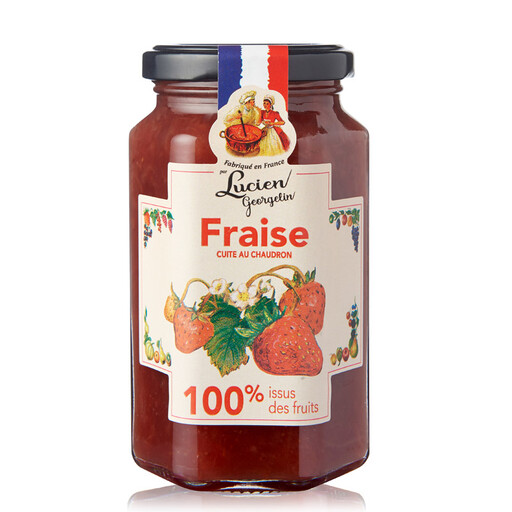
Why this choice suits this profile : At 300 g, this jar is ideal for trying jam for the first time or for a household that only eats it occasionally. Strawberry is a reliable breakfast favourite.
The percentage of strawberries and the presence of pectin are stated, making it easier to compare this recipe with others.
Contains 60% strawberries, comes in a 300 g format and has no allergens declared in the information provided.
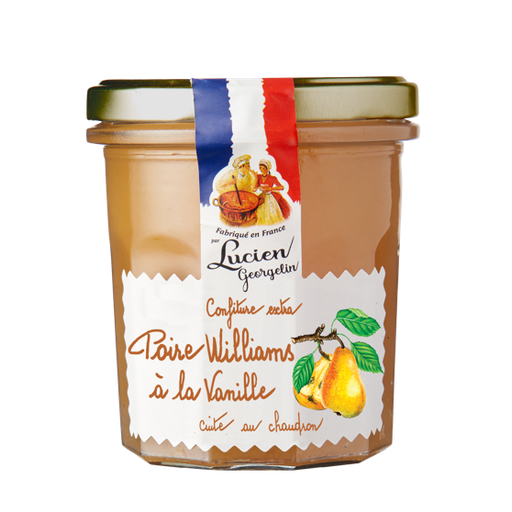
Why this choice suits this profile : The combination of Williams pear and vanilla offers a more sophisticated alternative to classic flavours. It is just as enjoyable on toast as it is in a dessert.
The recipe specifies the Williams variety, the proportion of pears and the flavouring ingredients, rather than relying on an overly general claim.
Contains 55% Williams pears, pectin, concentrated lemon juice and vanilla in the form of spent pods and extract.
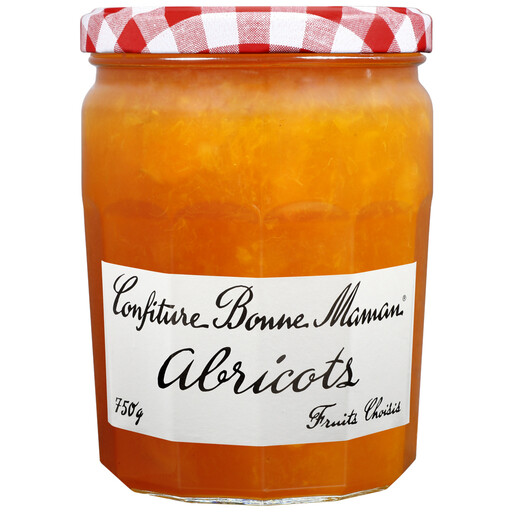
Why this choice suits this profile : The large format is ideal for families, anyone who enjoys daily toast and baking recipes that call for several spoonfuls of jam.
The volume is clearly displayed, so you can estimate the cost per use and avoid finishing a small jar within just a few days.
750 g, with apricots, sugar, brown cane sugar, concentrated lemon juice and fruit pectin in the ingredients.
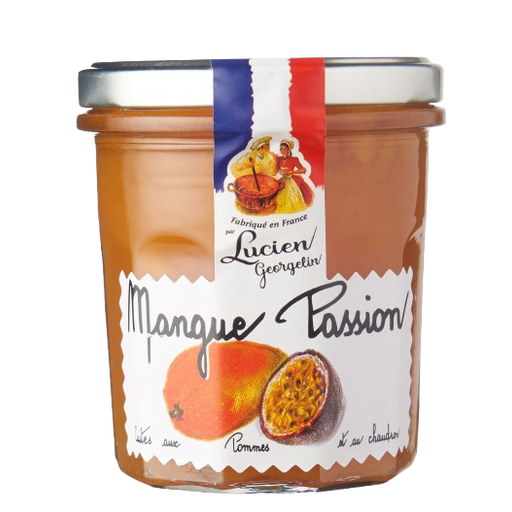
Why this choice suits this profile : The combination of mango, passion fruit and apple works just as well on toast as it does in baking or served with certain cheeses.
The proportions are detailed: 36% mango, 14.5% passion fruit and 14.5% apple.
Contains 65% fruit, is set with pectin and comes in a 320 g format.
For a citrus twist, Bonne Maman Orange Marmalade 370 g combines bitter oranges, brown cane sugar, concentrated lemon juice and fruit pectin. Lucien Georgelin Extra Jam 3 Citrus Fruits of Corsica combines orange, clementine and lemon.
Fans of tropical flavours can opt for guava jam, banana jam or a mango recipe with aged rum. The latter contains 1% rum, a detail to bear in mind, particularly if you avoid alcohol.
For a ready-to-serve fruit dessert, the 560 g apple and pear or apple, peach and apricot mixes can be served with yoghurt, ice cream, pancakes or cake. They are not quite suited to the same uses as a classic fruit spread.
We have brought together a comprehensive, real-time updated selection of products that meet these choice criteria, as well as European safety regulations.
The name depends on the recipe, the fruit content and the applicable regulations. A fruit preparation may contain less added sugar, fibre or have a different texture. To compare products, it is better to look at the ingredients list, fruit content and nutrition table rather than relying on the product name alone.
The storage period varies by product. Some products state that they can be kept in the fridge for 10 days, while others allow 3 weeks. Always follow the instructions on the packaging, close the jar after each use and do not consume the product if its appearance, smell or texture has changed.
A 210 to 350 g format is generally suitable for occasional consumption or for varying the flavours in a selection. For daily toast, a family may prefer a 560 to 750 g jar, provided it can be stored correctly after opening.