
Livraison le jour même ou le lendemain

Qualité garantie

Débloquez vos offres de bienvenue: Livraison GRATUITE | Jusqu'à -80 % | 30 jours d'essai gratuits à JoyPlus
Téléchargez l'application
A French press coffee maker, also known as a cafetiere, is popular because it requires no capsules, features a reusable stainless-steel filter and helps preserve the natural oils in ground coffee. However, not every model is suited to the same uses. Choosing the wrong capacity, a fragile glass carafe or a filter that is difficult to clean can quickly turn an enjoyable ritual into a disappointing purchase.
Here are the key criteria to consider before comparing a Bodum coffee maker, a borosilicate glass model, a tea press or a suitable coffee grinder.
Manufacturers often specify a number of ‘cups’, but this measure varies from one brand to another. A 1 L French press may be marketed as an 8-cup model, even though a cup served in the French style generally contains more than the 120 ml used in some technical specifications.
Use these figures as a guide:
Avoid filling the carafe right to the brim: you need to leave enough room for the plunger and minimise splashes when pressing.
Transparent glass lets you watch the coffee brew, but it remains vulnerable to knocks and sudden changes in temperature. A model with acacia wood details can add a stylish decorative touch, but its wooden components generally need to be washed by hand and dried promptly.
By contrast, models with dishwasher-safe components make everyday use easier. Even so, check the product details: compatibility may vary between the carafe, filter, lid and handle.
A French press designed for ground coffee works best with a fairly coarse grind. Coffee that is ground too finely slows the plunger, leaves more sediment in the cup and increases resistance when pressing.
A reusable stainless-steel filter eliminates the need for paper filters, but it does not always catch every fine particle. For greater control over the result, a manual coffee grinder or an electric coffee grinder with adjustable grind settings can make all the difference.
Borosilicate glass is very common in French press coffee makers. It withstands temperature changes better than ordinary glass, although it is not unbreakable. Before each use, check for cracks, chips or any unusual marks.
Carafes with a plastic or metal frame may offer a more secure grip. A wood or bamboo surround creates a more refined look, but requires extra care when washing.
A stainless-steel filter can be washed and reused as often as needed. In particular, check:
Rinse the filter after each preparation to prevent coffee oils from building up. Pressing slowly and steadily helps minimise splashes and reduces strain on the mechanism.
For French press coffee, choose a coarse, even grind. A manual grinder with several settings lets you switch from filter coffee to moka pot coffee or espresso. A rechargeable electric model may be worthwhile if you make several coffees or want to reduce the effort required for grinding.
Precise adjustment does not eliminate the need for a starting recipe. Begin with an infusion of around four minutes, then adjust it according to the coffee you use and your preferences. This method also helps prevent wasted beans.
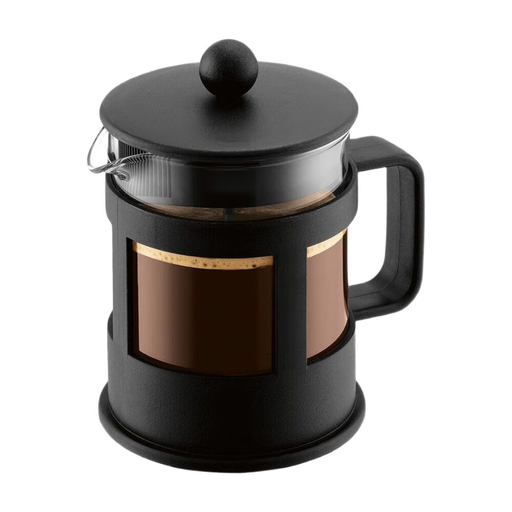
Why this choice suits this profile : Its 500 ml capacity is suitable for one person, a couple or a small kitchen, without making more coffee than you need.
Its clearly stated capacity reduces the risk of choosing a carafe that is too large for everyday use. The stainless-steel filter can be taken apart for easier cleaning.
Borosilicate glass carafe, stainless-steel filter and plunger, with components stated to be dishwasher-safe.
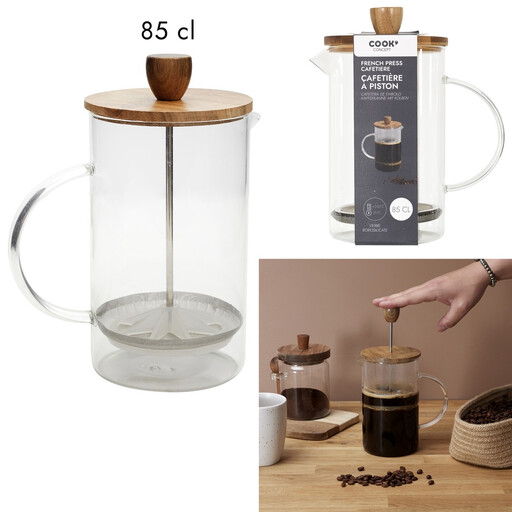
Why this choice suits this profile : Its transparent glass and acacia details fit naturally into an open-plan kitchen or on a carefully laid table, with an 85 cl capacity.
The product details specify that the acacia wood must be washed by hand. This prevents you from mistakenly assuming that all the components are dishwasher-safe.
Borosilicate glass, fine-mesh stainless-steel filter and stated 85 cl capacity, equivalent to around 3 to 4 cups.
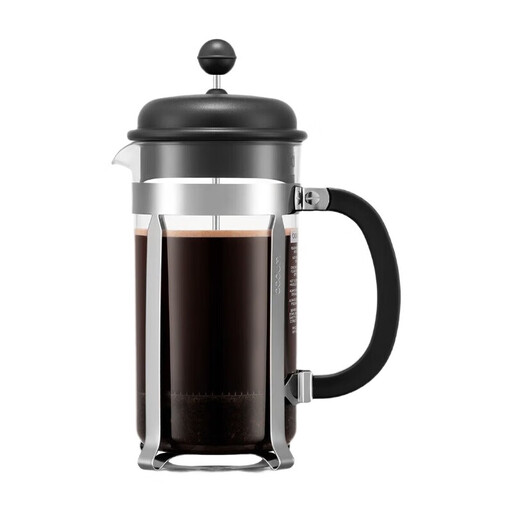
Why this choice suits this profile : Its one-litre capacity is ideal for family breakfasts, the office and occasions when several cups need to be prepared one after another.
The capacity is explicitly linked to a number of cups, making it easier to estimate servings. However, lower the plunger slowly to minimise splashes.
1 L capacity, fine-mesh stainless-steel filter, borosilicate glass carafe and stated dishwasher cleaning compatibility for several components.
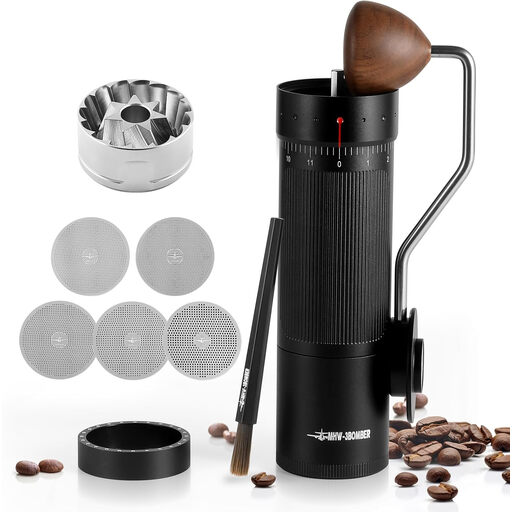
Why this choice suits this profile : This manual grinder is aimed at coffee lovers who switch between French press, filter coffee and espresso and want to change the grind quickly.
The external adjustment with 60 clicks per rotation means you do not need to take the grinder apart to change brewing method. The supplied sieves help remove some of the fine particles.
CNC-machined stainless-steel conical burrs, stated 20 g capacity and magnetic grounds receptacle.
We have put together a complete, real-time updated selection of products that meet these demanding criteria and European safety standards.
A French press coffee maker can also be used as a tea press, provided you check the design of its filter. The Bodum Assam Tea Press 0.5 L has a stainless-steel filter edged with silicone, designed to hold tea leaves in place while they infuse. For serving more people, the 1 L Bodum Assam tea press offers a more generous capacity.
For coffee, choose a coarse grind. For loose-leaf tea, focus mainly on the size of the leaves and the infusion time. In both cases, the plunger separates the water from the ingredients at the right moment, but it does not heat the carafe: these products must not be used on a hob, in an oven or in a microwave.
A common starting point is around 60 g of coffee per litre of water, then adjusting according to the desired result. With a 500 ml French press, start with around 30 g. A coarse grind and an infusion time of about four minutes are a good starting point.
It requires neither capsules nor paper filters. Running costs therefore depend mainly on the price of the beans or ground coffee. However, you should allow for the possible replacement of the carafe or filter if either component is damaged.
Its lifespan depends on knocks, how often it is cleaned and the condition of the filter. Rinse the mechanism after each preparation, avoid sudden temperature changes and inspect the glass regularly. Stop using the carafe at the first sign of a crack or chip.