
Livraison le jour même ou le lendemain

Qualité garantie

Débloquez vos offres de bienvenue: Livraison GRATUITE | Jusqu'à -80 % | 30 jours d'essai gratuits à JoyPlus
Téléchargez l'application
The French press, or cafetière à piston, is the purist's secret to a coffee rich in aroma, with a full body and a velvety texture. Simple, eco-friendly, and incredibly effective, this manual brewing method extracts all the oils and flavours from the bean. The problem? The market is flooded with models of wildly varying quality. Make the wrong choice, and your coffee ritual can turn into a disappointment, with a gritty brew and an appliance that doesn't last.
As the Head of Product Recommendations at Joybuy, my mission is to help you see things more clearly. Together, let's break down the 3 most common pitfalls and the essential criteria for making a purchase you won't regret.
Navigating the jungle of options can quickly become a headache. Too many users end up with a disappointing product, falling victim to well-hidden design flaws. Here are the pitfalls to steer clear of:
To make the right choice, focus on a few technical points that make all the difference in quality and durability.
The beaker is the heart of your coffee maker. While glass is the king of materials, not all glass is created equal. The gold standard? Borosilicate glass. Designed to withstand thermal shock, it allows you to pour in boiling water without fearing a single crack. Another advantage is that it's non-porous, meaning it won't retain odours or flavours, ensuring a pure taste with every cup.
For the frame (the structure that protects the beaker), stainless steel remains a safe bet. It is far more robust and durable than plastic, which tends to become brittle over time.
Manufacturers state the capacity in the number of cups. But beware of the trap! A standard "cup" according to them is about 120 ml (4 oz), a far cry from our usual mugs (250-300 ml / 8-10 oz).
The plunger must feature a fine-mesh filter made of stainless steel. Check that its perimeter is equipped with a spring or a flexible seal that presses it perfectly against the beaker's walls. This detail is what prevents grounds from getting into your drink. A good filtration system should also be fully disassemblable for deep cleaning, which is essential for removing coffee residue and oils that can turn rancid.
Rather than an endless list, we've selected models that have proven their worth, matching them with user profiles to help you find the perfect fit.
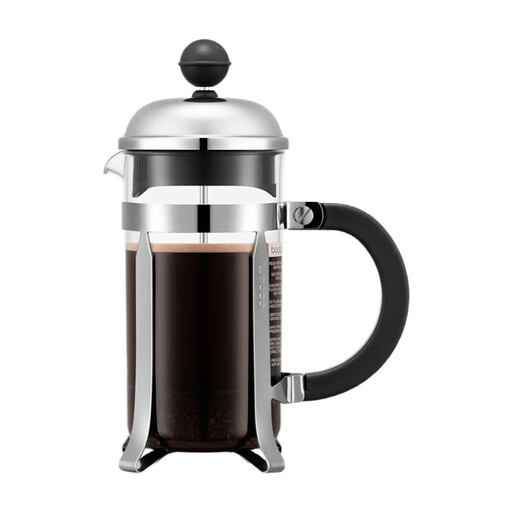
Why this model? Perfect for personal use, this iconic model from Bodum provides just the right amount for one large mug or two small cups. Its compact size makes it ideal for small kitchens and offices.
Its beaker is made of heat-resistant borosilicate glass. Its three-part stainless steel filter ensures flawless filtration, while the steel frame protects the glass.
A classic, time-tested design. The availability of spare parts (beaker, filter) makes it a sustainable investment and an excellent eco-friendly coffee maker option.
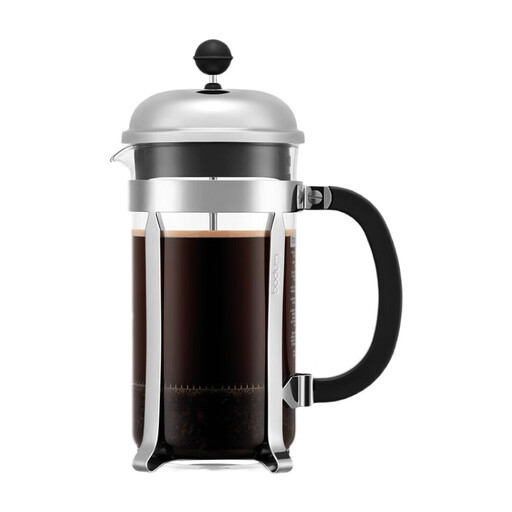
Why this model? Essential for family breakfasts or after-dinner coffee with friends. Its generous 1-litre capacity allows you to serve up to 8 cups in a single batch, without sacrificing elegance on the table.
It shares the same strengths as its smaller sibling: a borosilicate glass beaker, a sturdy steel frame, and the famous Bodum Chambord filtration system, renowned for its effectiveness.
Its large capacity (1L French press) and timeless design make it a sure bet for anyone who loves to host and share quality coffee.
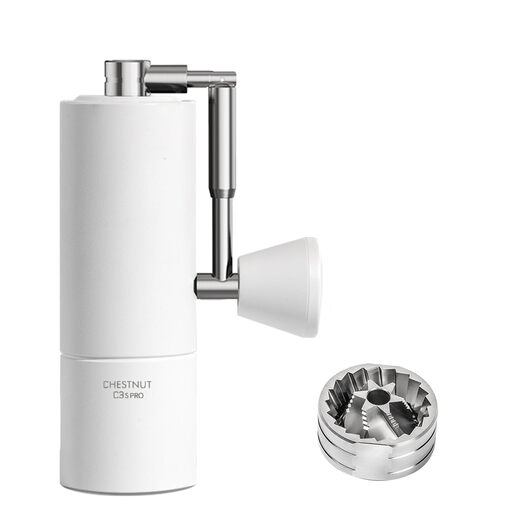
Why this product? Because the quality of a coffee starts long before brewing: with the grind. A good coffee grinder is the essential companion to a French press for achieving a coarse, consistent grind—the key to a perfect extraction.
It tackles the root cause of a gritty coffee: an inconsistent grind. Its stainless steel conical burrs guarantee a perfectly uniform particle size, light-years ahead of low-end blade grinders.
Total control over the grind size thanks to its micrometric adjustment. This allows you to dial it in perfectly for your coffee press to achieve optimal flavour extraction.
We have put together a complete selection of products that meet our strict selection criteria and current safety standards.
1. What grind size should I use for a French press? A coarse grind, with a texture similar to coarse salt, is recommended. A grind that is too fine not only risks passing through or clogging the filter but can also make it difficult to press the plunger down. Worse, it leads to over-extraction, which produces that dreaded bitter taste.
2. What's the best way to clean a French press? After each use, empty the grounds (which can go into your compost—a great bonus for an eco-friendly coffee maker). Completely disassemble the plunger and its filter. Rinse all parts with hot water. A small brush will help dislodge any coffee residue stuck in the filter. Most glass beakers and stainless steel parts are dishwasher-safe, but it's always a good idea to check the manufacturer's instructions.
3. Why are there grounds in my coffee, or why does it taste bitter? The presence of grounds in your cup usually points to two culprits: either your grind is too fine, or the filter is worn out or poorly positioned. As for the bitter taste, it's often a sign of brewing for too long (beyond 4-5 minutes) or using water that's too hot. Aim for water that is just off the boil (between 92 and 96°C / 195 and 205°F), but never boiling.