Households that shop in bulk
If large packs quickly fill your fridge freezer, compare the extra capacity you need with the space available. A chest freezer prioritises capacity, while an upright makes it easier to access a variety of foods.


If you regularly need to retrieve portions or prepared meals, choose an upright freezer with compartments that suit the way you store food. A chest freezer is better for larger quantities if you have enough floor space, while an under-counter model is more suited to a smaller reserve. In every case, check the usable capacity, location, climate class and kWh/year shown on the energy label.
A separate appliance is worth considering when your existing freezer compartment no longer has enough room for the amount of food you want to store, or makes it difficult to find what you need.
If large packs quickly fill your fridge freezer, compare the extra capacity you need with the space available. A chest freezer prioritises capacity, while an upright makes it easier to access a variety of foods.
If you want to separate portions, date meals and find them easily, look at the drawers or compartments. If you plan to add several freshly prepared dishes at once, check the model’s freezing capacity too.
A compact or under-counter appliance can add to your existing storage. Be sure to measure the space and check the net capacity, door clearance and clearances specified in the instruction manual.
First decide how much you want to store and how often you’ll need to access it. Then compare models suited to your available space and the temperature of the room.
Worth considering: if you want to separate portions and access food regularly in drawers.
Things to bear in mind: check that the drawers can open in your chosen location and that the capacity suits the amount you need to store.
Worth considering: for larger quantities or bulky packs, if you have enough floor space.
Things to bear in mind: you’ll need to organise smaller items stored at the bottom so they remain easy to reach.
Worth considering: for a modest amount of extra storage when space is more important than a large capacity.
Things to bear in mind: don’t assume it will hold everything from a bulk shop. Measure the space needed for installation too.
| Consideration | What to check | How it suits my needs |
|---|---|---|
| Capacity and freezing | Compare the net capacity with the food you want to store. If you plan to freeze several dishes or fresh shopping at once, check the freezing capacity in kg/24 h and the model’s features. | Do my bulk shops call for lots of extra space, or do I only need room for a few more portions? |
| Access to food | Check the drawers, baskets or compartments, and how the door or lid opens. With a chest freezer, think about how you’ll find smaller items stored beneath the rest. | I often reach for prepared meals, so being able to separate and access them matters as much as the overall capacity. |
| Location | Measure the dimensions, door or lid clearance, and the clearances required by the instruction manual. If you’re placing it in a garage, cellar or utility room, check the room temperature against the climate class and the model’s limits. | If the appliance is going in an unheated room, I need to make sure it can operate at the temperatures it will actually experience. |
| Energy and noise | The European Commission says the energy label displays details including the class, kWh/year, capacity and noise emissions. Compare the kWh/year figures for models of a similar size and capacity. | If the appliance is near a living area, I’ll also check its noise level, not just its capacity. |
| Food storage and maintenance | Compare the stated power-cut storage time and defrosting instructions. For everyday storage, the Ministry of Agriculture recommends setting the temperature to −18 °C. | I want to freeze home-cooked meals and maintain the appliance in line with its instruction manual. |
A chest freezer can offer plenty of space, but you’ll need to be able to open the lid and reach food stored at the bottom. An upright also needs enough room for its door and drawers to open.
Measure the space, the route to it and the clearance needed before settling on a format.
The temperatures a freezer can handle depend on the model. A room that is too cold or too hot may fall outside its intended operating range.
Compare the room’s minimum and maximum temperatures with the climate class and the instructions for the exact model you’re considering.
The energy class letter alone doesn’t tell you the storage capacity or annual energy consumption.
The European Commission says the label also gives the kWh/year, capacity and noise emissions. Check these figures before comparing appliances with similar capacities.
A freezer compartment intended for temporarily storing already-frozen food may not be suitable for freezing home-cooked meals.
To freeze fresh food or prepared dishes, check that the compartment has a 4-star rating and follow the Ministry of Agriculture’s freezing and defrosting guidance.
These ranges give you examples of formats and features to compare. The specifications mentioned don’t apply to every model from each brand.
Liebherr offers upright freezers, compact models and chest freezers, as well as models featuring NoFrost or FrostProtect.
Bosch offers freestanding and built-in upright freezers, with storage options that vary from model to model.
Whirlpool offers a range of large-capacity upright freezers.
This selection includes chest freezers for extra storage, a compact upright model and an upright with compartments for organised storage. Before choosing, compare their capacities with your shopping habits and the space available.
 Image unavailable
With a stated capacity of 99 L, this chest freezer offers extra storage in a compact format. The product title lists a 4-star rating, adjustable thermostat, removable basket and E energy class. Check that there’s enough room to open the lid, and check the climate class if you plan to put the appliance in an unheated room.
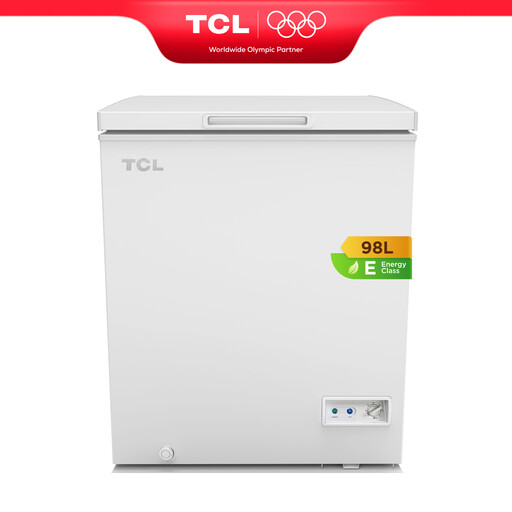 Image unavailable
This 98 L chest freezer is better suited to extra storage than to a large family’s bulk shopping. Its product title lists a basket, counterbalanced lid, temperature control and E energy class. If you plan to freeze fresh food in it, check its rating and freezing capacity. Also check its dimensions and climate class for the intended location.
 Image unavailable
With a stated capacity of 60 L, this compact model is better suited to a small overflow than to large bulk shops. The product title lists a reversible door and E energy class. Check the interior layout before buying, as the information about its compartments is inconsistent. Also check the clearances needed for installation.
 Image unavailable
Its stated capacity of 140 L offers another option for extra storage. Compare it with the amount you need to store and the floor space available. The product title lists a counterbalanced lid, temperature control and E energy class. If a basket is important for organising your food, check what’s included, as the information about it is inconsistent. Also check that the model can freeze fresh food and confirm its climate class.
 Image unavailable
This upright format could suit you if you’d rather separate your food than stack it in a chest freezer. The product title lists a capacity of 161 L, drawers, No Frost, an alarm and C energy class. It gives a temperature range of −14 °C to −22 °C, so check the instruction manual to confirm that you can set it to −18 °C for everyday storage. Check the dimensions before deciding where to put it.
Not necessarily. A freezer compartment may be intended for temporarily storing food that’s already frozen. If you want to freeze prepared meals, check for a 4-star compartment, as specified by the Ministry of Agriculture.
The Ministry of Agriculture recommends −18 °C for everyday storage of frozen food. Check the setting after installation and follow the appliance’s instruction manual.
Yes, provided the room’s actual temperature stays within the range allowed for the model. Check the room’s minimum and maximum temperatures, then compare them with the climate class and the instruction manual. A chest-freezer design alone doesn’t guarantee it’s suitable.
Check the energy class, kWh/year, capacity and noise emissions. The European Commission says this information appears on the labels for the appliances concerned. To compare energy use, focus on models with similar formats and capacities.
No. Frost management varies by design, but the appliance still needs maintenance. The Ministry of Agriculture recommends a thorough clean at least once a year. Follow the instruction manual too, for model-specific defrosting guidance.