Which criteria should you prioritise?
Choose a format based on how often you take out a portion and how much you want to store. Then compare the features of models that will actually fit in your space.
Upright freezer
Worth considering: if you want to keep portions separate and reach them regularly using drawers.
Bear in mind: maximum capacity may be lower than with a chest freezer; check that the door can open fully and the drawers are easy to handle.
Chest freezer
Worth considering: for a large supply, if you have a dedicated area of floor space.
Bear in mind: portions at the bottom need to be organised in baskets or by category, and you’ll need clear access from above.
Under-counter freezer
Worth considering: when space is limited and you only need to store a moderate number of portions.
Bear in mind: fitting it into the available space limits its capacity; check the recess dimensions and ventilation requirements.
Fridge-freezer
Worth considering: if a few portions will fit in the freezer compartment of the appliance you use every day.
Bear in mind: freezer space is generally more limited than in a dedicated freezer; check its net capacity and drawers.
| Criteria |
What to check |
Who it matters to |
| Access to portions |
Number of drawers and how easy they are to use; space for your containers. |
If I often take out just one meal, I want to find it without moving everything else. Around 36% of consumers would prioritise easy everyday access. |
| Storage capacity |
Net capacity in litres and container sizes; freezing capacity if you add several batches at once. |
If I prepare large quantities of family meals, I need enough room to store them without awkward stacking. Around 29% of consumers would put capacity first. |
| Space and installation |
Dimensions, door or lid clearance, and the permitted ambient temperature range. |
In a narrow kitchen or an unheated room, the first priority is making sure the appliance can be installed and used there. Around 21% of consumers would prioritise this compatibility. |
| Continuous use and food storage |
Annual energy consumption in kWh, storage time during a power cut and care instructions. |
When an appliance runs all the time, I want to check its energy consumption and the conditions for storing my meals. Around 14% of consumers would make this their top criterion. |
Freezers for storing prepared meals
This selection includes an upright freezer with drawers for easy access to portions, plus chest freezers in a range of capacities for storing meals. Compare their layout and where you could place them before deciding how much capacity you need.
 Image unavailable
Heinrich´s 161 L stainless steel upright freezer
Worth considering if you’d like to keep portions separate and reach for them regularly in an upright freezer.
The product name lists three drawers, No Frost protection, an alarm, a reversible-hinge door and energy efficiency class C.
Check that 161 L is enough for your containers, and check the annual energy consumption and permitted ambient temperature for your chosen location.
View on Joybuy
 Image unavailable
AUCMA 291 L convertible chest freezer
Its capacity may suit a household building up a supply of meals, provided there’s space for a freezer that opens from the top.
The product is listed with a removable basket, LED lighting, five-level digital controls and energy efficiency class E. It offers fridge and freezer modes.
Plan how to organise portions underneath the basket, and check the permitted ambient temperature before installing it in an unheated room.
View on Joybuy
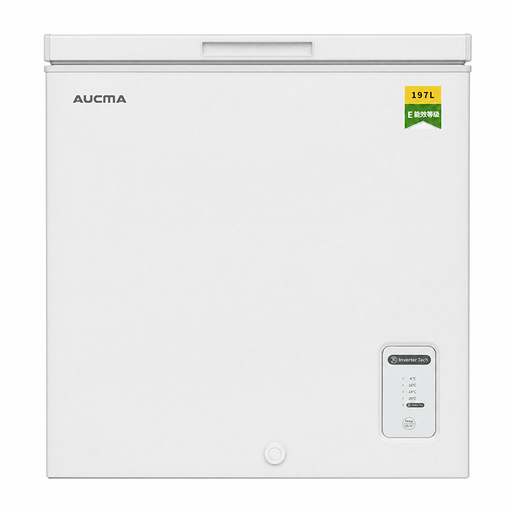 Image unavailable
AUCMA 197 L convertible chest freezer
Worth considering if you want to store prepared meals in a chest freezer with less capacity than the 291 L AUCMA model featured here.
The product lists a removable basket, fridge and freezer modes, five-level temperature control, a defrost drain and energy efficiency class E.
Check that you can reach your containers under the basket and that the ambient temperature range is suitable for your chosen room.
View on Joybuy
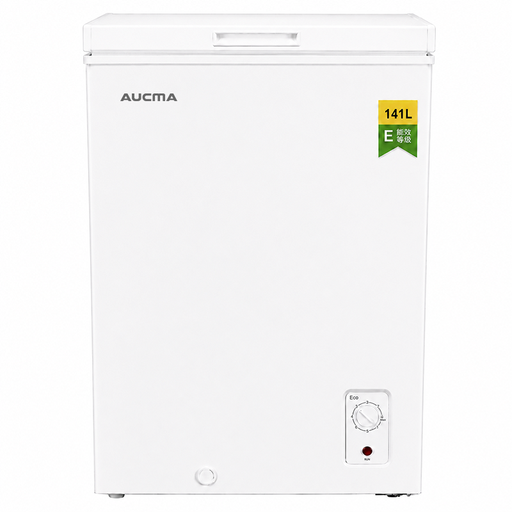 Image unavailable
AUCMA 141 L convertible chest freezer
This capacity may suit a smaller supply of portions if you prefer the top access of a chest freezer.
The product name lists a removable basket, fridge and freezer modes, a seven-level thermostat, a defrost drain and energy efficiency class E.
The basket doesn’t divide the whole interior, so think about how you’ll store portions at the bottom and check the permitted ambient temperature.
View on Joybuy
 Image unavailable
CHiQ JR99DWE 99 L chest freezer
Worth considering for extra portions rather than a large family-sized supply.
The product is listed with a removable wire basket, sliding lid, adjustable thermostat and energy efficiency class E.
Allow for access to food underneath the basket, and check the annual energy consumption and permitted ambient temperature before choosing where to put it.
View on Joybuy
Frequently asked questions
Can I freeze prepared meals in a domestic freezer?
Yes, but a freezer doesn’t replace food hygiene rules. ANSES states that at −18 °C, bacteria stop multiplying, although most micro-organisms aren’t destroyed. It recommends defrosting food in the fridge, in the microwave using the defrost setting, or quickly by cooking or reheating. Food that has been defrosted shouldn’t be refrozen.
What should I compare on a freezer’s energy label?
Compare the energy efficiency class and annual energy consumption in kWh for the exact model, taking into account the capacity you need. For the domestic refrigeration appliances covered in France, the DGCCRF states that this information appears on the energy label, including for online sales.
Can I put a freezer in an unheated garage?
Yes, if the model’s permitted ambient temperature range allows it. Beko and Liebherr state that certain models can operate at temperatures as low as −15 °C; this doesn’t apply to all their freezers. Check the instructions and climate class for the appliance you’re considering.
What does the stated storage time during a power cut mean?
It helps you compare how long a model keeps food cold without a power supply, according to the stated test conditions. UFC-Que Choisir measures the time it takes for the temperature to rise from −17 °C to −9 °C as part of its testing. Check the figure and the conditions it applies to for the model you plan to install.


