Households that prepare meals in advance
You want to find different dishes and portions easily throughout the week. Storage layout and freezing capacity matter just as much as the stated volume.


Start by considering how much you want to freeze, how often you’ll take out portions and how much space you really have. A chest freezer can suit larger stocks, an upright makes portions easier to access, and a compact model can meet more modest needs. A fridge-freezer is mainly worth considering if you also need to replace your fridge. Before buying, check the frozen food capacity, dimensions and installation clearances, permitted ambient temperature and stated storage time in the event of a power cut for the exact model.
You want to find different dishes and portions easily throughout the week. Storage layout and freezing capacity matter just as much as the stated volume.
You store lots of food or prepared meals at once and have room for an appliance that takes up more floor space. UFC-Que Choisir highlights the usefulness of traditional freezers for larger families.
You’re looking for extra freezer capacity, but need to consider the width, opening clearance, ventilation and sometimes the temperature of the room available.
For storing family meals, start with the usable space for frozen food, then consider how easy portions are to access, where the appliance will go, how long it can maintain the cold and how it works day to day.
| What matters | What to check | Who should consider it? |
|---|---|---|
| Space for meals and supplies | Compare the frozen food compartment’s capacity in litres, and the freezing capacity if you regularly add fresh meals. | If I store several meals and supplies at once, I want to know how much space is actually available for frozen food; around 26% of consumers prioritise this capacity. |
| Access to and storage of portions | Look at the layout of the drawers or baskets and how easy it is to reach food at the bottom of a chest freezer. | If I often take out different portions, I want storage that makes them easy to find; around 21% of consumers put easy access to portions first. |
| Available space and room temperature | Measure the appliance and the space needed to open it; check the permitted temperature range for the model. | If the room is small or unheated, I need to make sure the appliance fits and can be opened properly; around 21% of consumers prioritise suitability for the space. |
| Freezing and power cuts | Check that the appliance can freeze food, its freezing capacity and the stated storage time in the event of a power cut for the exact model. | If I freeze meals myself, I want to check the freezing functions and what to expect during a power cut; around 16% of consumers prioritise keeping food cold. |
| Electricity and maintenance | Compare kWh/year for models with a suitable capacity and check whether defrosting is manual or the model has a No Frost function. | If I’m interested in energy use and the time needed for maintenance over the long term, I compare these details on the label and product information; around 16% of consumers prioritise running costs and maintenance. |
ADEME points out that freezers run continuously. The energy consumption shown on the label and the usable capacity answer different questions, so compare kWh/year across appliances that meet your storage needs.
Part of a fridge-freezer’s capacity is taken up by fresh food. For example, Bosch lists separate capacities of 218 l for refrigeration and 103 l for freezing on the KGN362WDF.
Compare the frozen food compartment’s capacity with the amount of meals and supplies you want to store.
The permitted ambient temperature depends on the model. A feature designed for one model won’t necessarily apply to all chest freezers.
Check the temperature range and installation instructions in the manual for the exact model. Liebherr states that the CFe 2500 Pure’s FrostProtect feature works at ambient temperatures down to −15 °C.
The Brandt BFT525EW is described as a freestanding appliance with a non-removable top. Its height alone doesn’t confirm that it can be installed under a worktop.
For this type of installation, check that the manual explicitly allows under-worktop placement and specifies the required clearances.
The energy rating, kWh/year, usable capacity and defrosting method describe different features. ADEME points out that freezers run continuously.
Compare the kWh/year and frozen food capacity of models suited to your needs, then check whether manual defrosting is required.
These two models show the difference between a standalone freezer and a fridge-freezer that shares its capacity between fresh and frozen food.
The CFe 2500 Pure chest freezer is an example of a high-capacity model designed for a location where the ambient temperature may be low.
The BFT525EW is an example of a freestanding top freezer designed for more compact, additional storage.
The WHM4612 chest freezer is a model worth looking at when comparing features specific to individual products.
This selection includes fridge-freezers with large freezer compartments, upright freezers and chest freezers to suit different family storage needs.
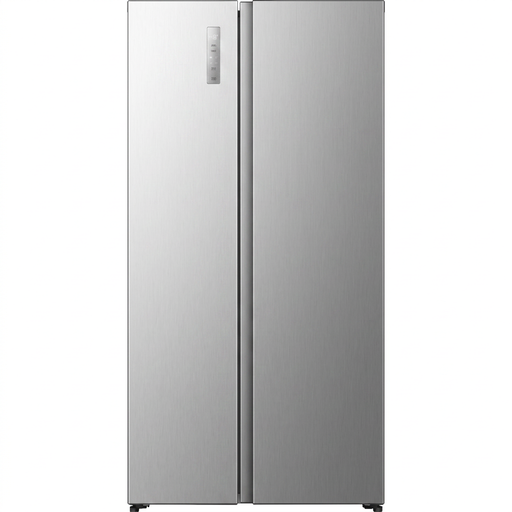 Image unavailable
Worth considering if you’re also replacing your fridge and want a dedicated compartment for frozen meals.
Stated capacity: 347 l for refrigeration and 197 l for freezing. The product information lists No Frost, four shelves, two drawers and freezer door bins.
 Image unavailable
Worth considering if you want to keep portions separate and find them more easily in a standalone freezer.
Stated capacity: 161 l. The product information lists three drawers, two shelves, No Frost, an energy rating of C and an adjustable temperature range of −14 °C to −22 °C.
 Image unavailable
Worth considering if you also need to replace your fridge and want a large freezer compartment.
Stated capacities: 333 l for the fridge and 192 l for the freezer. The product information lists No Frost, an inverter compressor and an energy rating of E.
 Image unavailable
Worth considering for storing larger quantities in a standalone appliance, if you have enough room to open the lid.
Stated capacity: 291 l. The product information lists a four-star function, a removable basket and five-level digital temperature control.
With a chest freezer, food at the bottom may take more organisation to find.
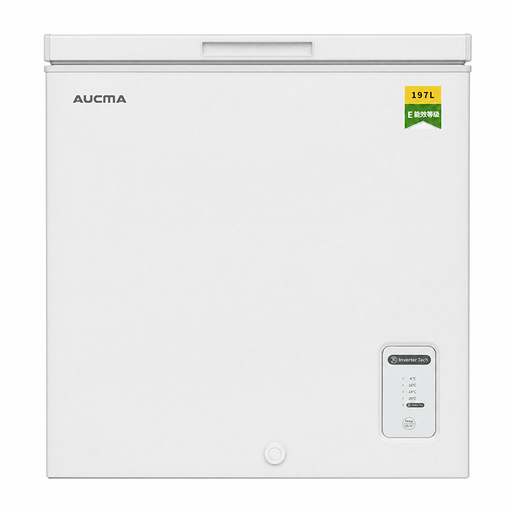 Image unavailable
Worth considering for storing a family-sized supply in a standalone appliance, with a suitable storage system for the chest.
Stated capacity: 197 l. The product information lists a four-star function, a removable basket and five-level digital temperature control.
Finding food at the bottom of a chest freezer takes some organisation.
No. Check that the compartment can freeze food, rather than just temporarily storing products that are already frozen. The Ministry of Agriculture states that a four-star compartment can freeze food and recommends setting it to −18 °C. Also check the appliance’s freezing capacity.
No. The permitted ambient temperature depends on the model. Check the manual for the one you’ve chosen: Liebherr states that the CFe 2500 Pure, which has FrostProtect, works at ambient temperatures down to −15 °C. This feature doesn’t apply to all chest freezers or fridge-freezers.
This is a feature stated for a particular model. It’s useful when comparing products, but doesn’t replace checking the condition of your food after a power cut. Bosch states 9 h for the GSN36CWFV and Brandt 12 h for the BFT525EW; these figures don’t apply to every appliance from these brands. Avoid opening the appliance unnecessarily during a power cut.
Compare the kWh/year shown on the label for models with enough frozen food capacity to meet your needs. Bosch lists No Frost for the GSN36CWFV, while the Brandt BFT525EW uses static cooling and requires manual defrosting. ADEME points out that freezers run continuously; actual energy use depends in part on the appliance’s size and how you use it.
For a personal purchase from a professional seller, the statutory guarantee of conformity applies. The Ministry of the Economy states that it lasts for two years from delivery. The European energy label for relevant appliances shows details including the rating, energy consumption and capacity: compare this information for the models you’re considering.