Households preparing portions
You regularly freeze meals to take out individually when you need them; easy access to compartments may matter more than maximum capacity.


If you regularly take out individual portions, an upright freezer with drawers makes it easier to keep things organised. For larger containers, a chest freezer may suit you if you have enough floor space and can reach the bottom. A large fridge freezer is only a substitute for a dedicated appliance if its freezer compartment has enough room for your stock. Que Choisir highlights the importance of ease of use, while ADEME points out that a freezer runs continuously.
You regularly freeze meals to take out individually when you need them; easy access to compartments may matter more than maximum capacity.
You store lots of frozen food or large containers and can set aside floor space for a chest freezer. Usable capacity and access to items at the bottom are both worth considering.
You also need room for fresh food and want to check whether a large fridge freezer has enough space for your frozen food before adding an appliance that runs continuously.
Consider it if: you often take out meal containers or want to sort food by category.
Bear in mind: the available height and the clearance needed to open the door.
Consider it if: you store a large amount of food, including bulky packaging, and have enough suitable floor space.
Bear in mind: items at the bottom may need careful organisation. Check how much room you need to open the lid, too.
Consider it if: you also need to replace your fridge and the freezer compartment can hold your usual stock.
Check: a large total capacity does not necessarily mean the freezer compartment is large, too.
Que Choisir points out that ease of use matters just as much as capacity. ADEME notes that a freezer runs continuously, so compare the specifications of specific models and configurations.
| What matters | What to check before buying | Who it matters most to |
|---|---|---|
| Space for frozen food | Compare the usable capacity in litres of the freezer compartment alone, and check that your containers will fit. | If your frozen meals and shopping take up more space than your current compartment offers, prioritise the space you will actually have. Around 28% of consumers prioritise capacity. |
| Access and organisation | Compare drawers, baskets and open compartments, and check how easy it is to reach items stored at the bottom. | If you often take out individual portions, an easy-to-navigate layout may matter more than a large compartment. Around 22% of consumers prioritise access. |
| Power cuts | Compare the stated storage time for each model and check the condition of the food after a power cut. | If you are concerned about power cuts, compare the stated durations, but do not treat them as a guarantee that food will remain safe to eat. Around 17% of consumers prioritise this criterion. |
| Location and installation | Measure the appliance and the clearance needed to open it, and check the ambient temperature range specified for the model. | In a utility room, garage or cold room, the dimensions and room temperature may determine your choice. Around 17% of consumers put these conditions first. |
| Electricity consumption | Compare kWh/year and usable capacity. If you are considering more than one appliance, compare the complete setup. | If you are unsure about adding an appliance that runs continuously, it is worth checking the energy use of the options you are considering. Around 16% of consumers make this their priority. |
Bosch’s KGN56XLEB product information lists 400 l for refrigeration and 108 l for freezing. So the total capacity alone does not tell you how much room you will have for frozen meals.
Compare the freezer compartment’s usable capacity and layout with the quantity and dimensions of the containers you plan to store in it.
Specifications vary by model: the stated storage times for the Bosch GSN58AWCV and Whirlpool WHCF2044, for example, are different. You cannot work out energy use or storage time from the format alone.
For the models you are considering, compare kWh/year and the stated storage time separately, and distinguish manufacturer specifications from test results.
An open compartment makes it harder to find food than the drawers in an upright freezer. The appliance’s dimensions and the space needed to open the lid must also suit the room.
Measure the space and the clearance needed, then think about how you will organise and remove your meals.
The GSN58AWCV and KGN56XLEB are examples of a dedicated upright freezer and a large fridge freezer respectively.
The WHCF2044 chest freezer is an example of a mid-sized model with baskets.
The HCE420E chest freezer is an example of a high-capacity option to weigh up against the space you have available.
The CFe 1870 Pure chest freezer may be worth considering for an unheated room, provided you follow the conditions in its manual.
This selection includes dedicated upright and chest freezers to help you organise meals and frozen food at home.
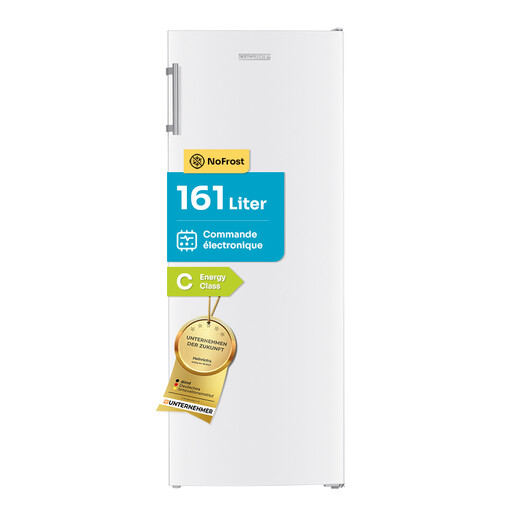 Image unavailable
The drawers and shelves may suit you if you want to separate foods that you take out regularly.
Stated capacity: 161 L; three drawers and two shelves; energy class C; No Frost protection stated.
 Image unavailable
A chest freezer with a basket may suit you if you want to store frozen food while keeping some smaller items together.
Stated capacity: 140 L; one storage basket; counterbalanced lid stated to stay open between 40 and 75°; stated dimensions: 637 × 556 × 846 mm.
 Image unavailable
Its stated capacity may appeal to households looking to build up a dedicated stock of frozen food. Check that the location and access to the compartment work for you.
Stated capacity: 291 L; energy class E; stated consumption: 226 kWh/year; five digital settings; removable basket; stated four-star rating.
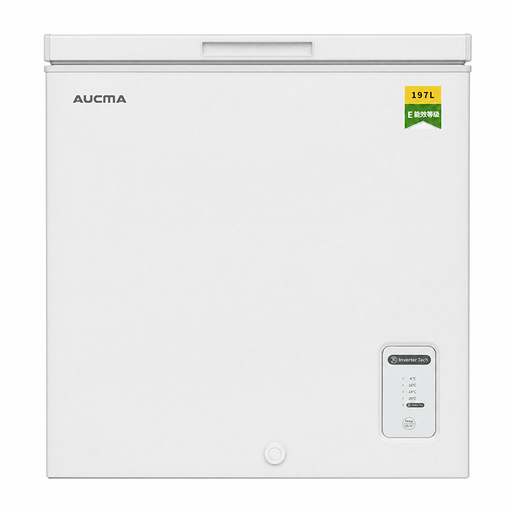 Image unavailable
The removable basket can help keep items together in the compartment. Check the chest freezer’s dimensions against the space you have available.
Stated capacity: 197 L; energy class E; stated consumption: 197 kWh/year; five digital settings; removable basket; stated dimensions: 816 × 554 × 848 mm.
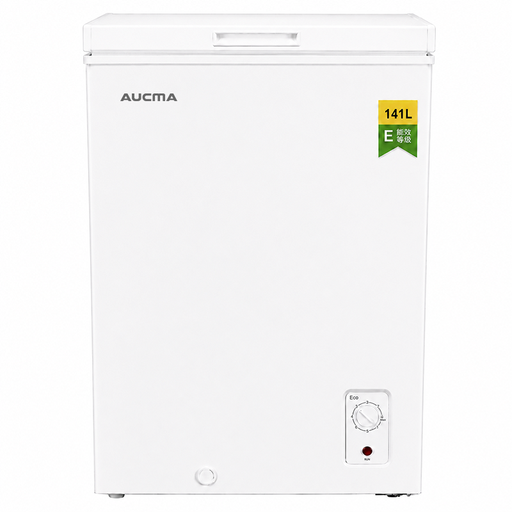 Image unavailable
This stated capacity may be worth considering if you are looking for a dedicated chest freezer that is more compact than the 197 L or 291 L models.
Stated capacity: 141 L; energy class E; stated consumption: 179 kWh/year; seven-level thermostat; removable basket; stated dimensions: 632 × 554 × 848 mm.
Yes, if its usable capacity and layout suit the amount of frozen food you keep. For the Bosch KGN56XLEB, Bosch states 400 l of refrigeration capacity and 108 l of freezer capacity. Compare the litres in the freezer compartment, not the total capacity.
Not necessarily. The French Ministry of Agriculture distinguishes between a freezer compartment, intended for temporarily storing food that is already frozen, and a four-star compartment that can freeze food. Check the star rating and freezing capacity of the appliance you are considering.
Check the stated storage time for the exact model, but do not take it as a guarantee that all the food will remain safe to eat. Anses advises against refreezing food that has defrosted.
It depends on the model and the actual temperature in the room. Liebherr states that FrostProtect works down to -15 °C for the CFe 1870 Pure only. Check the operating temperature range and the manual for the model you choose.
Your Europe, the European Union’s portal, shows the current energy scale from A to G. When comparing models, also check the kWh/year and usable capacity of each one.