Households that prepare meals in advance
If you regularly freeze portions, think about how many containers you need to store at once and how easily you’ll be able to find each meal.


If you want to find prepared portions quickly, an upright freezer with drawers makes it easier to keep everything organised. For larger stocks and bulky containers, a chest freezer can be a good choice if you have enough space and keep its contents organised. If you also need to replace your fridge and only need a moderate amount of extra freezer space, compare fridge freezers by the net capacity of their freezer compartment. In all three cases, check the annual energy consumption, how long the appliance can keep food frozen during a power cut, and the ambient temperature range for the model you choose.
The right format depends as much on how you store and retrieve food as it does on how much you need to keep frozen.
If you regularly freeze portions, think about how many containers you need to store at once and how easily you’ll be able to find each meal.
For bulk shopping or bulky food, compare the net capacity and interior space. An upright freezer’s drawers and a chest freezer’s open interior offer different ways to organise your food.
If the room isn’t heated, check that the model’s permitted ambient temperature range covers the conditions you’ll actually find there.
Consider it: if you often take out portions and want to organise them in drawers.
Bear in mind: check that the drawers can hold your containers and that the door can open where you plan to put the appliance.
Consider it: if you store food in large containers and have enough floor space.
Bear in mind: food at the bottom takes more organising to keep within easy reach.
Consider it: if you’re already replacing your fridge and only need a moderate amount of extra freezer space.
Bear in mind: the fridge freezer’s total capacity doesn’t tell you how much space is available for frozen food.
| Criteria | What to check | My needs |
|---|---|---|
| Usable capacity | Compare the net freezer capacity, not just the total capacity of a fridge freezer. Check that the drawers or chest can accommodate your containers and everything you need to store at once. | I want to store my portions and bulk shopping without counting space that’s already occupied twice. |
| Access to food | Check the drawers, baskets and access to the bottom. Also measure the space needed to open the door or lid. | If I take out a prepared meal several times a week, I need to be able to find it without moving all my other food. |
| Location | Measure the available space and check the clearance requirements in the manual. Liebherr explains that the climate class indicates the ambient temperatures in which the appliance can operate. Check the range for the specific model. | For a cellar, utility room or garage, I need to know what temperatures the room reaches before installing the appliance there. |
| Everyday use | Compare annual energy consumption in kWh for appliances of a similar type and capacity, then check power-cut storage time, noise and defrosting separately. UFC-Que Choisir assesses energy consumption and temperature retention using separate measurements. | Energy consumption matters to me over time. If the appliance is near a living area, its noise level matters too. |
Its open interior can hold bulky food, but items at the bottom are harder to reach, and you need enough space to open the lid fully.
Measure the floor space it will take up and the clearance needed to open it. Then plan to use baskets or storage zones for food you reach for often.
Whether an appliance can be used in a cold or warm room depends on the model’s operating temperature range, not simply on the fact that it’s a freezer.
Check the room’s minimum and maximum temperatures, then compare them with the manual or rating plate for the model you’re considering.
Annual energy consumption and how long food stays frozen during a power cut answer different questions. UFC-Que Choisir assesses them separately in its freezer testing protocol.
Compare annual kWh for models of a similar capacity, and also check how long they can keep food frozen during a power cut and how noisy they are in your chosen location.
If you already need to replace your fridge, a fridge freezer with a suitably sized freezer compartment could meet moderate storage needs without adding a second appliance.
List the food you need to freeze at the same time, then compare the net freezer capacity of fridge freezers with that of separate appliances.
These ranges offer useful points of comparison for different formats and installation options. Features vary from one model to another.
Beko offers a range of upright freezers, including some models designed for use in unheated rooms.
Whirlpool offers chest freezers and freestanding upright freezers. Compare the two formats based on the space available and how you want to access your food.
Liebherr’s guidance on climate classes is useful when considering installation in a cellar, utility room or other unheated space.
These Joybuy options include fridge freezers to consider if you’re replacing your fridge, as well as upright freezers and a chest freezer if you want to add a separate appliance. Compare the usable freezer capacity and installation requirements of each model to find the right fit for your plans.
 Image unavailable
Worth considering if you’re also replacing your fridge and want to store frozen food in a fridge freezer.
The model name states a total capacity of 360 L and Total No Frost technology. Compare the net capacity of the freezer compartment separately with your storage needs. Also check that the ambient temperature range is suitable for the room where you plan to put it.
 Image unavailable
A separate freezer with drawers to consider if you want to organise portions and take them out regularly.
The product name states a capacity of 161 L and No Frost. Before choosing where to put it, compare its dimensions and ambient temperature range with the space available and the room you plan to use.
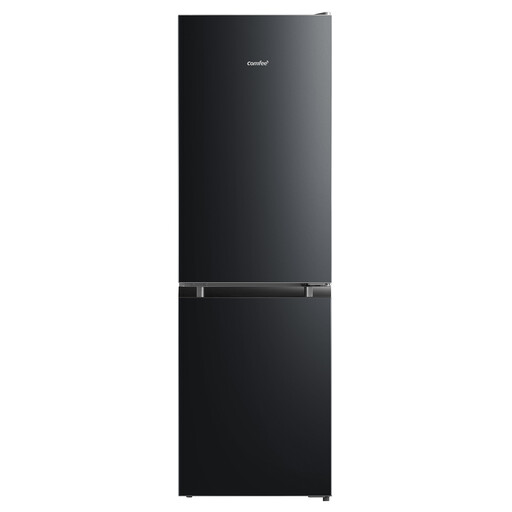 Image unavailable
Worth considering if you’re replacing a fridge freezer and don’t necessarily need a separate appliance for your frozen food.
The 174 L stated in the name refers to the fridge freezer, not necessarily its freezer compartment. Check the compartment’s net capacity to make sure it can hold your portions. The product is listed with Low Frost.
 Image unavailable
Consider this chest freezer if you want to keep bulky food in a separate appliance and have enough floor space.
The name states a capacity of 291 L, fridge or freezer settings and a removable basket. Measure the space needed to open the lid. The product name’s reference to a garage doesn’t replace checking its ambient temperature range.
 Image unavailable
A compact separate appliance to consider for extra storage, rather than for large stocks of frozen food.
The model name states a capacity of 60 L, drawers and a reversible door. Check that it can hold the number of portions you need, then check its dimensions and whether the room you plan to use is within its temperature range.
Yes, as long as the model’s permitted ambient temperature range covers the temperatures in the room. Check the minimum and maximum temperatures where you plan to put it, then consult the manual or rating plate. Liebherr explains that the climate class indicates the conditions in which the appliance can operate.
An upright freezer is usually a better choice if you often take out portions stored in drawers. Consider a chest freezer for larger stocks, provided you have enough floor space and can organise access to food at the bottom. UFC-Que Choisir notes that chest freezers can hold up to 600 L, while upright freezers are generally around 200 L and can reach 400 L for larger models. Check the capacity of the specific model.
Compare net freezer capacity, dimensions, annual energy consumption in kWh, noise, how long food stays frozen during a power cut and the ambient temperature range. If you regularly freeze a lot of fresh food, check the freezing capacity too. The energy rating doesn’t replace these other criteria.
No. First check what the manual says about frost and defrosting, then compare the appliance’s usable capacity, energy consumption and installation requirements with your needs. A feature listed for one model shouldn’t be assumed to apply to every appliance from the same brand.