To freeze batch-cooked meals, stick with a fridge freezer if its freezer compartment can hold all the portions you want to store at once. An upright freezer makes it easier to organise and access your containers; a chest freezer is suited to storing large quantities if you have enough floor space and can easily reach food at the bottom. Compare the freezer capacity, annual energy consumption and installation requirements of each model before you choose.
Who are these options for?
The right format mainly depends on how many portions you need to store at once, how you like to retrieve them and how much space you have.
Households preparing meals for the week
If you cook several portions in advance, plan where to store each meal so you can find it easily, without confusing fridge space with freezer space. France 3 Nouvelle-Aquitaine describes this kind of advance preparation as the principle behind batch cooking.
Households running out of freezer space
When your portions already fill the freezer compartment, compare its usable capacity with that of a dedicated appliance. Also think about how easy it is to reach the containers you take out regularly.
Households with a storage room
A pantry, cellar or garage may be suitable for a separate appliance, provided its dimensions and permitted ambient temperature range are right for the space. Check this for each model.
What should you compare?
First choose the format that suits how you rotate your meals, then compare the features of models in that format.
Fridge freezer
Consider this if: you need a fridge every day and the freezer compartment has enough room for your portions.
Check: the freezer capacity on its own. Bosch lists 103 l for the KGN39AIAU, showing why a fridge freezer’s total capacity doesn’t answer this question.
Upright freezer
Consider this if: you want to sort portions into drawers and regularly retrieve individual containers.
Check: that the drawers are the right size for your meals. UFC-Que Choisir says upright freezers generally take up less floor space than chest freezers, but usually offer a lower maximum capacity.
Chest freezer
Consider this if: you store lots of meals or large containers and have enough floor space.
Plan for: a way to find portions stored deep inside, and a location with a temperature that suits your chosen model.
| What to compare |
What to check |
What I need |
| Freezer capacity |
Check the litres available for frozen food, separately from the fridge capacity. Count the portions and larger dishes you need to store at the same time. |
I prepare several batches of meals, so I need enough room for all the portions I have before my next rotation. |
| Access to meals |
Check the drawers, baskets and space for your containers. With a chest freezer, think about how you’ll reach food stored at the bottom. |
I often take out just one container and want to find it without moving the rest of the food. |
| Installation |
Measure the appliance and the available space. Check the permitted ambient temperature range in the manual, especially if you’ll be using it in an unheated room. |
Space is limited, or I want to use a cellar or garage, so the appliance must be suitable for that specific location. |
| Energy use and noise |
Compare the kWh/year figures on the energy label for appliances of a similar format and capacity, then check the noise level. The Ministry of the Economy lists annual energy consumption and energy efficiency class as two separate details on the label. |
As the appliance runs continuously, I want to compare its annual energy use rather than relying on the energy efficiency rating alone. |
| Freezing batch-cooked meals |
If you add several dishes at once, check the stated freezing capacity and whether the appliance has a fast-freeze function or an alarm. According to Anses, domestic freezing at −18 °C stops bacteria from multiplying but does not destroy most micro-organisms. |
I cook in batches, so I need to freeze meals soon after preparing them, rather than waiting until they are nearing the end of their storage life. |
What mistakes should you avoid?
-
Going by a fridge freezer’s total capacity
A large fridge freezer may have much less room for frozen portions than you expect. For example, Bosch lists 260 l of fridge space and 103 l of freezer space for the KGN39AIAU.
Work out how many containers, bags and dishes you need to store together, then compare them with the freezer compartment’s capacity alone.
-
Assuming any freezer will work in a garage
If the ambient temperature falls outside the appliance’s specified range, it may not work properly, as UFC-Que Choisir points out.
Check the temperatures allowed in the model’s manual and compare them with those in the room where you plan to put it.
-
Waiting too long before freezing a dish
According to Anses, domestic freezing at −18 °C stops bacteria from multiplying, but most micro-organisms survive. Freezing won’t make up for unsuitable storage beforehand.
Freeze food as soon as it’s prepared and label each portion with the date to help you plan when to use it.
-
Comparing energy efficiency ratings alone
Fridges and freezers run continuously, notes ADEME. The energy efficiency ratings of two models don’t give you a useful comparison unless you also consider their annual energy consumption and capacity.
Check the kWh/year on the label, then compare appliances of a similar format and capacity. Don’t forget to consider noise and where you’ll put it.
A few models from well-known brands
These models and ranges show some of the features to look for; their inclusion here does not guarantee that a particular appliance is available.
Bosch
For its KGN39AIAU fridge freezer, Bosch lists 260 l of fridge space, 103 l of freezer space, an A energy efficiency rating, No Frost and a noise level of 29 dB.
- The separate capacities make it easy to see how much room this model actually has for frozen meals.
- Check that its 103 l of freezer space is enough for the number of portions you keep at once.
Liebherr
The FNe 5006 Pure NoFrost upright freezer is listed with a capacity of 238 l and dimensions of 165.5 × 59.7 × 67.5 cm.
- Liebherr lists a 250 mm SpaceBox for this model, which you can compare with the size of your dishes.
- The manufacturer says this model can operate at ambient temperatures as low as −15 °C; check the installation requirements in its manual all the same.
Beko
Beko describes its chest freezer range as an option for storing food and planning meals over a longer period.
- Some chest freezers in the range are listed with a temperature alarm or a capacity of over 500 l; features vary by model.
- A large chest freezer needs plenty of floor space and an organisation system that lets you reach smaller portions stored deep inside.
Appliances in all three formats
This Joybuy selection includes fridge freezers, upright freezers and a chest freezer. For each one, check how much room is actually available for your portions and whether the installation requirements suit your space.
 Image unavailable
Haier HTW5618ENMG, 3-door fridge freezer, 360 L
If you want to keep fresh food and frozen meals in one appliance, check that the freezer section has enough room for the portions you rotate. The model name lists a total capacity of 360 L and Total No Frost technology; this is not the capacity of the freezer alone. Also check the permitted ambient temperature range if you plan to install it in an unheated room.
View on Joybuy
 Image unavailable
CHiQ JR263LGE, 262 L fridge freezer, 70/30 split
This fridge freezer could suit you if you freeze portions as well as needing a fridge. Check the exact freezer capacity rather than relying on the 262 L stated in the title. The model is listed with Low Frost and measures 54 cm wide and 176 cm high. Its stated ambient temperature range is 16 to 38 °C, so don’t use it in an unheated room outside this range.
View on Joybuy
 Image unavailable
Heinrich´s, 161 L upright freezer
The upright format and three stated drawers can help you separate portions that you retrieve regularly. The title lists No Frost, a C energy efficiency rating and an adjustable temperature range of −14 to −22 °C. Before choosing a location, check the appliance’s dimensions and permitted ambient temperature range. Also compare its annual energy consumption in kWh.
View on Joybuy
 Image unavailable
COMFEE' RCU60WH2(E), 60 L freezer
This compact upright freezer could be useful for storing a limited number of portions separately from your everyday fridge. The title lists three drawers and an E energy efficiency rating; check that 60 L is enough for all the meals you want to store at once. Check the kWh/year and permitted ambient temperature range, especially if you’re planning to put it in a cellar or garage.
View on Joybuy
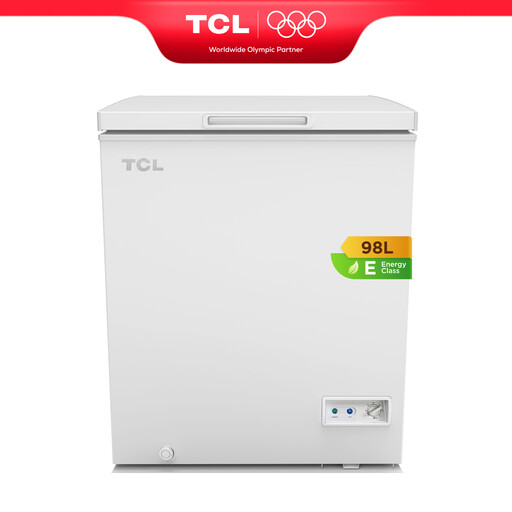 Image unavailable
TCL CF126EWE0FR, 98 L chest freezer
This 98 L chest freezer is an option for storing portions in a dedicated appliance; its storage basket can help keep smaller containers within easy reach. Make sure there’s enough space to open the lid and reach food at the bottom. The model is listed with an E energy efficiency rating; check its kWh/year and permitted ambient temperature range before installing it in a garage.
View on Joybuy
Frequently asked questions
What temperature should you freeze home-cooked meals at?
Anses recommends −18 °C as a guide for domestic freezing. At this temperature, bacteria stop multiplying, but most micro-organisms survive. Freeze meals as soon as they’re prepared rather than relying on freezing to make up for food that has been stored for too long.
Can you refreeze a defrosted meal?
Anses recommends not refreezing food once it has been defrosted. Dividing meals into portions means you only need to take out the amount you need.
What should you compare on the energy label?
Compare the energy efficiency rating and annual energy consumption in kWh, then consider the model’s freezer capacity and noise level. The Ministry of the Economy notes that the label shows the rating and annual energy consumption; the rating alone won’t tell you how much room there is for your meals.
Can you put a chest freezer in an unheated garage?
Yes, but only if the model’s permitted ambient temperature range covers the temperatures in your garage. Check the manual: Beko says some chest freezers with Freezer Guard can operate at temperatures as low as −15 °C, but this feature is not available on all chest freezers.


