What should you check before choosing?
Start by working out how much space you need for your food, then check how easy it is to access and where the appliance can be installed. You can compare energy use and maintenance requirements between models suited to the same needs.
| What to consider |
What to check |
My needs |
| Freezer capacity |
Compare the litres of freezer space, not the total capacity of a fridge-freezer. UFC-Que Choisir says chest freezers can hold up to 600 l, compared with up to 400 l for large upright models. If you’re adding a lot of fresh food at once, also check the freezing capacity in kg/24 h. |
I batch-cook several meals or buy frozen food in bulk: how many containers and packs do I actually need to store? If I only keep a modest stock, the freezer compartment in a fridge-freezer may be enough. |
| Access and organisation |
Check the size and ease of use of an upright freezer’s drawers, or the baskets in a chest freezer. Make sure the compartments can hold your meals and that you can reach food stored at the bottom. |
I take portions out several times a week: separate sections would make it easier to find a meal without moving everything else. For larger items, I could opt for a less divided storage space. |
| Installation room |
Measure the space, check how far the door or lid needs to open, and allow for the clearances specified in the manual. According to ADEME, the climate class must suit the room’s ambient temperature; check the model’s temperature range if it’s going in a cellar or garage. |
I’d put the appliance in an unheated room, so I need to compare the temperatures it reaches throughout the year with the temperatures permitted for this model. The word ‘garage’ alone doesn’t tell me whether it’s suitable. |
| Use and maintenance |
Compare the European energy label, which ranges from A to G, and the consumption stated for each model. Also check the defrosting system, the stated storage time in the event of a power cut and whether it has any alarms. |
I want to compare the energy use of appliances with enough room for my food, rather than choosing on the energy rating alone. If I’m keeping a large stock, the stated storage time and alerts also matter. |
Which models show the different formats?
These examples from manufacturers show different configurations to compare based on your space and how you like to organise food. Their features don’t necessarily apply across the brand’s entire range.
Bosch
The range includes upright freezers, including options for households looking for separate storage compartments.
- Bosch states that the GSN58AWEV offers 366 l of capacity, No Frost and 12 h of storage time in the event of a power cut.
- These features apply to the GSN58AWEV. Check the permitted ambient temperature range separately for any model you plan to install in an unheated room.
Liebherr
The models documented include a large-capacity chest freezer and an under-counter freezer designed to fit in a housing unit.
- Liebherr states that the CFd 2505 Plus chest freezer has a capacity of 359 l and FrostProtect down to -15 °C. The under-counter SUFNd 365i is listed at 74 l and is designed for a housing unit measuring 82 to 88 × 60 × 56 cm.
- Suitability for a cold room and built-in dimensions depend on the model. Check the product information and manual for the one you’re considering.
Beko
The HSM14540 chest freezer is worth considering if installing an appliance in an unheated room is a priority.
- Beko says the HSM14540 can operate in ambient temperatures as low as -15 °C.
- This stated capability applies to the HSM14540 and shouldn’t be assumed for other Beko freezers.
Which freezers should you look at on Joybuy?
This selection of freestanding freezers includes an upright model for organising portions, as well as chest and compact models for extra storage. Compare their capacity with your usual shopping before choosing a model for batch cooking.
 Image unavailable
Heinrich´s 161 l No Frost upright freezer, stainless steel
For portions you want to access regularly, this upright model has drawers and a stated capacity of 161 l. The title mentions a reversible door and an alarm; check the permitted ambient temperature range for the room where you plan to install it.
View on Joybuy
 Image unavailable
CHiQ JR99DWE 99 l chest freezer
At 99 l, it’s better suited to providing extra capacity than storing large bulk buys. The title mentions a removable basket, an adjustable thermostat and an E energy rating; check the dimensions and permitted ambient temperature before choosing where to put it.
View on Joybuy
 Image unavailable
COMFEE' RCU60WH2(E) 60 l upright freezer
This 60 l model is designed for a small amount of extra storage, not a large stock of batch-cooked meals. The door is listed as reversible; check the layout of the compartments and the space required for installation.
View on Joybuy
 Image unavailable
TCL CF182EWE0FR 140 l chest freezer
This 140 l chest freezer offers more space than the smaller models in this selection, with a basket listed for separating some foods. The counterbalanced lid needs enough clearance to open fully; also check the permitted ambient temperature range if you plan to keep it in a cellar or garage.
View on Joybuy
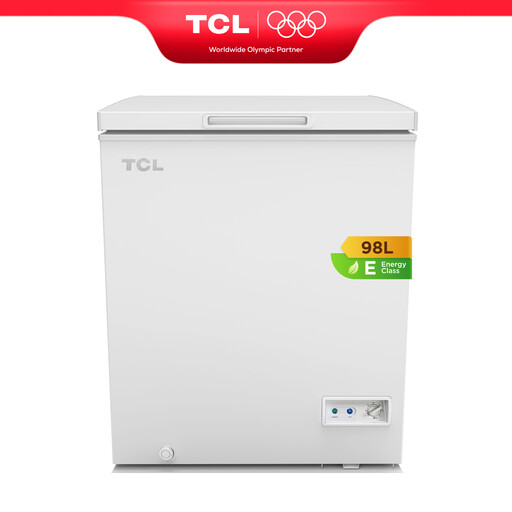 Image unavailable
TCL CF126EWE0FR 98 l chest freezer
With a capacity of 98 l, this chest freezer is suitable for extra storage rather than large batches of meals. The title mentions a basket and a counterbalanced lid; check its overall dimensions and permitted ambient temperature range against your chosen location.
View on Joybuy
Frequently asked questions
When should you add a separate freezer instead of choosing a large fridge-freezer?
A separate freezer makes sense if your batch-cooked portions or bulk buys regularly exceed the freezer capacity you have available, and you have space for another appliance. Compare the litres of freezer space: the Joybuy product page for the Beko B5RCNE416HXB fridge-freezer lists 118 l for the freezer compartment, out of 415 l in total. So a high total capacity doesn’t necessarily mean lots of room for frozen food.
Which freezer should you install in an unheated cellar or garage?
Choose a model whose ambient temperature range covers the room’s temperature throughout the year, as ADEME recommends when choosing where to put a freezer. Beko and Liebherr state that the HSM14540 and CFd 2505 Plus models respectively can operate down to -15 °C. You can’t assume this feature applies to every chest freezer, so check it for the model you’re considering.
Does No Frost mean there’s no maintenance at all?
No. Bosch describes No Frost on the GSN58AWEV as a feature that removes the need for defrosting, but you should still follow the maintenance instructions in the model’s manual. Check the technology listed for the appliance you choose rather than assuming No Frost, SmartFrost and MinFrost are the same system.
How do you compare the energy labels of two freezers?
First compare appliances with a capacity and format that suit your needs, then look at their energy labels and model specifications. The European Union states that the scale runs from A, for low energy consumption, to G, for high consumption. The rating doesn’t replace checking that there’s enough space for your food and that the appliance is suitable for its intended location.


