Households that freeze large batches
You prepare lots of portions in advance or buy in bulk. Usable capacity and space for bulky containers matter more than having lots of separate compartments.


If you need to store a lot of prepared food, choose a chest freezer if capacity is your priority and you have a suitable space; opt for an upright model if you often need to find portions sorted into drawers. An under-counter model is better suited as extra storage, while a fridge-freezer is worth considering if you’re replacing your fridge too. In that case, check the capacity of its freezer compartment, not its total capacity.
You prepare lots of portions in advance or buy in bulk. Usable capacity and space for bulky containers matter more than having lots of separate compartments.
You open the freezer often and want to keep meals, ingredients and portions separate. Easy-to-reach drawers may suit you better than a large open space, depending on the containers you need to store.
You want to increase your freezer storage but don’t have room for a large appliance. Measure the space, the route to get the appliance in and the clearance needed to open it before choosing a compact model or a fridge-freezer.
If you’re freezing food in bulk, start by working out how much capacity you need and how much space you have. Then compare how easy it is to access your food and the features of the model you’re considering. Que Choisir says chest freezers can hold up to 600 l, while upright models generally hold around 200 l, with the largest reaching 400 l. These figures are a guide only: always check the stated capacity of each appliance.
Best for: large batches, if you have a suitable room with enough floor space and clearance above the lid.
Bear in mind: the open space accommodates bulky containers, but you’ll need to organise it into baskets or zones to find portions easily.
Best for: if you open the appliance often and want to sort prepared food into drawers.
Bear in mind: drawer size can limit the containers you can fit in. Check the usable dimensions.
Best for: extra storage when there isn’t room for a larger appliance.
Bear in mind: make sure the capacity suits how much you prepare; the Bosch GTV15NWEB under-counter model, for example, has a stated capacity of 83 l.
Worth considering: if you’re replacing your fridge too and don’t want to add a separate appliance.
Check: only the freezer compartment capacity tells you how much space is available for your prepared food.
| Criteria | What to check | What matters to consumers |
|---|---|---|
| Usable capacity | Compare the litres available for freezing and the space you can actually use with your containers. | When I prepare large batches, I want room for all my portions without cutting back on bulk buys; around 33% of consumers would prioritise this need for capacity. |
| Access and organisation | Look at the drawers or baskets and how easy it is to reach food at the back. | If I take out a portion regularly, I want to find it without moving everything else. This would be the main concern for around 27% of consumers. |
| Location | Measure the appliance and the space needed to open it, then check the ventilation clearances and the model’s climate class. | In a narrow kitchen or an unheated room, I need to be sure I can install and use the appliance in the conditions it’s designed for; around 20% of consumers would prioritise this compatibility. |
| Electricity and power cuts | Compare kWh/year for models of a similar type and capacity, then check the stated power-cut holdover time and any alerts the model offers. | With a large stock of frozen food, I want to know how much electricity an appliance that runs continuously uses, and what information is available during a power cut; nearly 20% of consumers would put these questions first. |
A chest freezer may fit in the room but still be awkward to use if the lid can’t open fully. As a guide, Que Choisir gives an average width of 110 to 140 cm and an average depth of 70 cm for the chest freezers covered in its guide.
Measure the space, access routes and lid clearance, then follow the clearances specified in the model’s instructions.
The letter alone won’t tell you the annual energy use of two appliances with different capacities. ADEME points out that a freezer runs continuously.
Check the kWh/year figure and compare appliances of a similar type and capacity, taking into account how much space you actually need.
The permitted ambient temperature depends on the appliance’s climate class; choosing a chest freezer doesn’t automatically mean it’s suitable for an unheated room.
Compare the room’s minimum and maximum temperatures with the range specified for the model, and follow its ventilation instructions.
If you’re storing a lot of food, capacity alone won’t tell you what happens when the power is off. As part of its test procedure, Que Choisir measures how long it takes for the temperature to rise from −17 °C to −9 °C.
Compare holdover times using the same measurement method, and check whether the model has door or temperature alerts.
Beko offers a range of chest freezers worth considering if you want to store a large weekly shop.
Bosch offers under-counter models and upright freezers, which are worth comparing if you’re deciding between extra storage and drawer organisation.
Liebherr’s NoFrost upright freezers are worth considering if interior organisation and maintenance are important to you.
These models show three ways to meet your needs: add a chest freezer, choose an upright model with drawers, or replace your fridge as well with a fridge-freezer. Compare their freezer capacity and the space you have available before deciding which type is right for you.
 Image unavailable
Worth considering for large batches if you have enough room for a chest freezer. This model can switch between freezer and fridge modes. It has a stated E energy rating, LED lighting, five-level digital controls and a removable basket. The basket won’t replace drawers if you want to separate all your portions. Check the climate class and holdover time in the event of a power cut to make sure it suits your needs.
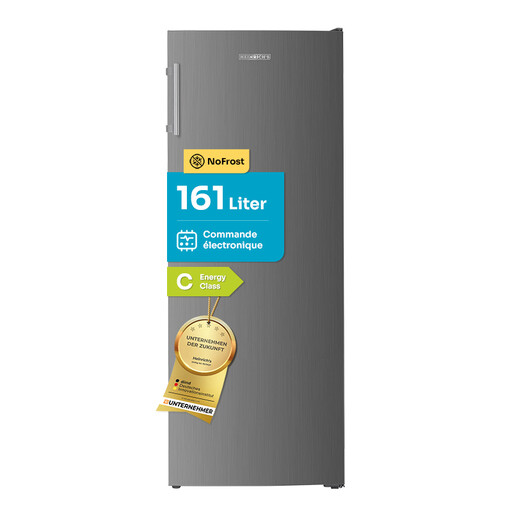 Image unavailable
Worth considering if drawer storage matters more to you than one large open space. The model title lists three drawers, a reversible hinged door, an alarm, a temperature range of −14 °C to −22 °C, a C energy rating and No Frost technology. Check that the capacity is enough for your batches, as well as the dimensions, kWh/year, climate class and holdover time.
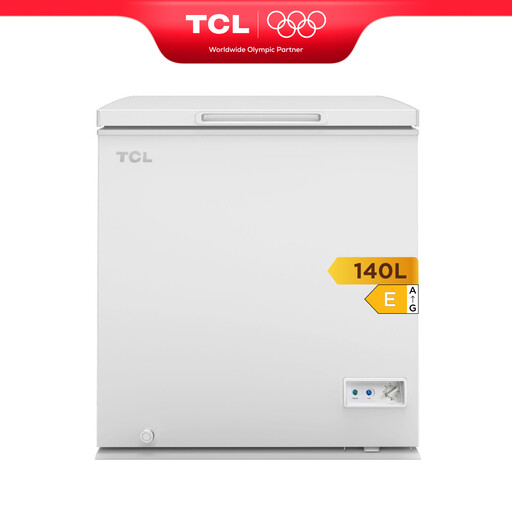 Image unavailable
Worth comparing if you want extra freezer space without choosing a particularly large chest freezer. The model is listed with a basket, a counterbalanced lid, temperature control and an E energy rating. If you store lots of small portions, plan how you’ll organise them into zones. Also check the lid clearance, kWh/year, climate class and holdover time.
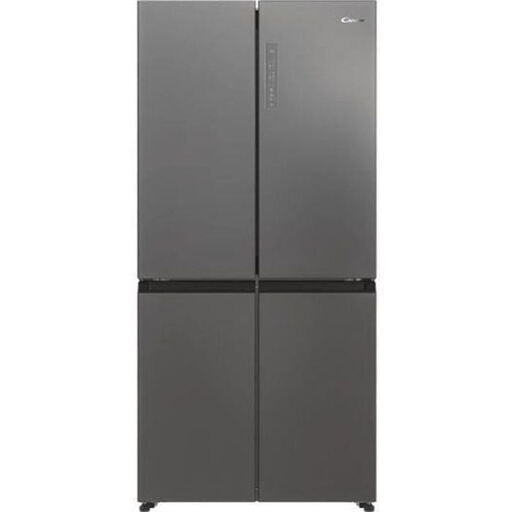 Image unavailable
Worth considering if you’re replacing your fridge too, rather than adding a dedicated freezer. The stated total capacity is 467 l, and the model is listed with Total No Frost and an E energy rating. Don’t mistake the total capacity for the freezer capacity: compare the freezer compartment separately with the amount of prepared food you want to store, and check the installation clearances.
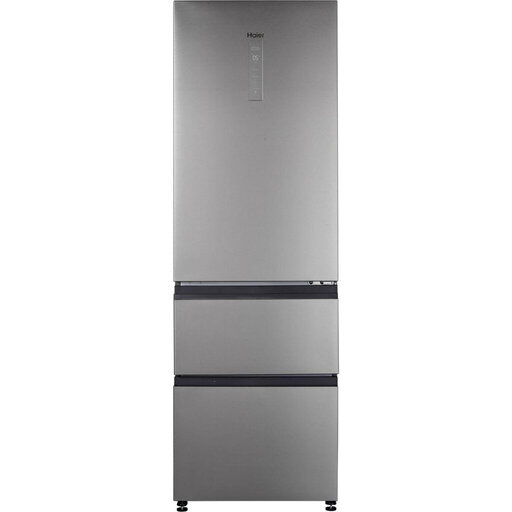 Image unavailable
Worth comparing if you want one appliance for both refrigeration and freezing. The stated total capacity is 360 l, and the model comes with Total No Frost and an E energy rating. To see whether it’ll hold your prepared food, check the freezer compartment capacity and drawer layout. Also make sure you have enough room for installation.
Compare annual energy use in kWh with the usable freezer capacity and the type of appliance. The energy rating letter alone isn’t enough to compare a small under-counter model with a large chest freezer designed for a different amount of storage.
Yes, if the ambient temperature range specified for the model covers the room’s actual conditions. Check its climate class and the ventilation instructions in the manual; the term ‘chest freezer’ doesn’t guarantee it’s suitable.
No. No Frost is mainly a maintenance feature that prevents ice build-up. First choose a capacity and layout that suit your containers, then compare the model’s energy use, holdover time and installation requirements.
In France, the Ministry for Ecological Transition describes ‘one-for-one’ take-back as returning a used appliance when buying a new appliance of the same type. Before ordering, check with the seller how this works for your order, especially if your appliance is being delivered to your home.