Households that sort portions by meal
If you prepare several meals in advance, the drawers in an upright freezer make it easy to separate portions. Check the layout and available capacity before choosing.


If you’re also replacing your fridge, a fridge-freezer could be enough, provided its freezer compartment can hold your portions. For regularly sorting and finding meals, consider an upright freezer with drawers; for bulky containers and more storage, compare chest freezers against the floor space you have available. In every case, check the freezer capacity, how easy it is to access food, the installation requirements and annual energy consumption.
If you prepare several meals in advance, the drawers in an upright freezer make it easy to separate portions. Check the layout and available capacity before choosing.
A chest freezer is worth considering if you store bulky containers. UFC-Que Choisir describes its open, flexible interior; you’ll also need a way to organise it so food stays easy to reach.
A fridge-freezer combines refrigeration and freezing in one appliance. Compare the capacity of its freezer compartment, which is separate from the total capacity shown for the appliance.
Consider it if: you’re also replacing your fridge and its freezer compartment has enough room for your portions.
Keep in mind: the total capacity also includes the fridge section. Check separately how much space is available for frozen food.
Consider it if: you want to sort meals into drawers and find them easily.
Keep in mind: you’ll need enough height and room to open the door and drawers.
Consider it if: you want an open storage space for bulky containers, as described by UFC-Que Choisir.
Keep in mind: you’ll need floor space and a way to find food stored at the bottom.
Once you’ve chosen a format, compare each model’s features with the portions you prepare and the space you have in mind.
| Criteria | What to check | Your needs |
|---|---|---|
| Capacity and storage | Compare the freezer compartment’s capacity, then check how the drawers or baskets fit your containers. With a fridge-freezer, don’t confuse the freezer capacity with that of the whole appliance. | I want to store portions without having to move everything around to find a meal. |
| Installation | Measure the space, doorways and clearance needed to open the appliance. If it’s going in a room that isn’t heated much, check the exact model’s permitted ambient temperature conditions. | My appliance needs to fit in the space and remain easy to open once installed. |
| Food storage | Check the temperature settings and follow the instructions for freezing and defrosting food. According to Anses, freezing at −18 °C at home stops bacteria from multiplying, but most micro-organisms survive. | I prepare meals in advance and want to freeze them without treating cold temperatures as a substitute for food hygiene rules. |
| Energy and noise | The European Commission says the label shows details including the energy class, energy consumption, storage capacities and noise emissions. Compare these figures across appliances with a similar format and capacity. | If the appliance is near a living area, its noise level matters as much to me as its annual energy consumption. |
Capacity doesn’t tell you whether your containers will be easy to reach or whether the appliance will fit through the door. A chest freezer offers open storage, while an upright freezer’s drawers help you separate food.
Measure the route to the space and compare the interior layout with the containers you use.
The permitted ambient temperature depends on the appliance. Beko says some models are suitable for temperatures as low as −15 °C, but this doesn’t automatically apply to other models.
Before placing an appliance in an unheated room, check the installation requirements in the manual for the model you’ve chosen.
According to Anses, freezing at −18 °C at home stops bacteria from multiplying, but most micro-organisms survive.
Follow food storage and defrosting instructions, even when your freezer is set correctly.
A single letter doesn’t tell you the annual energy consumption or storage capacity. The European Commission says that these details, along with noise emissions, appear on the labels of relevant appliances.
Look at all these figures together, ideally for models with a similar capacity and format.
These examples give you an idea of what to compare; their features don’t apply to every appliance from the same brand.
If you’re looking at a fridge-freezer, the French product information for the Bosch KGN39VLEB lists 279 L of fridge capacity and 89 L of freezer capacity.
Haier offers the H4F226WDH1 upright freezer and the HCE301D chest freezer, giving you two different storage layouts to compare.
Beko’s range is worth considering if the temperature of the room where you’ll install the appliance is important.
This selection includes two fridge-freezers for households also replacing their fridge, one upright freezer with drawers and two chest freezers. Compare their freezer capacity and layout to suit the amount of food you want to store.
 Image unavailable
If you’re also replacing your fridge, compare the space available for portions in its freezer compartment, which is separate from the 360 L listed for the appliance as a whole. The product title mentions Total No Frost and an E energy class.
 Image unavailable
This multi-door fridge-freezer combines refrigeration and freezing. Check the freezer’s own capacity before planning how much food to store. Its product title mentions Total No Frost and an E energy class.
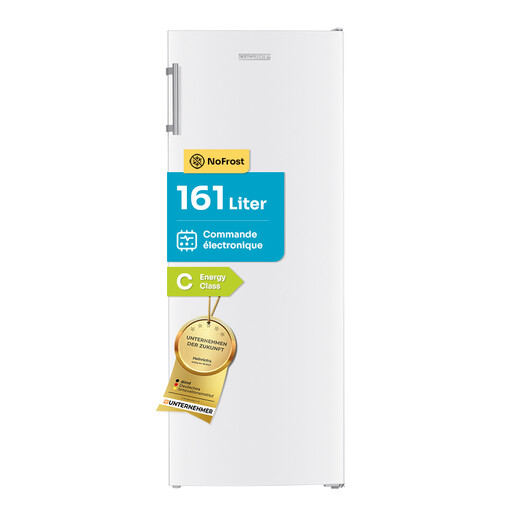 Image unavailable
The three listed drawers make it easy to sort portions by meal. The product title mentions No Frost, a reversible hinged door, a temperature range of −14 °C to −22 °C and a C energy class. Before installation, check the setting intended for everyday food storage as well as the dimensions.
 Image unavailable
You can use its removable basket to keep smaller containers separate from the rest of your food. The title lists a four-star rating and an E energy class; also check how much clearance you’ll need to open the lid.
 Image unavailable
According to the product title, this chest freezer comes with a storage basket and a counterbalanced lid. Check that the top-opening design suits the space you have in mind and how often you’ll need to take out portions; the listed energy class is E.
Anses describes domestic freezing at −18 °C: it stops bacteria from multiplying, but most micro-organisms survive. Check your appliance’s setting and continue to follow food hygiene and storage guidance.
Compare the energy class, annual energy consumption, storage capacities and noise emissions. The European Commission says these details appear on the labels of relevant refrigeration appliances. When comparing two models, take their format and capacity into account.
Contact the seller and give details of the model you received and the specifications that were advertised. In France, the Ministry of the Economy notes that the statutory legal guarantee of conformity applies to goods sold by a business to a private individual.