If your fridge-freezer’s freezer compartment is no longer big enough, an upright freezer makes it easier to access foods stored separately in drawers. A chest freezer is a good choice for bulky containers, provided you have enough floor space and room to open the lid. A larger fridge-freezer is another option if there’s no room for a second appliance. In that case, compare the capacity of its freezer compartment alone with your needs, as well as the annual energy consumption and dimensions of the models you’re considering.
Who is this choice for?
Families whose fridge-freezer is often full
If bulk shopping and prepared meals are taking up more space than your freezer compartment can offer, work out how much extra capacity you need and how often you’ll need to get things out. UFC-Que Choisir highlights the benefits of standalone freezers for larger families.
Households with a utility room
A pantry, cellar or garage may be suitable for a separate appliance, as long as its dimensions and the permitted ambient temperature range are right. Don’t assume that a chest freezer can operate in a cold room just because of its design: check the model’s documentation.
Households that access their supplies often
If you need to find different types of food every day, take a look at the layout of an upright freezer. Drawers, bins and easy access to your food matter just as much as the stated capacity.
What should you compare?
Upright freezer
Worth considering: if you open your freezer often and want to keep food organised in separate drawers.
Bear in mind: measure the clearance needed for the door and check that the compartments can accommodate your usual containers.
Chest freezer
Worth considering: if you store large packages and have enough floor space.
Bear in mind: top access means leaving room for the lid and organising food stored at the bottom.
Larger fridge-freezer
Worth considering: if you don’t have room for a second appliance and a larger freezer compartment will hold enough for your needs.
Bear in mind: the total capacity of a fridge-freezer isn’t the same as the space available for frozen food.
| Factor | What to check | My needs |
|---|
| Freezer capacity |
Compare the capacity in litres dedicated to freezing, rather than the total capacity of a fridge-freezer. Also consider the shape of the compartments and the size of your containers. |
My fridge-freezer is packed full; I want more space without making food difficult to find. |
| Access to food |
Look at the drawers in an upright freezer, or the baskets and depth of a chest freezer. Check how easy it is to reach food stored at the back or bottom. |
If I open the freezer every day, being able to find each type of food quickly matters to me. |
| Space required |
Measure the width, depth and height of the intended space. Allow for the door swing or the lid opening. |
I have a specific spot for the appliance; I also need to be able to open it and reach what’s inside. |
| Electricity |
Compare the kWh/year shown on the energy label for appliances with a similar capacity and design. Consider the A to G rating alongside the capacity, rather than on its own. |
An additional appliance will run continuously, so its annual energy consumption is an important factor in my choice. |
| Location and power cuts |
Check the ambient temperature range the model is designed for and its stated power-cut storage time, given in hours. |
If I’m installing it in a utility room, I need to know the temperatures it can handle and how long the model will keep food frozen during a power cut. |
| Maintenance |
Check whether the model needs manual defrosting or has a frost-free system, then consider how easy it is to access the compartments for cleaning. |
I’d rather factor in defrosting before choosing an appliance I’ll open often. |
What should you watch out for?
-
Choosing based only on the stated capacity
Extra litres don’t tell you whether your containers will fit easily or whether you’ll be able to reach food at the bottom of a chest freezer.
Measure the space and clearance needed to open the appliance, then check its layout against the containers you usually use.
-
Relying on the energy rating alone
According to ADEME, a freezer runs continuously. The rating letter alone isn’t enough to compare the energy consumption of models with different capacities.
Check the kWh/year on the energy label and compare it with the freezer capacity of the models you’re considering.
-
Assuming a chest freezer is suitable for a cold garage
The permitted ambient temperature depends on the model, not just its design. For example, Beko states that some models with Freezer Guard can operate at temperatures as low as −15 °C, but this doesn’t apply to all its appliances.
Check the temperature range specified in the documentation for the exact model before deciding where to put it.
-
Forgetting about power cuts and your old appliance
Storage time during a power cut varies by model: UFC-Que Choisir assesses this separately in its freezer tests. If you’re replacing an appliance, you’ll also need to decide what to do with the old one.
Compare the stated storage time for each model and ask the retailer how they can arrange to take away your old freezer when the new one is delivered.
Brands worth knowing
These examples highlight features to check on specific models; they don’t represent every range from each brand.
Beko
Beko offers upright and chest freezers for home use.
- For some models with Freezer Guard, the brand states that they can operate at ambient temperatures as low as −15 °C.
- If you’re using it in an unheated room, check this feature for your chosen model rather than assuming it applies across the whole range.
Bosch
Bosch offers upright freezers to consider if easy access and organised food storage are priorities.
- Bosch France’s product information for the GSN29EWEV lists a freezer capacity of 200 L.
- The stated 9 h of storage time during a power cut applies to the GSN29EWEV, not to other Bosch models.
Whirlpool
Whirlpool offers, among other things, upright freezers with frost-free features.
- Whirlpool France’s product information for the UW8F2DWHBIN2 lists No Frost and 24 h of storage time during a power cut.
- These features apply to this specific model, so check the product information for the one you’re considering.
Freezers available on Joybuy
This selection includes an upright freezer and several chest freezers, offering separate frozen-food storage away from your fridge-freezer. Compare their capacity and ease of access with your needs. A larger fridge-freezer is another option to consider if you don’t have room for a second appliance.
 Image unavailable
AUCMA, convertible chest freezer, 291 L
This 291 L chest freezer offers separate storage; check that you have enough floor space and clearance to open the lid. Its product title indicates that it can switch between fridge and freezer modes, and lists an E energy rating, LED lighting and a five-level digital control. If you’re placing it in an unheated room or need to know how long it will keep food frozen during a power cut, check the information for this specific model.
View on Joybuy
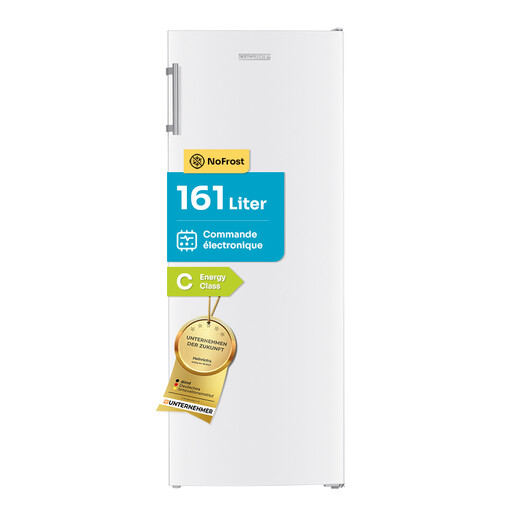 Image unavailable
Heinrich´s, 161 L upright freezer, No Frost
This upright freezer is worth considering if you often check your supplies and want to store food in drawers. Its product title lists a 161 L capacity, drawers, No Frost protection, a reversible door hinge and a C energy rating. Check its dimensions, kWh/year and the ambient temperature range it’s designed for at your chosen location.
View on Joybuy
 Image unavailable
CHiQ JR99DWE, 99 L chest freezer
With a 99 L capacity, this chest freezer is worth comparing with the amount of food you want to store in addition to what fits in your fridge-freezer. Its product title lists a removable basket, adjustable thermostat and E energy rating. Allow for top access and bear in mind that this model requires manual defrosting.
View on Joybuy
 Image unavailable
TCL CF182EWE0FR, 140 L chest freezer
This 140 L chest freezer provides separate storage for family supplies and its product title lists a basket. It has a counterbalanced lid, temperature control and an E energy rating. Measure the space needed to open the lid and compare the kWh/year before making your choice.
View on Joybuy
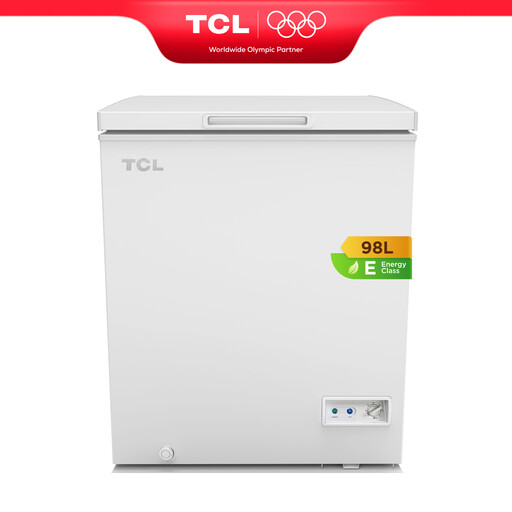 Image unavailable
TCL CF126EWE0FR, 98 L chest freezer
This 98 L chest freezer offers separate storage and is worth comparing with the extra capacity your fridge-freezer really needs. Its product title lists a basket, counterbalanced lid, temperature control and an E energy rating. Check that you’ll be able to open the lid and reach food at the bottom of the freezer.
View on Joybuy
Frequently asked questions
How do you compare the energy consumption of two freezers?
Compare the kWh/year on the energy labels of models with similar capacities and designs, then look at their freezer capacity. ADEME points out that a freezer runs continuously, so the rating letter alone doesn’t tell you everything you need to know about its energy consumption.
Can you put a chest freezer in a garage or cellar?
Don’t assume it’s suitable just because it’s a chest freezer: check the ambient temperature range for the model you’re considering. Beko states that some Freezer Guard models can operate at temperatures as low as −15 °C, but this doesn’t apply to every freezer.
What should you look for on a domestic freezer’s energy label?
Check the energy rating and annual consumption in kWh, taking the appliance’s capacity into account. The European Commission states that energy labels for domestic fridges and freezers have used a scale from A to G since 1 March 2021.


