What should you check before choosing?
Chest freezer
Best for: storing meals and frozen food when you have enough floor space and can easily open the lid.
Bear in mind: food at the bottom takes more organising and is less easy to reach.
Upright freezer
Best for: taking out portions regularly and keeping them organised in accessible drawers.
Bear in mind: its tall design means you’ll need to check the available height and allow enough room in front to open the door.
Under-counter freezer
Best for: extra storage when the available height or space limits your options.
Bear in mind: its capacity may be too small for storing a large supply of prepared meals.
Once you’ve chosen a style, compare the stated capacity with the space you actually have, then weigh up the features of the models you’re considering.
| Factor |
What to check |
Your needs |
| Capacity and space |
Compare the net capacity in litres, then measure the width, depth and height. Allow for the clearances specified in the manual, the route to the room, and the space needed to open the door or lid. |
I want to store meals and frozen food without choosing an appliance that’s too small or a style I can’t fit. |
| Access to food |
Check the layout of the drawers, shelves or baskets, and the space needed to use them. With a chest freezer, consider how you’ll find items at the bottom. |
I often take out portions, so I’d like to find them without moving all my other food. |
| Power cuts and freezing |
Compare the stated storage time in hours on each model’s product details. If you’ll be freezing meals, also check the freezing capacity and the four-star marking: the UK Department for Environment, Food & Rural Affairs associates this with freezing food through to the centre at −18 °C. |
I’m concerned about power cuts, or I plan to freeze food regularly rather than just store food that’s already frozen. |
| Installation room |
Compare the room’s minimum and maximum temperatures with the ambient range stated for the model. If the room is near a living area, also check the noise level in dB(A). |
I may put my freezer in a cellar or garage where the temperature changes throughout the year. |
| Energy use |
According to the European Commission, the label shows information including the energy class, kWh/year and capacity. Compare these figures for appliances with similar capacities and designs, rather than relying on the letter alone. |
I want to know the annual energy use while still having enough room for my food. |
A few models from well-known brands
These features apply to the specific models listed, not to every freezer made by each brand.
Bosch
The GSN58AWCV is an example of a large upright freezer. Bosch lists its capacity as 366 L and its dimensions as 1 910 × 700 × 780 mm.
- Bosch lists No Frost, a C energy class and a noise level of 38 dB(A) for this model.
- Its height and depth mean you’ll need a suitable space, with room to open the door and use the drawers.
Whirlpool
The W3RHS19DW is a 198 L chest freezer, according to its Whirlpool France product details.
- Whirlpool states that this model keeps food frozen for 41 h and can operate in a room where the temperature falls to −15 °C.
- Check that its capacity and top access suit the amount you’ll store and how often you’ll take food out.
Beko
Some Beko chest freezers are designed to be installed in an unheated room.
- Beko states that models with Freezer Guard can operate at temperatures as low as −15 °C.
- Check that the specific model you’re considering has this feature, and confirm its dimensions and internal layout.
Liebherr
In its selection dated 17 June 2026, Guide Topten France lists the FNa 6635-20 as a 260 L freestanding upright freezer.
- Guide Topten France lists this model in energy class A, with energy use of 99 kWh/year.
- These figures don’t apply to other Liebherr models. Compare each appliance’s product details with the capacity you need.
Freezers to consider on Joybuy
These models cover three different needs: chest freezers for separate storage, an upright for easy access to portions, and a small vertical freezer for extra capacity. Compare their capacity and design with the space you have before choosing.
 Image unavailable
TCL CF182EWE0FR, 140 L chest freezer
This chest freezer offers 140 L of capacity, a storage basket and a counterbalanced lid, making it a handy way to store food with easy access from above. Its stated energy class is E. Check the space needed to open the lid, as well as the storage time during a power cut and the ambient temperature range for your installation.
View on Joybuy
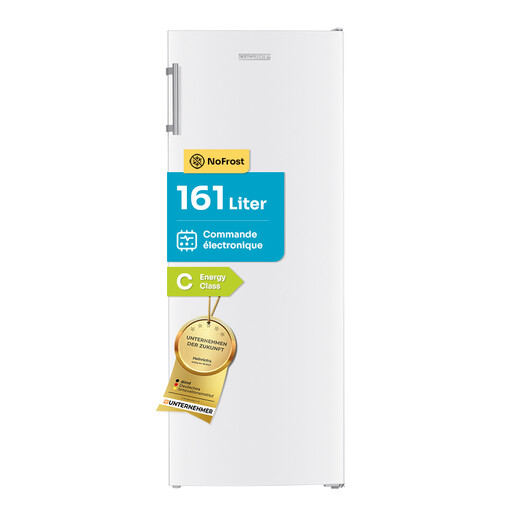 Image unavailable
Heinrich´s, 161 L No Frost upright freezer
This upright design is a good choice if you want to keep portions separate in drawers. The model name indicates a 161 L capacity, No Frost, a reversible door and a C energy class. Measure the space and door clearance, then check the storage time during a power cut and the ambient temperature range.
View on Joybuy
 Image unavailable
COMFEE' RCU60WH2(E), 60 L vertical freezer
With a stated capacity of 60 L, this model is better suited to occasional extra storage than a large stock of food. Its name indicates a reversible door and an E energy class. Check the exact internal layout, the dimensions with the door open and the installation requirements before planning to fit it under a worktop.
View on Joybuy
 Image unavailable
CHiQ JR99DWE, 99 L chest freezer
This 99 L chest freezer can provide extra storage if you’re happy with top access. Its name mentions a removable basket, an adjustable thermostat, a four-star marking and an E energy class. Also allow for the manual defrosting mentioned in its description, and check that there’s enough room to open it.
View on Joybuy
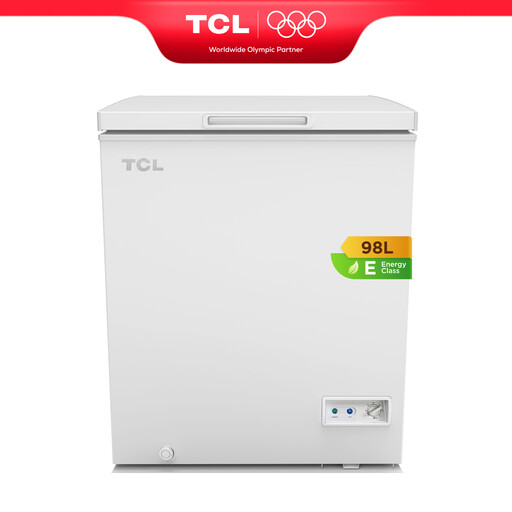 Image unavailable
TCL CF126EWE0FR, 98 L chest freezer
This chest freezer has a stated capacity of 98 L, making it suitable for modest storage rather than a large supply of meals. It comes with a basket and counterbalanced lid, and has an E energy class. Measure the space and check the stated storage time during a power cut, annual energy use and ambient temperature range before choosing a room.
View on Joybuy
Frequently asked questions
What temperature should I set a freezer to for prepared meals?
The UK Department for Environment, Food & Rural Affairs recommends setting it to −18 °C. If you plan to freeze food, check that the compartment has a four-star marking. Don’t confuse it with a basic ice box, which is intended for temporarily storing food that’s already frozen.
Can I install a freezer in a cellar or garage?
Yes, as long as the room’s minimum and maximum temperatures are within the ambient range stated for the model. Some appliances are designed for rooms where the temperature falls as low as −15 °C, including some Beko chest freezers with Freezer Guard. Check that this applies to the specific model you choose.
Is the energy label enough to compare two freezers?
No. According to the European Commission, it helps you compare the energy class, annual energy use, capacity and noise, but it doesn’t tell you how easy the food is to reach or how much space you’ll need for installation. Compare kWh/year with the capacity you’re looking for, and look at models with similar designs.
Does a No Frost freezer still need cleaning?
Yes. No Frost reduces the need for manual defrosting, but it doesn’t replace cleaning. The UK Department for Environment, Food & Rural Affairs recommends thoroughly cleaning your freezer at least once a year. Follow your model’s manual for maintenance instructions.


