Households stocking up
If you buy in bulk, batch-cook or store bulky items, consider a chest freezer’s usable capacity and the floor space available. Also check the stated storage time in the event of a power cut.


If your fridge’s freezer compartment is no longer big enough, choose a chest freezer for storing a larger supply if you have enough floor space, an upright freezer for sorting and frequently accessing your food, or an under-counter model for a compact extra option. Que Choisir distinguishes between these formats by their capacity and ease of access. Before buying, also check the dimensions, whether the climate class suits the room, the stated power-cut storage time and the model’s ventilation requirements.
The capacity you need depends as much on what you freeze as how often you need to access it.
If you buy in bulk, batch-cook or store bulky items, consider a chest freezer’s usable capacity and the floor space available. Also check the stated storage time in the event of a power cut.
If you often need to find a portion or an ingredient, the drawers or shelves in an upright freezer can make it easier to organise and access your food. Que Choisir also points out that how you handle food is a factor when choosing a format.
If your fridge’s freezer compartment is too small, an under-counter or compact model can give you more room without needing space for a large appliance. Be sure to measure the available space and check that the door can open fully.
Consider one: if you need to store large quantities or bulky packages and have enough floor space.
The trade-off: items at the bottom need to be arranged thoughtfully to keep them accessible.
Consider one: if you open your freezer often and want to separate food into drawers or shelves.
The trade-off: compartments can limit the space available for some larger packages.
Consider one: to supplement a fridge in a small kitchen, rather than to store large quantities.
The trade-off: its compact capacity means you’ll need to check what you can realistically fit inside.
| Priority | What to check | What I need |
|---|---|---|
| Capacity | Compare the usable capacity with how much you store and how often you shop. If you freeze a lot of fresh food at once, also check the freezing capacity in kg/24 h. | I’m looking for extra storage for less frequent shopping trips, without choosing an appliance that’s bigger than I can fill. |
| Storage | Look at the layout of the drawers, shelves or baskets and check there’s room for the packages you usually buy. Check the model’s defrosting requirements. | I prefer compartments so I can find portions quickly; for larger packages, I’ll also consider the open space in a chest freezer. |
| Energy use | Compare the energy rating and the stated kWh/year for appliances with a similar capacity. According to ADEME, a freezer runs continuously. | I want to assess the appliance’s annual energy use, as it’ll be running every day. |
| Location and power cuts | Measure the appliance, the space needed to open it and the route to its intended location. Check that its climate class covers the room’s temperatures, then check the stated storage time in hours and the clearances specified in the manual. | If I’m putting it in a cellar or garage, I need to consider the temperatures the space actually reaches. Storage time also matters if I’m concerned about power cuts. |
An appliance might suit your storage needs but still not fit through the access points, or leave too little room to open its door or lid. For example, Bosch lists the GSN58AWEV as measuring 191 × 70 × 78 cm.
Measure the space, the clearance needed to open it and the delivery route before comparing capacities.
The climate class indicates the ambient temperature range the appliance is designed for. Whirlpool says this information is on the rating plate and in the technical specifications. Suitability for very low temperatures must be confirmed for the specific model.
Note the room’s temperatures during cold and warm periods, then compare them with the range specified for the freezer.
The rating doesn’t tell you the model’s annual energy use. As ADEME points out, a freezer runs continuously, so it’s worth considering the capacity you need alongside its kWh/year figure.
Compare formats suited to the same use and check their stated annual energy consumption.
In a chest freezer, items stored beneath other food can be harder to find. In an upright model, compartments help organise your food but need to accommodate the packages you buy.
Make a list of your portions, boxes and bulky items before choosing the interior layout.
These examples illustrate specific configurations; their features don’t apply to every freezer from the same brand.
Two Whirlpool models offer a practical comparison between a chest freezer and a large-capacity upright model.
The GSN58AWEV is an example of an upright freezer to consider if storage compartments and available space are key to your choice.
The FSE1174N is a useful example of an under-counter freezer for extra capacity.
This selection includes chest freezers for stocking up or adding compact extra capacity, as well as upright models with compartments for organising food. Start by choosing the format and location that work for you, then check the specifications of your chosen model.
 Image unavailable
A chest freezer with a top-opening lid for stocking up. The product name lists an E energy rating, a removable basket, LED lighting and five-level digital controls. Before placing it in an unheated room, check its climate class. Also check the stated storage time in the event of a power cut and the model’s ventilation requirements.
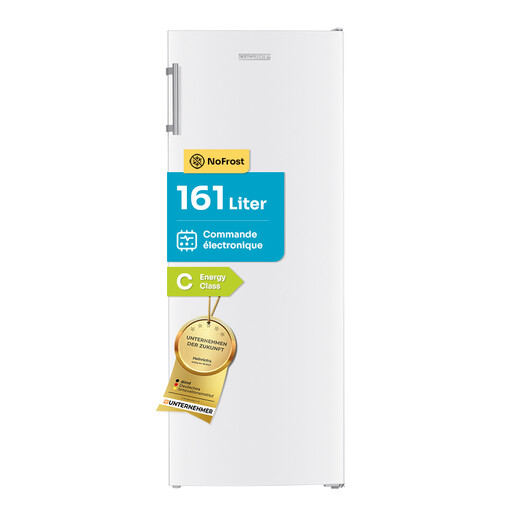 Image unavailable
A drawer-style model to consider if you want to keep different foods separate. The product name mentions No Frost, a C energy rating and an adjustable temperature range of −14 °C to −22 °C. Check the dimensions, annual energy consumption, climate class and stated storage time to make sure they suit your location and needs.
 Image unavailable
A compact chest freezer to consider for extra capacity rather than stocking up in a big way. Its name lists a four-star rating, a removable basket and an E energy rating. Be sure to check its annual energy consumption, climate class, stated storage time in the event of a power cut and installation requirements.
 Image unavailable
A compact top-opening freezer for extra storage. The product name indicates that it can switch between fridge and freezer modes, and lists an E energy rating, a seven-level thermostat and a removable basket. Check the climate class, stated storage time in the event of a power cut and the clearances required for installation.
 Image unavailable
A compact upright model to consider for extra fridge-freezer storage. Its name lists a reversible door and an E energy rating. Check the exact compartment layout before buying, as well as the climate class, annual energy consumption, stated storage time and ventilation requirements.
A separate appliance is worth considering if you mainly need extra space for frozen food, especially if you shop less often or store bulky items. Que Choisir recommends starting with how much frozen food you use and how much space you have. If you only need a little extra room, compare an under-counter model’s capacity with what you actually need.
Yes, as long as the temperature range the model is designed for covers the temperatures the room actually reaches. Bosch, for example, gives a range of 10 to 38 °C for the SN-ST class. Whirlpool says the model’s class is listed on its rating plate and in its specifications. Any suitability for particularly cold conditions must be stated for the model you choose.
Follow the clearance requirements in the manual for the exact model. Electrolux France advises allowing air to circulate around the appliance and following its installation instructions. You’ll also need enough room to open the door or lid.
Check the stated storage time in hours for each model, but don’t treat it as a measure of the appliance’s overall quality. Whirlpool France lists 41 h for the W3RHS19DW chest freezer, while Bosch lists 12 h for the GSN58AWEV upright model. These models also differ in format and capacity.
No. Compare it with the stated annual energy consumption in kWh and the capacity you need. ADEME points out that a freezer runs continuously, so comparing appliances suited to similar needs makes these figures more useful when choosing.